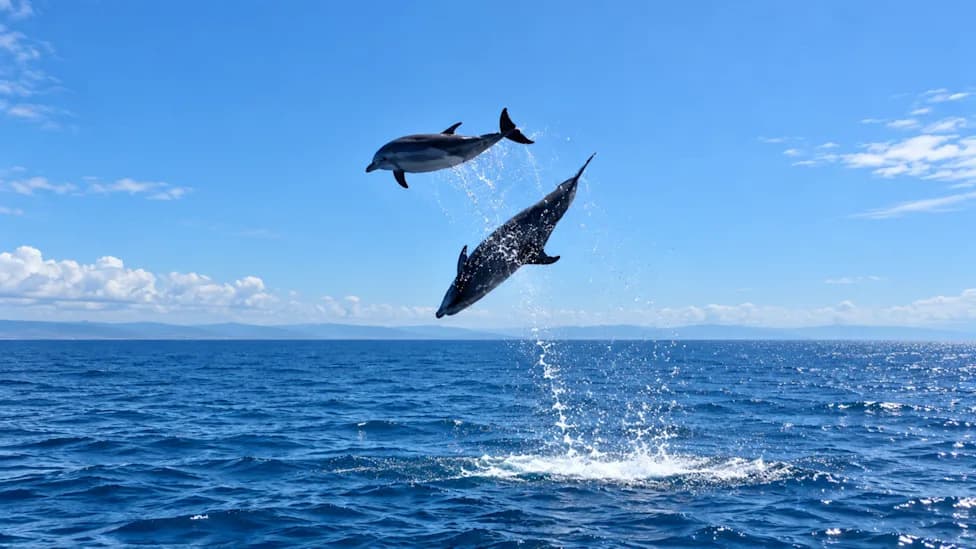
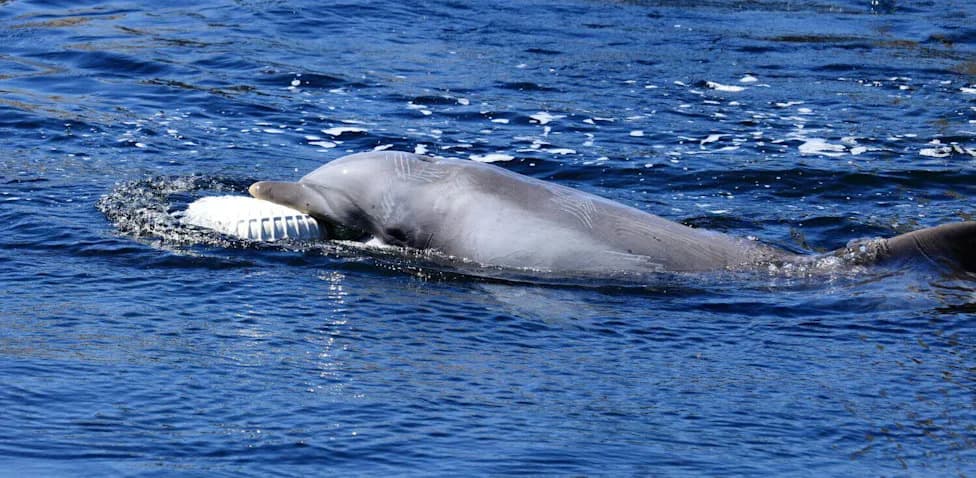
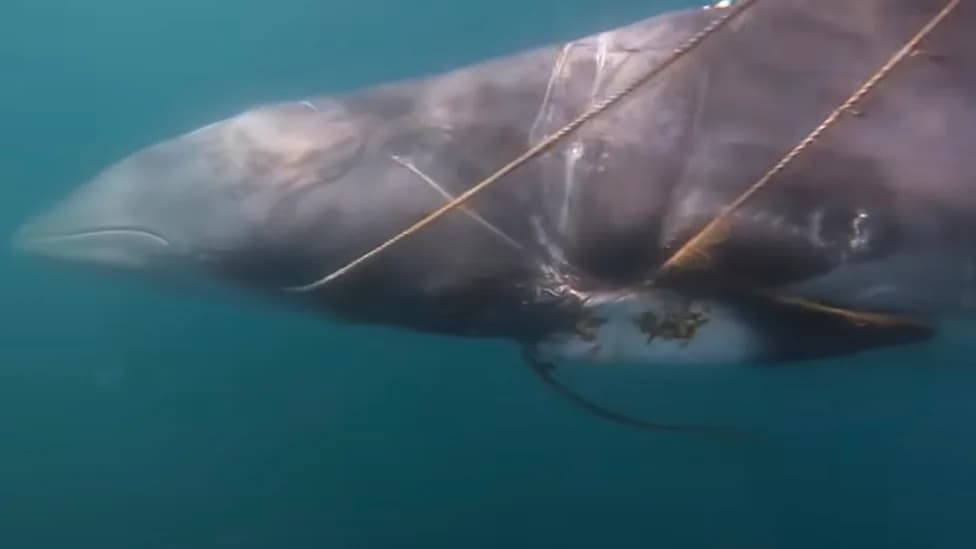
The Wildlife Conservation Society's Ocean Giants team recorded humpback, minke and fin whales feeding together in the New York Bight on June 29, about 25–35 miles south of Long Island. The footage shows bubble-net feeding, fin whales lunging through baitfish, minke whales feeding below the surface, dolphins riding a vessel bow, and breaching calves. Researchers say these rare multi-species feeding events signal an ecological recovery helped by protections such as the 1972 Marine Protection, Research, and Sanctuaries Act.
Stunning Footage Shows Whales and Dolphins Rebounding in the New York Bight
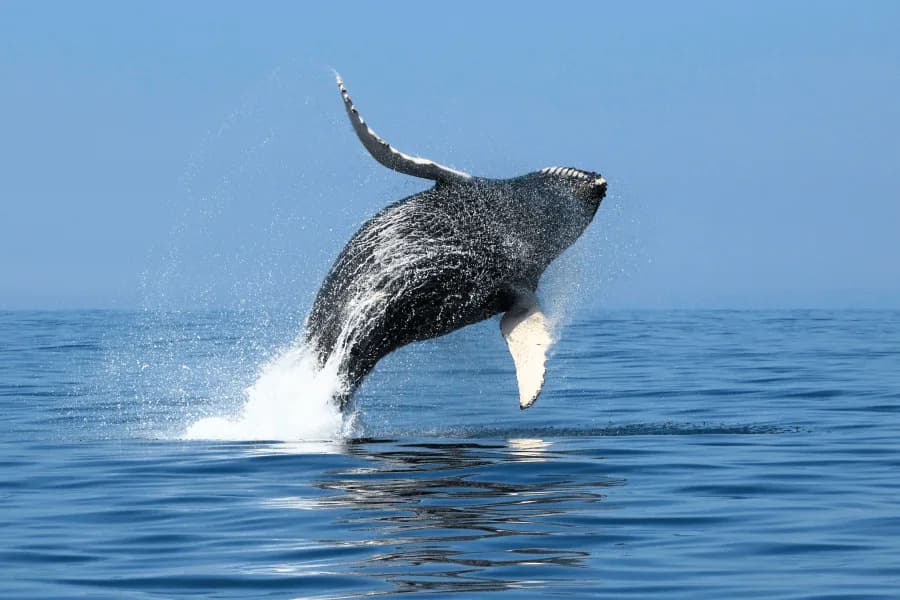
Stunning video shows marine life’s comeback off New York, New Jersey
Researchers captured striking video and photos on June 29 showing a surge of marine life off the coasts of New York and New Jersey, highlighting a notable ecological comeback in the New York Bight.
What Researchers Recorded
During a survey, the Wildlife Conservation Society's New York Bight Program and the Ocean Giants research team documented humpback, minke and fin whales feeding together roughly 25–35 miles south of Long Island, between Montauk, N.Y., and Cape May, N.J. The team recorded multiple feeding behaviors: humpback whales using bubble-net feeding, fin whales lunging through dense schools of baitfish, and minke whales feeding just below the surface. Crew members also observed a pod of common dolphins riding the research vessel's bow and watched humpback calves practicing energetic behaviors such as breaching, when young whales leap clear of the water.
Why This Is Important
Multi-species feeding aggregations like this — where different predators exploit the same baitfish and sometimes benefit from each other's hunting techniques — are not often directly observed by scientists. The team used the rare encounter to study simultaneous feeding tactics and interspecies interactions in a highly productive foraging hotspot.
“They were feeding, taking advantage of an incredibly productive foraging hotspot,” said Dr. Howard Rosenbaum, executive director of the Wildlife Conservation Society's New York Bight Program. “Dense schools of baitfish attract humpback, fin, and minke whales and other marine predators into feeding aggregations.”
Recovery After Decades Of Impact
Officials say these gatherings underscore the New York Bight's recovery after decades of heavy pollution and ocean dumping. Conditions began improving after the Marine Protection, Research, and Sanctuaries Act of 1972 (also known as the Ocean Dumping Act) helped curb dumping and expand protections for marine habitats.
“When we began our research more than a decade ago, these waters weren't widely recognized as important whale habitat,” Rosenbaum said. “But days like this bring our long-term science to life and remind us why protecting these waters has never been more important.”
Note: The footage provides a valuable snapshot of a thriving coastal ecosystem and a timely reminder of the benefits of long-term conservation and pollution controls.
Help us improve.