Short Take: Viral satellite clips showing several Ontario wildfires appearing to flare up at once have been used to claim arson or the use of directed energy weapons. Experts and historical lightning data point to lightning as the likely ignition source, while hot, dry and windy conditions allowed fires to grow rapidly. Official Canadian fire data reviewed on July 30 record most of the mapped fires as naturally caused, with only three listed as human‑caused.
Satellite Clips Don’t Prove Ontario Wildfires Were Set Intentionally, Experts Say
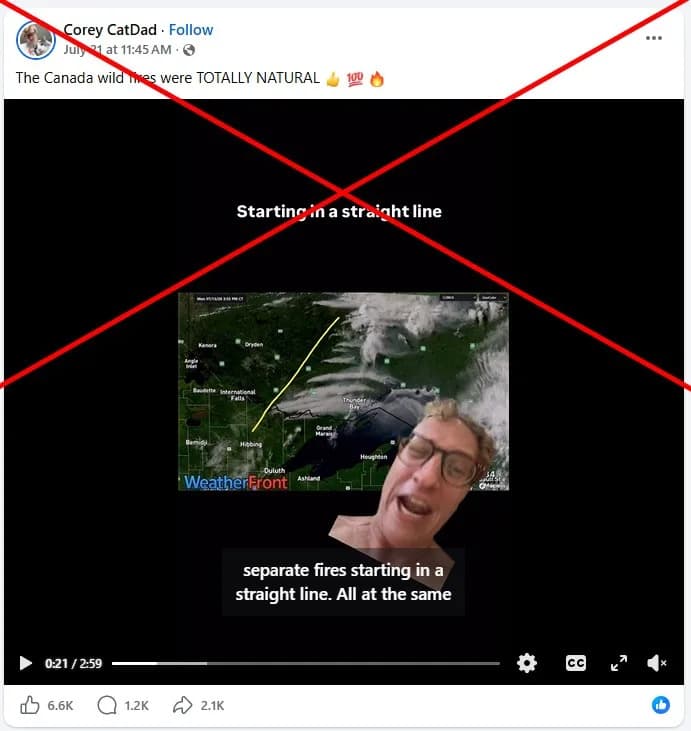
Screenshot of a Facebook post taken July 30, 2026
Conspiratorial posts on social media have circulated satellite clips of the mid‑July 2026 wildfires in northwest Ontario, claiming that multiple fires flaring up at the same time proves deliberate ignition. Experts, historical lightning records and official fire data, however, point to natural causes—primarily lightning—exacerbated by hot, dry and windy conditions.
Viral claims and theories: A July 22 Facebook video that went viral carried the caption:
“This is the fire that brought us all of that smoke last week... Arson. Straight up, arson.”Identical satellite footage was shared across Facebook, Instagram, Threads and X, and some posts interpreted the apparently synchronized growth of smoke plumes as evidence of coordinated arson. Other posts promoted unfounded theories that the blazes were started using high‑energy directed energy weapons (DEW) or were part of attempts to facilitate “land grabs.”
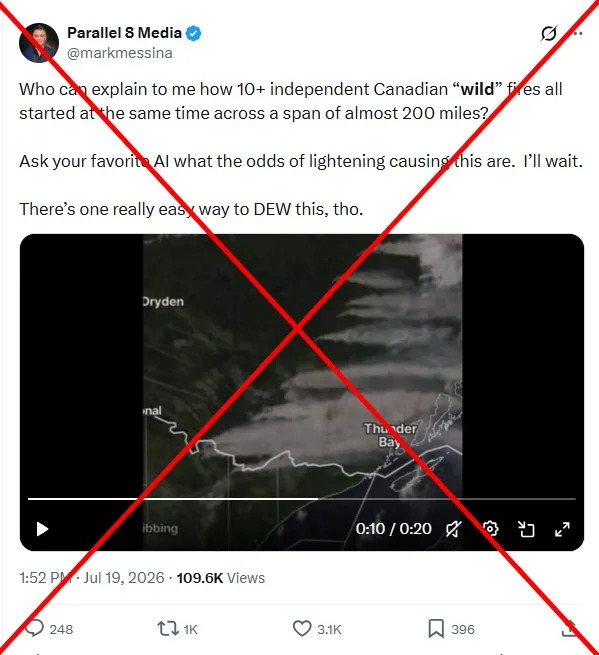
Screenshot of an X post taken July 30, 2026
No evidence of intentional ignition in the imagery: There is no indication in the shared satellite clips that the fires were deliberately started. Thompson Rivers University fire scientist Mike Flannigan told AFP that the fires visible in the footage appear consistent with lightning ignitions. Fire weather specialist Liam Buchart of the Canadian Forest Service likewise said the fires were likely sparked by lightning, noting that the region experienced an extended spell of heat and drought followed by lightning strikes.
What the timeline and data show: The satellite video first posted by meteorological software company WeatherFront on July 14 includes a timestamp showing imagery captured on July 13 between about 12 p.m. and 8 p.m. Central Time. The Cooperative Institute for Research in the Atmosphere (Colorado State University) posted similar satellite views for the Great Lakes region.
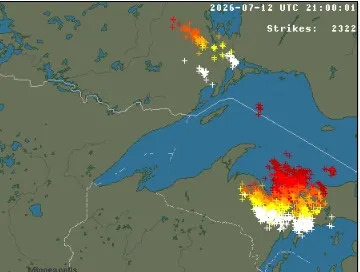
Screenshot of Blitzortung historical data taken July 30, 2026
Historical lightning records from Blitzortung, which logs near‑real‑time thunderstorm activity, show multiple clusters of strikes across the same Ontario area in the days before July 13—supporting a natural ignition scenario. Remote blazes can smolder for days after a lightning strike before weather changes allow them to grow quickly; Buchart explained that a cold front passage, followed by hot, dry and windy conditions, can turn smoldering spots into rapidly expanding fires.
Official fire‑cause data: Data from the Canadian Interagency Forest Fire Centre reviewed on July 30 indicate that most wildfires appearing in the widely circulated satellite footage were recorded as naturally caused, with only three fires in the mapped area listed as human‑caused. Fire information officers told AFP that while lightning is the most common natural cause, human‑caused fires can be accidental, intentional, or due to negligence.
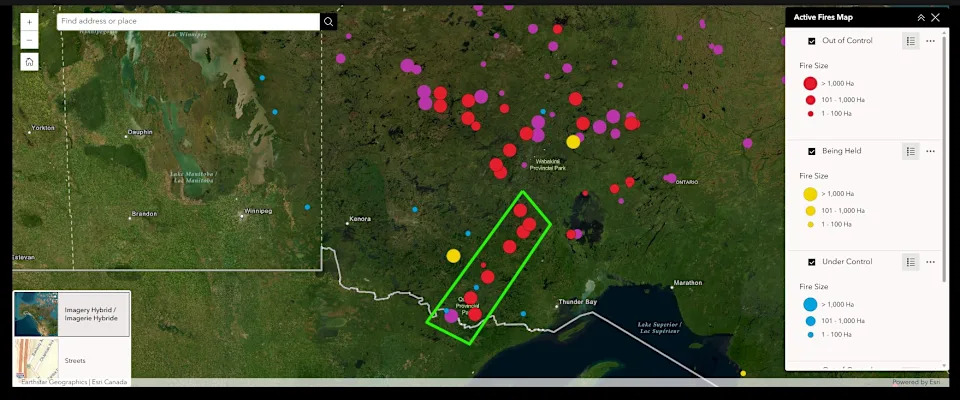
A screenshot taken on July 30, 2026 of an Ontario fire map, with elements highlighted by AFP
Why the conspiracy claims are unlikely: Experts say claims that directed energy weapons or other clandestine technologies were used to ignite fires are not supported by evidence. Such operations would likely leave measurable traces and be detectable by agencies monitoring fires, and they would be unnecessary explanations when simple, well documented weather and lightning patterns fit the observed events.
Climate context: Scientists note that higher temperatures driven by human greenhouse‑gas emissions have very likely lengthened fire seasons and increased the area at risk in Canada by creating hotter, drier conditions that favor larger and more extreme wildfires.
Previous, similar misinformation: AFP and other fact‑checking organizations have previously debunked similar arson and DEW claims tied to satellite footage of Canadian wildfires, including a 2023 incident in Quebec that was likewise attributed to lightning.
Bottom line: The viral satellite clips do not provide reliable evidence of intentional ignition. Multiple independent lines of evidence—expert analysis, lightning strike records and interagency fire‑cause data—point to lightning and weather‑driven fire growth as the more plausible explanation.
Help us improve.