Ancient viral DNA from mummies in northern Chile provides the clearest molecular evidence yet that European colonization introduced smallpox to the Americas. Researchers detected smallpox sequences in leg bones of two adults dated between 1492 and 1631; phylogenetic analysis places the virus between medieval European strains and later global variants. The findings illuminate possible transmission routes—including colonial movements, the transatlantic slave trade and Indigenous networks—and underscore the severe human toll of the disease.
Ancient Chilean Mummies: DNA Confirms European Colonization Brought Smallpox to the Americas

This photo provided by Bernardo Arriaza shows the Camarones coast on Nov. 2, 2018, in Northern Chile, where scientists found evidence of ancient smallpox infections. (Bernardo Arriaza via AP)
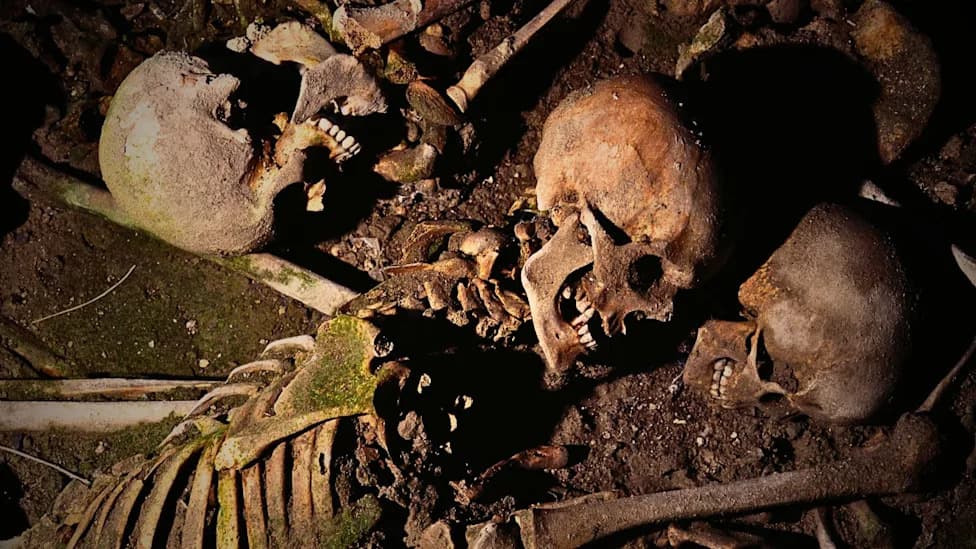
Ancient DNA recovered from mummies in northern Chile provides the strongest molecular evidence yet that European colonization introduced smallpox to the Americas. Researchers detected smallpox viral sequences in bone fragments from two adults excavated at the Camarones archaeological site.
Geneticist Shigeki Nakagome of Trinity College Dublin and colleagues reanalyzed 13 bone samples and identified viral DNA consistent with variola (smallpox) in leg bones belonging to an adult man and an adult woman. Radiocarbon dating and genomic analysis indicate the individuals most likely died between 1492 and 1631.
Phylogenetic comparisons place the recovered viral lineage between medieval European smallpox strains and later global variants, a position that strongly suggests these South American infections derived from Old World strains. The study, published in Science, therefore provides direct molecular support for what historical records have long suggested: that colonization brought smallpox to the Americas.
Routes and implications. The researchers note that it remains unclear which specific groups introduced the virus. European arrivals in successive waves after 1492 are the most likely source, but the virus also could have moved via transatlantic connections involving Africa during the expansion of the slave trade. Finding these infections so far south, in an area with no prior documentary record of smallpox, raises the possibility that Indigenous trade networks helped carry the disease across long distances.
The genetic data also reveal how smallpox evolved over time, including the loss or inactivation of certain genes that may have shaped the virus's ability to infect and spread in human populations.
"Nobody would ever question that smallpox came to this hemisphere from colonization, but this proves it," said Patricia Foster, a biologist at Indiana University who was not involved in the research.
The two infected individuals were young adults (estimated between 18 and 35 years old), and researchers say smallpox is the likely cause of death. Coauthor Constanza de la Fuente Castro, a biological anthropologist at the University of Chile, emphasized the broader significance: disease was not only a cultural and demographic factor but a biological force that amplified the catastrophic effects of conquest.
Why it matters: This study combines archaeology, radiocarbon dating and ancient viral genomics to link molecular evidence with historical accounts, deepening our understanding of how pathogens spread with human movement and colonization—and the devastating human cost that followed.
Help us improve.