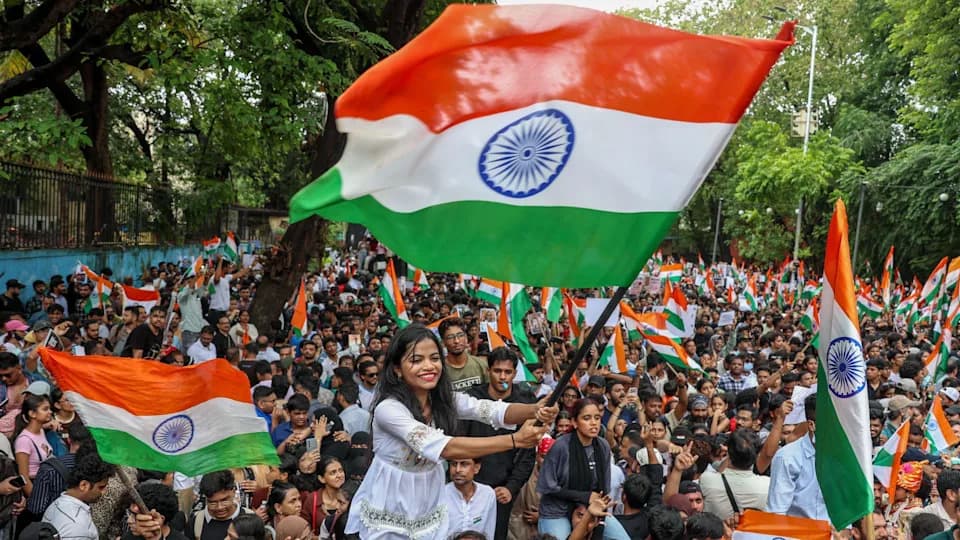
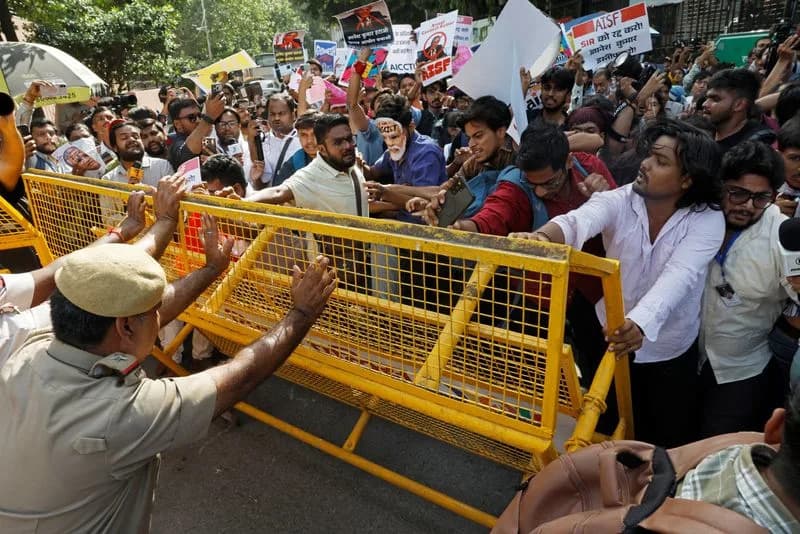
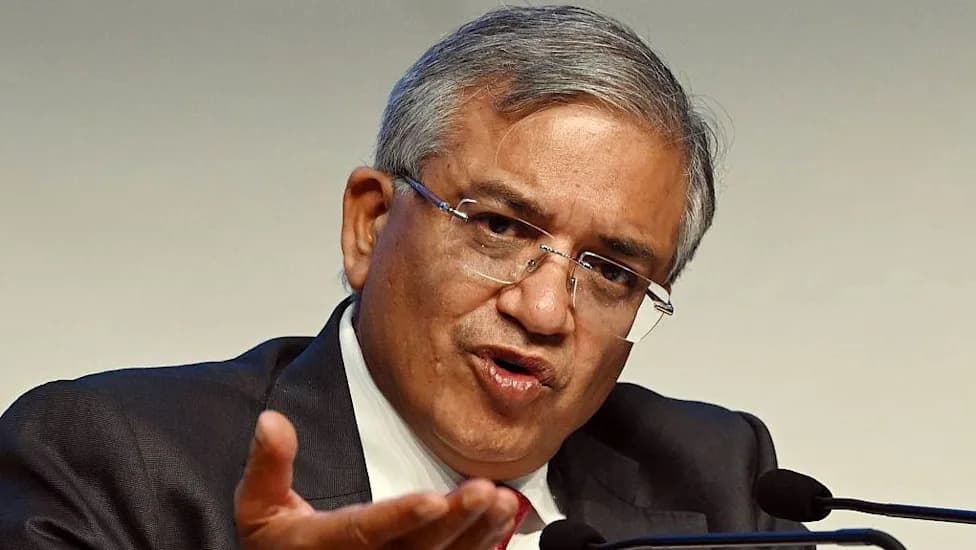
The Cockroach Janta Party, an online Gen Z movement, turned satire into mass protests at New Delhi's Jantar Mantar after reported leaks of the NEET medical entrance exam disrupted millions of students. The sustained demonstrations, amplified by viral social media content, forced Education Minister Dharmendra Pradhan to resign — a rare ministerial departure in Narendra Modi's 12-year tenure. Parliament moved quickly to tighten penalties for exam leaks, while analysts warn rising youth discontent and high graduate unemployment could reshape political dynamics ahead of key state elections.
Gen Z Protests Force Education Minister's Resignation — How an Online Meme Movement Became Real-World Power
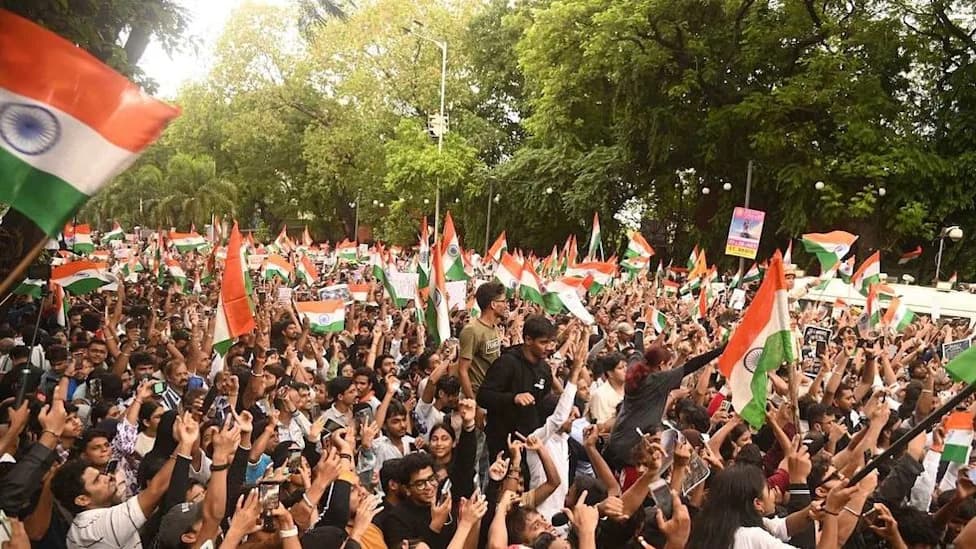
Supporters of the youth-led satirical political movement Cockroach Janta Party (CJP)
For weeks tens of thousands of mostly young Indians gathered at Jantar Mantar in New Delhi to demand the resignation of Education Minister Dharmendra Pradhan. What began online as a sarcastic meme movement rapidly translated into daily street demonstrations that culminated in Pradhan's resignation — the first time in Prime Minister Narendra Modi's 12-year government that a senior minister stepped down under sustained public pressure.
What Sparked the Protests
The immediate trigger was a widely reported leak of NEET exam questions in May. More than two million students sat the National Eligibility cum Entrance Test (NEET) for roughly 130,000 medical seats; within days, reports of leaked questions spreading on WhatsApp forced students back into frantic preparation. The disruption and stress were linked to at least a dozen student suicides in the weeks that followed, intensifying public outrage.
The Movement: From Meme to Mass Mobilisation
The protests were channelled by the Cockroach Janta Party (CJP), an online-born Gen Z movement that took off in May after young people used satire to respond to remarks attributed to Chief Justice Surya Kant. The CJP's Instagram account gained over 22 million followers within two weeks, and its content — humorous reels, digital posters and viral carousels — helped convert online anger into physical rallies in New Delhi, Mumbai, Pune and Bengaluru.
“Digital life and its conversion into political action is now a highly identifiable phenomenon,”
State Response and Legal Changes
Police used batons and crowd-control measures to disperse demonstrations at times, but protesters returned day after day. Within days of the sustained rallies, and amid growing national scrutiny of exam administration, Parliament passed an Anti-Leak Paper Amendment Bill raising penalties for exam leaks to fines up to Rs. 50 lakh (about $52,000) and prison sentences of up to 10 years.
Political Implications
Pradhan's resignation raises questions about political costs for the ruling Bharatiya Janata Party (BJP). With roughly two-thirds of India's population under 35 and high graduate unemployment, youth dissatisfaction has been growing since 2019. The unrest could affect turnout and support in next year's key state elections in Uttar Pradesh and Gujarat, where younger voters make up a substantial share of the electorate.
What Comes Next
Observers note the CJP differs from traditional protest movements because it has not relied on established political leaders for direction. Whether its founder, Abhijeet Dipke, or other organisers will formalise the movement into a party or pressure group remains uncertain. For many young Indians, the CJP is now a rallying banner — Pradhan's resignation is viewed as a minimum achievement, and activists are debating how to sustain momentum and press for broader institutional reform.
Key Contextual Facts: India's National Crime Records Bureau reported 14,488 student suicides in 2024, a rise of roughly 80% from 2014. Opposition leaders say paper leaks are a recurring problem: Rahul Gandhi has claimed more than 150 leaks over the past decade. The National Testing Agency, which administers major exams, has faced years of criticism.
Help us improve.