Hilleman Laboratories, the Merck–Wellcome joint venture in Singapore, will produce trial doses of an IAVI-developed rVSV vaccine targeting the Bundibugyo Ebola strain, supported by up to $8.5 million from CEPI. The WHO has identified the IAVI candidate as a leading option; Merck expects doses could be ready for early clinical testing by year‑end. CEPI is also funding Oxford’s ChAdOx1 candidate and a Moderna program, while treatment trials of MBP134, remdesivir and other antivirals are ongoing.
Merck–Wellcome JV Hilleman Labs to Produce Bundibugyo Ebola Vaccine Doses for Clinical Trials
FILE PHOTO: A vial and syringe are seen in front of Merck logo in this illustration taken March 26, 2025. REUTERS/Dado Ruvic/Illustration/File Photo
Hilleman Laboratories, a Singapore-based joint venture between Merck and the Wellcome charity, is preparing to manufacture doses of an experimental single-dose vaccine targeting the Bundibugyo strain of Ebola, which is driving a rapidly expanding outbreak in eastern Democratic Republic of Congo (DRC).
Funding and Partnerships
The effort is supported by up to $8.5 million from the Coalition for Epidemic Preparedness Innovations (CEPI). CEPI has separately committed funds to other Bundibugyo vaccine programs, including up to $8.6 million for an Oxford ChAdOx1 candidate and up to $50 million toward a Moderna-developed vaccine.
Vaccine Candidate and Manufacturing Plan
The doses Hilleman will produce come from starting material supplied by the International AIDS Vaccine Initiative (IAVI). The vaccine uses a recombinant vesicular stomatitis virus (rVSV) platform—the same technology Merck used for its approved Ervebo vaccine that targets the Zaire Ebola strain. Hilleman will convert IAVI’s material into finished doses suitable for early-stage clinical trials, with Merck serving as technical adviser and providing expertise on rVSV manufacturing.
Tarit Mukhopadhyay, Merck’s head of infectious disease and vaccines discovery, said in an interview that doses could be ready for clinical testing by the end of the year. Hilleman Labs is equipped to produce tens of thousands of doses—adequate for early trials—and partners have agreed in principle to transfer technology to a larger manufacturer if mass production becomes necessary.
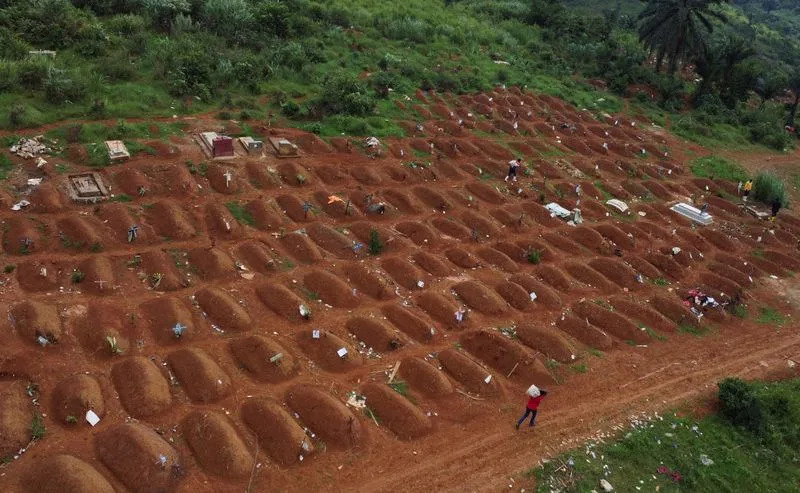
FILE PHOTO: A drone view of workers at the Ceca-20 cemetery, as aid agencies intensify efforts to contain an Ebola outbreak caused by the Bundibugyo virus, in Mungwalu, Djugu Territory of Ituri province, Democratic Republic of Congo, July 14, 2026. REUTERS/Gradel Muyisa Mumbere/File Photo
Outbreak Context and Other Clinical Efforts
As of July 29, health authorities reported the outbreak in eastern DRC had infected 3,360 people and caused 1,487 deaths. The World Health Organization in May identified the IAVI rVSV candidate as the most promising vaccine for Bundibugyo. There are currently no vaccines or treatments approved specifically for the Bundibugyo strain.
Alongside vaccine development, treatment trials are underway. These include Mapp Biopharmaceuticals’ pan‑Ebola antibody drug MBP134, Gilead Sciences’ antiviral remdesivir (being tested alone and in combination), and WHO‑considered trials for Regeneron’s antibody maftivimab in combination with other antibodies, as well as Gilead’s oral antiviral obeldesivir.
Broader Manufacturing Work
Earlier this year, Merck and CEPI launched a $30 million program to update Ervebo’s manufacturing processes—aimed at improving yields, extending shelf life, and making the vaccine more affordable and accessible for low‑ and middle‑income countries. That work underscores ongoing efforts to strengthen global preparedness for Ebola outbreaks across different strains.
“With Bundibugyo virus cases rising at worrying speed, the epidemic is fast becoming a humanitarian crisis,” said CEPI CEO Richard Hatchett. “No vaccine is currently approved against the virus, so we are urgently advancing vaccine candidates into testing.”
What’s next: Preparations for early clinical trials are under way; regulatory and logistical steps will determine the exact timing and scale of testing and any subsequent manufacturing scale‑up.
Help us improve.