California released 356 pages 66 days after a records request revealing that a $6.2 million diaper contract was awarded to Baby2Baby without a formal competitive bid. Records show repeated warnings that providing 400 diapers only in Newborn and Size 1 at hospital discharge — with no returns or exchanges — could produce waste. State files lack bid‑scoring sheets, show inconsistent respondent counts, and indicate another finalist, SupplyBank.org, proposed more sizes and direct‑to‑consumer delivery.
Records Reveal Waste, Transparency and Oversight Concerns in California’s $6.2M No‑Bid Diaper Program
What records reveal about Newsom's taxpayer-funded, California-branded free diaper program
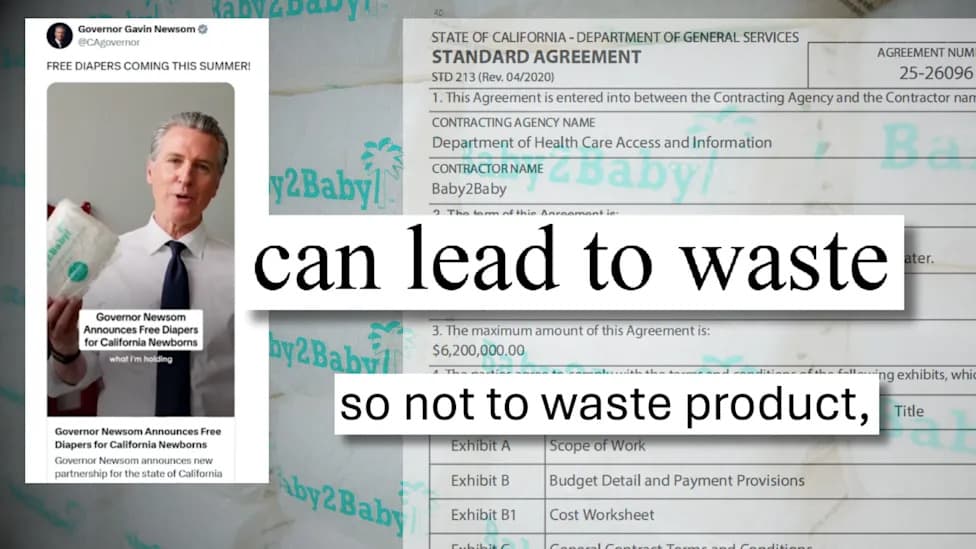
California released 356 pages of records 66 days after a public records request, disclosing the documents behind Gov. Gavin Newsom’s $6.2 million diaper program awarded to the nonprofit Baby2Baby without a formal competitive bid. Reporters reviewed the full package — including the executed contract, internal analyses, vendor proposals and email exchanges between the California Department of Health Care Access and Information (HCAI) and responding organizations.
What The Records Show
Legal But Contested: The files contain no evidence of illegal conduct. A one‑sentence budget exemption inserted by lawmakers made it lawful for the administration to bypass usual competitive‑bid and state contract‑review processes. Still, the records raise serious questions about the program’s design, transparency and oversight.
Design Locked In A Potentially Wasteful Model: The contract requires hospitals to give families 400 diapers at discharge in only Newborn and Size 1, with no right to return or exchange if the sizes are wrong. Multiple internal warnings and applicant comments flagged that this approach could produce large amounts of unused, taxpayer‑purchased diapers, especially when infants quickly outgrow those sizes.
Process Concerns And Missing Documentation: The release contains no bid‑scoring sheets, evaluation criteria or rankings showing how proposals were compared. The state's comparison spreadsheet contains many "Not answered" cells, and the most substantive decision document appears to be HCAI’s final recommendation, which names two finalists.
Other Vendors Offered Different Models: HCAI’s recommendation notes SupplyBank.org as a finalist that proposed more diapers, a broader range of sizes and a direct‑to‑consumer delivery option. Several other vendors offered flexibility that could reduce waste: for example, Amazon proposed voucher programs allowing families to choose sizes, receive shipments at home and return unused product, but Amazon does not appear in the comparison or finalist records.
Inconsistencies And Limited Transparency: Documents list conflicting respondent counts (11, 14 and 15). At least one applicant reports submitting a response but not receiving a meeting. Baby2Baby declined to name its diaper manufacturer during selection; the executed contract identifies the manufacturer as based in Mexico. Contract language also obligates taxpayers to pay for California branding on the diapers.
Confidentiality And Messaging Controls: The agreement requires mutual approval of communications strategy and talking points and describes oversight‑committee meetings as "not open or public," limiting public scrutiny of program administration.
Odd Contract Edits: The executed contract originally cited a prescription‑drug law as authority to bypass contract oversight; in the public copy that citation is crossed out and replaced with the budget exemption, with a notation dated eight days after the records request.
Aftermath
Despite the red flags about process, potential waste and limited transparency, lawmakers renewed both the diaper program and the contracting exemption for a second year. Reporters sent follow‑up questions to the state and, at the time of publication of these records, were still awaiting answers.
Bottom line: The documents show a legal but narrowly designed, no‑bid program that many participants and agency staff warned could waste public resources and limit family choice — yet key evaluation materials and public oversight mechanisms are missing or restricted.
Help us improve.