Akademik Lomonosov, a 21,000-tonne floating nuclear barge moored at Pevek, passed a two-week WANO safety follow-up with improved findings versus 2022. Auditors confirmed that prior recommendations were implemented across organisation, maintenance, radiation protection and emergency preparedness. The barge's two KLT-40S reactors produce a combined 70 MWe and have Arctic-specific reinforcements; independent analysis estimates core damage frequency below 10⁻⁷ per reactor-year. However, the IAEA lacks dedicated standards for floating plants, and emerging 2026 guidance is only a partial solution for international oversight.
Akademik Lomonosov Passes WANO Safety Follow-Up — Arctic Floating Nuclear Barge Cleared
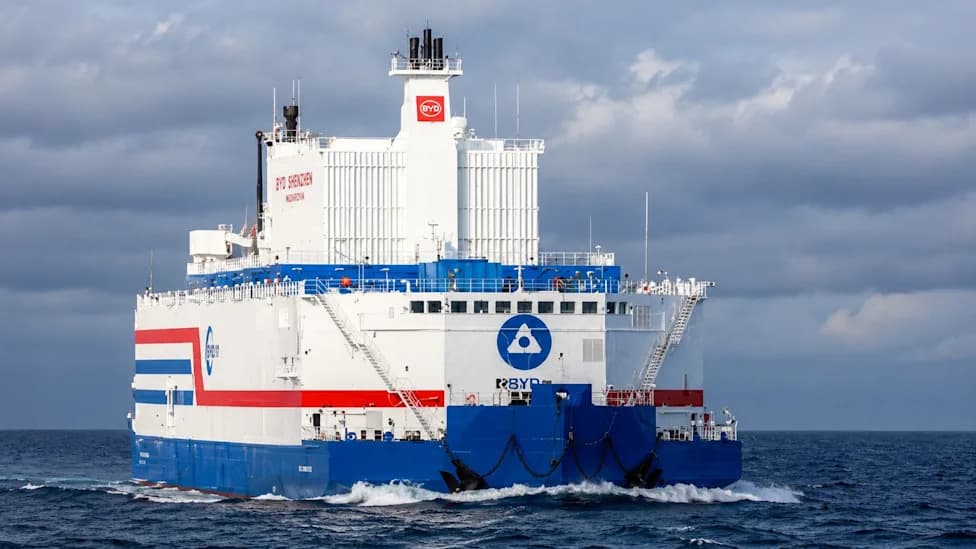
Image: Rosatom
The Akademik Lomonosov, a 21,000-tonne floating nuclear barge moored off Pevek in the Russian Arctic, has successfully completed a two-week follow-up safety review by the World Association of Nuclear Operators (WANO). The international team found that recommendations from the 2022 audit were implemented and reported fewer "Areas for Improvement" than previously noted, marking clear progress in operations and safety management.
What the Audit Found
Thirteen international experts from the WANO Moscow Centre reviewed organisational practices, maintenance regimes, radiation protection, emergency preparedness and engineering support. Auditors observed daily operations and examined technical documentation to verify that 2022 recommendations were addressed across risk management and radiation safety. WANO mission head Dmitry Zerkal commented that the plant 'has achieved good results in all areas.' The team recorded a reduced number of formal improvement items compared with the prior review.
How the Facility Works
The barge houses two KLT-40S pressurised-water reactors that deliver a combined 70 MWe. Each reactor is refuelled approximately every three years. The 144-metre hull is permanently moored to coastal infrastructure, and the reactor compartments have been reinforced to withstand Arctic-specific hazards: severe storms, large wave motion and mechanical shock — conditions not typically encountered by land-based plants. Independent IPSAM technical analysis places core damage frequency during normal operation below 10⁻⁷ per reactor-year, a figure comparable to modern Gen III+ designs.
Regulatory Gaps and International Oversight
Despite the positive audit, global regulatory frameworks for floating nuclear plants remain incomplete. The International Atomic Energy Agency (IAEA) does not yet have dedicated, facility-specific safety standards for floating nuclear stations. Currently, regulators combine land-based nuclear rules, maritime codes and national laws in a patchwork approach that analysts and some Russian experts have criticised as inadequate. Emerging classification society guidance expected in 2026 begins to address these gaps, but broader, explicit international standards will be needed for confident cross-border oversight and wider deployment.
Why This Matters
Remote Arctic communities today rely heavily on diesel generators — an expensive, carbon-intensive, and logistically burdensome power source. A floating small modular reactor (SMR) that meets international safety expectations can alter the economics and emissions profile of Arctic electrification and heating. FNPP Director Viktor Yelagin said the review places Akademik Lomonosov 'on par with Russia's top nuclear power plants, including the Balakovo and Kalinin NPPs,' a message likely to feature in future export discussions.
The Akademik Lomonosov has operated since 2019 without major incident and now carries two clean WANO audits. With a projected 40-year service life, the vessel represents an early but closely watched example of floating nuclear technology, and SMR developers, regulators and remote communities will be monitoring subsequent deployments and regulatory developments.
Help us improve.