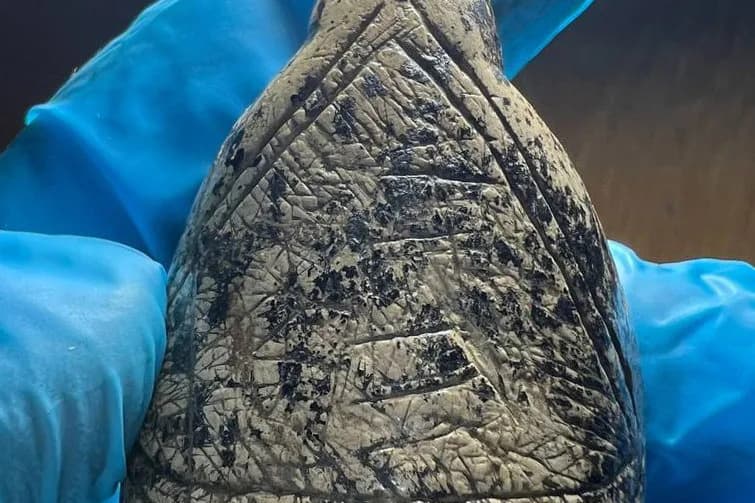
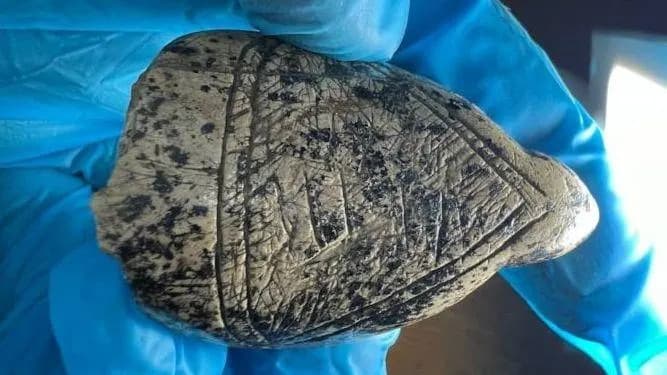
Archaeologists have uncovered two tiny mammoth‑ivory bird figurines in Hohle Fels cave, Baden‑Württemberg, dating to the Aurignacian period about 40,000 years ago. One carving is just 2 cm long and the pair weigh approximately 1.3 g and 0.7 g, making them the smallest Ice Age artworks found in the World Heritage region. The objects are on display at the Blaubeuren Museum of Prehistory and Ice Age Art through April of next year. Researchers say the finds raise new questions about the symbolic role of birds for early modern humans at this site.
Tiny 40,000‑Year‑Old Ivory Bird Figurines Unearthed at Hohle Fels — Called 'Find of the Year'
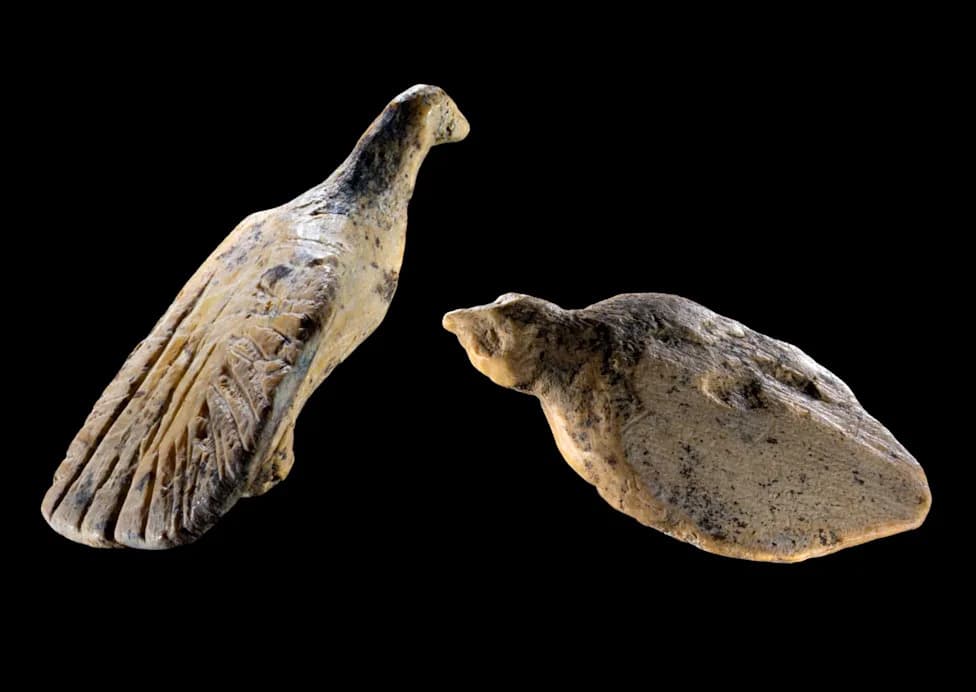
Two bird figures approximately 40,000 years old from a UNESCO cave in southern Germany. Ralf Ehmann/Universität Tübingen/dpa
Researchers have uncovered two minute ivory bird figurines in the Hohle Fels cave in Baden‑Württemberg, Germany — a discovery that offers fresh insight into the creativity of early modern humans roughly 40,000 years ago.
The finds: The pair of mammoth‑ivory carvings include an almost complete depiction of a resting, possibly brooding, bird and a second bird shown with outstretched wings; the latter’s left wing is broken and cannot be reattached because parts are missing. One figurine measures just 2 centimetres long, and the objects weigh about 1.3 g and 0.7 g, making them the smallest known Ice Age artworks from the World Heritage region, according to the University of Tübingen and the Museum of Prehistory and Ice Age Art in Blaubeuren.
Context and significance
Hohle Fels is among several caves that together form a UNESCO World Heritage Site and are counted among the world’s most important Palaeolithic locations. Excavations at the site previously produced the oldest known human figurine and the world’s oldest known musical instrument in 2008. The new bird carvings were recovered from the lower layers associated with the Aurignacian culture, dated to around 40,000 years ago.
"At just under 1.3 and 0.7 grams, the two newly discovered ivory birds are true lightweights," said Nicholas Conard, who leads prehistoric and early history research at the University of Tübingen and the Blaubeuren museum, which described the discovery as the 'find of the year.'
The reason birds appear at Hohle Fels — including a previously excavated water‑bird figurine discovered about 25 years ago — remains unclear. Researchers are exploring whether these tiny carvings were personal talismans, markers of group identity, teaching tools, or something else entirely. Notably, the other three decorated Ice Age sites in the World Heritage area have yielded depictions of large mammals such as mammoths, cave lions and wild horses, but no birds.
On display: The pieces will be shown alongside other mammoth‑ivory finds, including prehistoric musical instruments, at the Blaubeuren Museum of Prehistory and Ice Age Art through April of next year, giving the public a chance to see these delicate objects.
Next steps: Conservators and researchers will continue detailed study — including microscopic wear analysis and comparison with earlier finds — to better understand how the figurines were made, how they were used, and what they reveal about symbolic life in the Aurignacian period.
Help us improve.