UKRI has cut £2.8m from Jodrell Bank's annual budget, risking 28 jobs and raising concerns about the UK's future role in international astronomy. Dr George Dransfield of Sky At Night called the move "a gamble" that could drive scientists abroad and weaken national research capacity. The Lovell Telescope — part of the e-MERLIN network and located on a UNESCO World Heritage site — remains crucial for deep-space science and training new talent. Campaigners and the University of Manchester are seeking alternative funding to secure the observatory through 2028.
Jodrell Bank Funding Cut Is 'A Gamble' That Threatens UK Science and Jobs

Dr George Dransfield says the funding cut is 'short-sighted' [BBC]
The UK Research and Innovation (UKRI) agency has cut £2.8m from the annual funding of Jodrell Bank Observatory, putting around 28 jobs at risk and prompting warnings that the decision could weaken Britain's role in international astronomy collaborations.
The cut affects the Cheshire site that houses the Lovell Telescope — the world's third-largest steerable radio telescope — which is central to the e-MERLIN network of six other telescopes across England. Together, these instruments enable researchers to probe how planets and stars form, how galaxies evolve, and other deep-space phenomena.
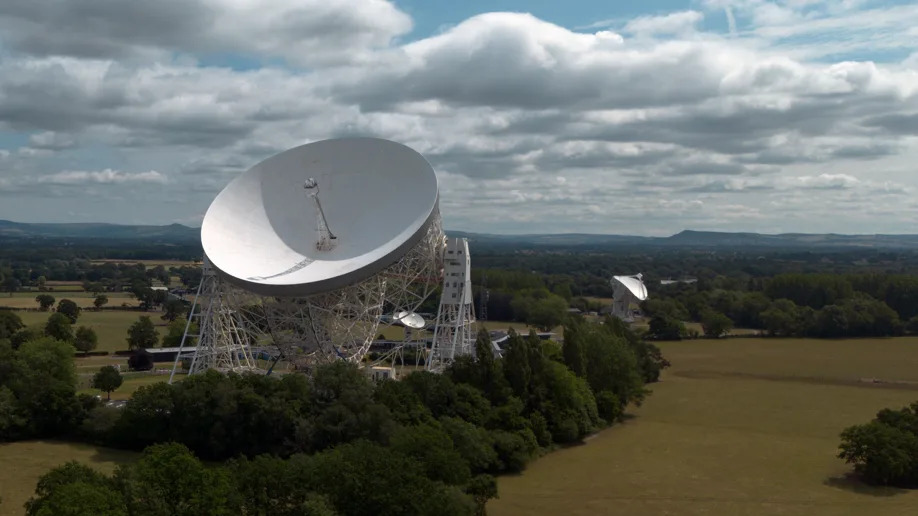
The Lovell Telescope is the world's third-largest steerable radio telescope [Reuters]
Why Experts Are Alarmed
Dr George Dransfield, an astrophysicist and presenter on the BBC's Sky At Night, described the reduction as "a gamble on the future of UK science and scientific research." She warned that without access to cutting-edge infrastructure, researchers may leave the UK and the country could lose influence in major international projects.
Dr Dransfield said: 'What's really disappointing is that it takes decades to set up this kind of infrastructure. Without it, scientists will move to places where the facilities exist.'
The observatory, chosen by radio-astronomy pioneer Sir Bernard Lovell as a research base for the University of Manchester in the 1940s, sits on a UNESCO World Heritage Site and remains a key training ground for early-career scientists who later lead research groups or join industry sectors that are priorities for government.
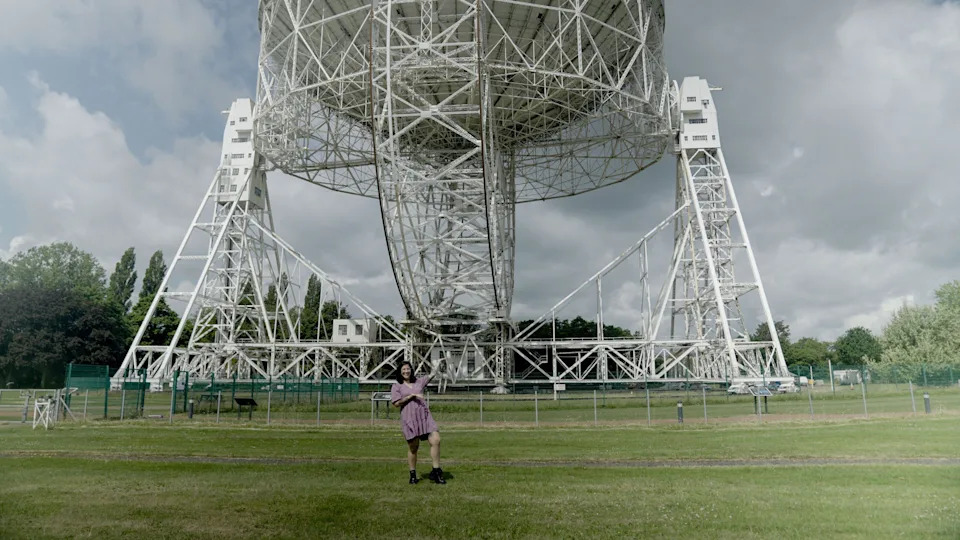
Dransfield has visited the Lovell Telescope and spoken to researchers about their work [BBC]
Official Reason and Local Reaction
UKRI attributed the funding reduction to rising laboratory and research costs that have squeezed budgets across the sector. While Dr Dransfield acknowledged finite budgets, she called the decision short-sighted given the UK's strong international standing in radio astronomy.
Henri Murison, chief executive of the Northern Powerhouse Partnership, said eminent physicists fear a national loss of physics talent and urged funding bodies — including UKRI — to explain what additional investment the North West will receive to support innovation and skills, noting the amount is small in the wider context of research funding.
The University of Manchester, which owns Jodrell Bank, said it is committed to continuing scientific research at the site. A grassroots campaign has also been launched to identify alternative funding streams to secure the observatory's operations through 2028 and beyond.
Visitors and scientists alike describe Jodrell Bank as both historic and highly active: the Lovell Telescope remains an important instrument for cutting-edge research while also serving as a hub for training the next generation of astronomers.
Help us improve.