Lake whitefish populations across parts of the Great Lakes have plunged after invasive quagga and zebra mussels disrupted the food web by eliminating diporeia, a key food for juvenile whitefish. Commercial catches and Indigenous livelihoods are suffering, and biologists warn whitefish could disappear from some areas within five years. Local interventions (CO2 tarps, high-pressure jets) and predators like freshwater drum offer limited, localized relief; a proposed federal funding bill seeks sustained investment to develop scalable controls.
Great Lakes' Iconic Lake Whitefish Faces Possible Local Extinction as Invasive Mussels Spread
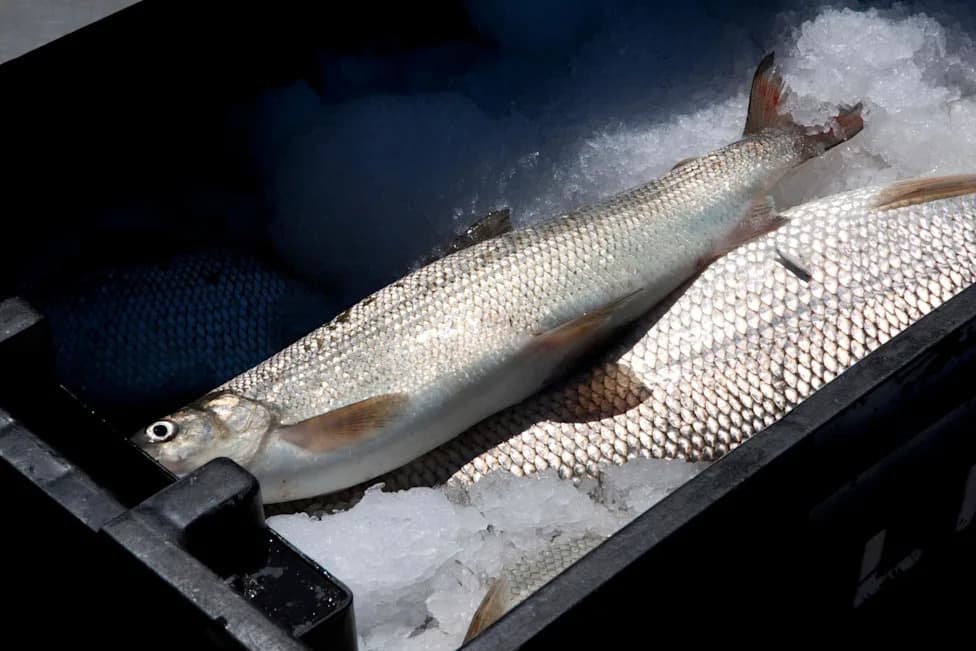
Freshly caught lake whitefish from Lake Michigan.Photograph: Carol Dembinsky/Dembinsky Photo Associates/Alamy
In the basement of Sandusky's public library, an 1888 promotional book proclaims the town the "largest fresh water fish market in the world" and devotes a full-page illustration to the lake whitefish, calling it "Sandusky's pride." For centuries the lake whitefish was both a culinary staple and a cultural cornerstone for Indigenous peoples and shoreline communities across the Great Lakes.
Beginning in the 1990s, fishers and scientists began noticing dramatic declines in juvenile and adult lake whitefish, particularly in Lake Erie. Research now links this collapse largely to the spread of invasive dreissenid mussels—quagga and zebra mussels—which disrupted the food web by decimating diporeia, a small, calorie-rich crustacean that juvenile whitefish rely on.
How Invasive Mussels Broke the Food Chain
Quagga and zebra mussels, believed to have arrived in ballast water from transoceanic ships, filter massive quantities of phytoplankton—the base food source for diporeia. As mussel populations exploded across lakebeds, they removed the primary food that sustains diporeia, triggering cascading declines up the food chain and starving out whitefish fingerlings before they reach maturity.
Economic, Cultural and Ecological Impact
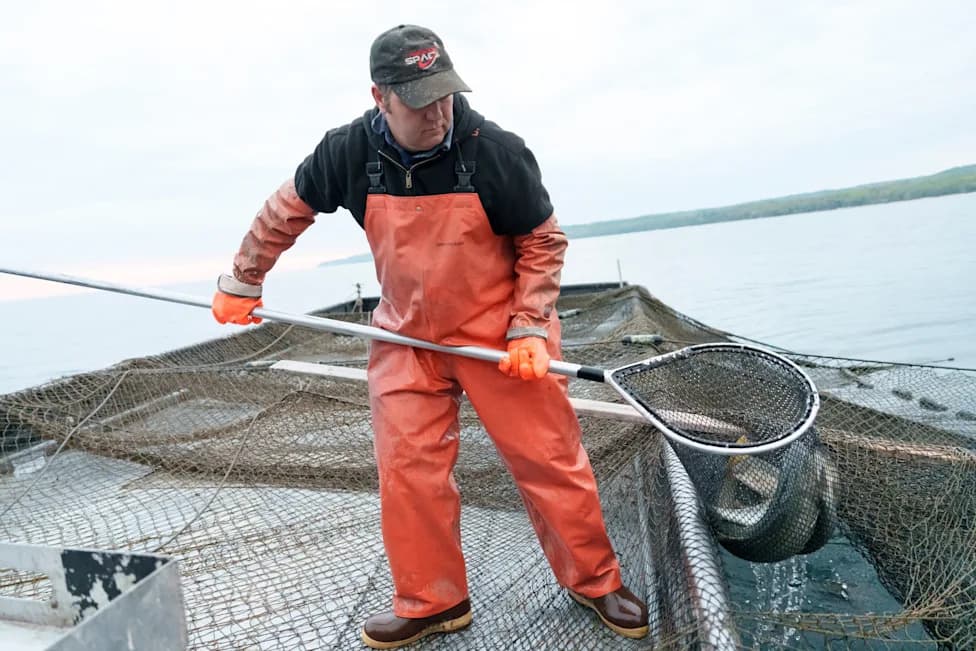
The decline has hit commercial fishers and Indigenous communities hard. William Ortiz of the Little Traverse Bay Bands of Odawa Indians describes whitefish as "the biggest source of income for the tribe's fishers." Ortiz began commercial whitefish fishing in 2015 and reports a steady decline in catches since then: "From 2015 to 2020, there was a noticeable decline... it's hard to make a living when there's not a lot of fish out there."
"It's heartbreaking what's happening. It's a treaty right; we used to be able to make a living... Now, it's hard if not impossible to do that." — William Ortiz
Commercial landings have fallen markedly: Ohio recorded about 200,000 pounds in 2009, while last year roughly 185,000 pounds were taken from Lake Erie as a whole, the bulk harvested late in the year by Ontario-based operations. Biologists who completed an extensive western Lake Erie survey warned last year that lake whitefish could disappear from parts of the Great Lakes within five years if trends continue.
Possible Natural and Management Controls
Researchers are exploring several avenues to reduce mussel impacts. One hopeful sign is predation by native freshwater drum (sheephead), a fish with robust molars that eats dreissenid mussels. A study estimated freshwater drum near Sandusky consumed between 611 and 2,799 tonnes of dried, digestible mussel material annually from 2013–2023—helpful locally but unlikely to eradicate mussels basin-wide.
State and local agencies have trialed targeted control techniques: placing large tarps on the lake bottom and injecting carbon dioxide beneath them to suffocate mussels, and using high-pressure water jets to remove mussel colonies. "Both methods were very effective, but the scale and cost of effectively treating extremely large areas is a significant challenge," says Travis Hartman of Ohio's Lake Erie Fisheries Program.
Legislative attention is growing. Last year, two Michigan members of Congress proposed legislation that would provide $50 million per year for a decade to fund research and control measures for invasive mussels in the Great Lakes. Greg McClinchey of the Great Lakes Fishery Commission compared the task to the mid-20th century lamprey response, emphasizing that a coordinated, well-funded effort is required to find scalable solutions.
Outlook and Ongoing Concerns
Lake Superior, the deepest and most northerly of the Great Lakes, has so far resisted full mussel domination, but warming temperatures linked to climate change could make it more vulnerable in coming decades. Fishers and tribal communities are frustrated by decades of study with few large-scale remedies. "It's been studied since the 80s but no remedies have come up," Ortiz says, underscoring the urgency for practical, funded solutions.
As Sandusky and other shoreline towns show, once-thriving fishery cultures are being reshaped by ecological change. While localized successes and promising lines of research exist, experts warn that significant investment, coordination and time will be necessary to prevent the lake whitefish from slipping further toward local extinction.
Help us improve.