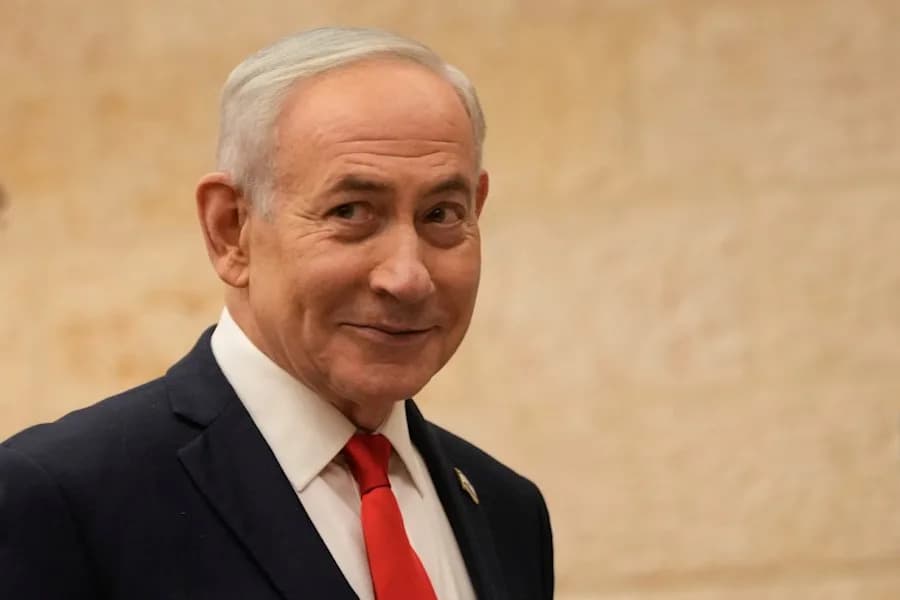
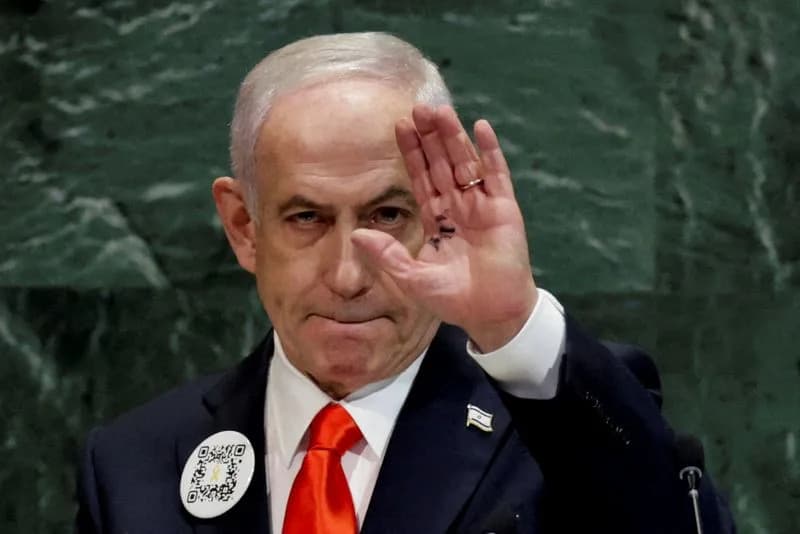
The historic bipartisan U.S. consensus on Israel is splintering as Israel’s Gaza offensive, tensions with Iran and Prime Minister Netanyahu’s alignment with U.S. Republicans deepen divisions among Democrats. Nearly half of House Democrats recently backed an amendment to suspend aid, and public opinion—especially among younger voters—has shifted sharply. High-profile primaries in Michigan, Florida and Colorado are turning Israel policy into a central campaign issue, while October’s Israeli election could reshape U.S.-Israel ties.
Gaza War and Netanyahu's GOP Ties Fracture Democratic Support for Israel
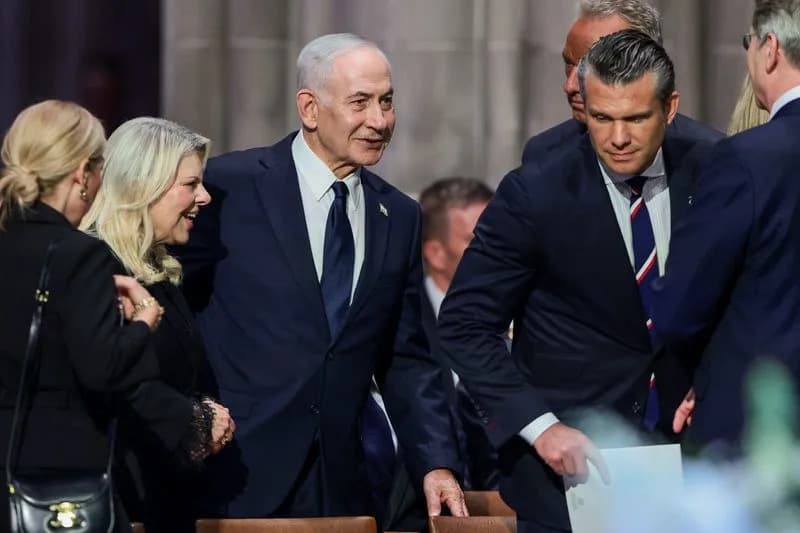
FILE PHOTO: Israeli Prime Minister Benjamin Netanyahu with his wife Sara, U.S. Defense Secretary Pete Hegseth and other officials on the day of the funeral service for late U.S. Senator Lindsey Graham (R-SC) at Washington National Cathedral in Washington, D.C., U.S., July 28, 2026. REUTERS/Evelyn Hockstein/File Photo
For decades, bipartisan consensus in Washington kept U.S. support for Israel steady. That compact is now fraying as Israel's military campaign in Gaza, growing tensions with Iran and Prime Minister Benjamin Netanyahu's close alignment with U.S. Republicans create deep divisions within the Democratic Party.
A Shifting Congressional Landscape
This month nearly half of House Democrats backed a failed amendment to suspend U.S. aid to Israel — a vote that would have been unlikely even a few years ago. Israel receives roughly $3.8 billion a year in U.S. military aid and has been granted additional billions through emergency appropriations in recent years. High-profile Democrats split on the measure: House Leader Hakeem Jeffries and several lieutenants opposed it as overly broad, while former Speaker Nancy Pelosi and Whip Katherine Clark supported it.
Primary Races Turn Into Policy Referendums
Primary contests from Michigan to Florida and Colorado are becoming tests of where Democratic voters stand on Israel. In Michigan’s competitive Senate primary, AIPAC-backed Haley Stevens emphasizes the economic and security benefits of a close U.S.-Israel relationship, while progressive Abdul El-Sayed sharply criticized continued funding and called attention to humanitarian concerns in Gaza. Similar dynamics have played out in House and Senate primaries across several battleground districts.
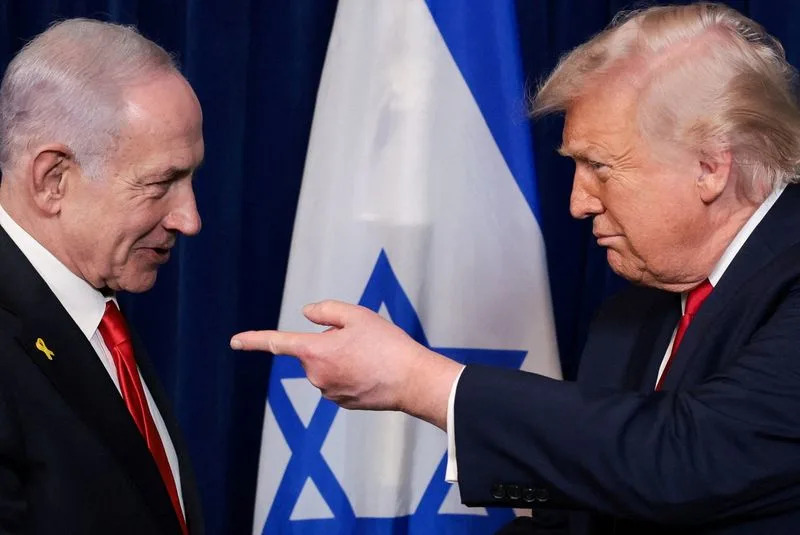
FILE PHOTO: U.S. President Donald Trump points his finger towards Israeli Prime Minister Benjamin Netanyahu during a press conference after meeting at Trump?s Mar-a-Lago club in Palm Beach, Florida, U.S., December 29, 2025. REUTERS/Jonathan Ernst/File Photo
Public Opinion and Generational Change
Public attitudes toward Israel have shifted markedly. A June Quinnipiac University poll found 48% of voters and 66% of Democrats saying the United States is too supportive of Israel, up from 16% and 20% in 2017. The Gaza offensive has intensified opposition among younger voters and sparked campus protests that have pressured elected Democrats to reassess longstanding policy positions.
Accusations, Responses and Political Echoes
A United Nations inquiry and several human rights organizations have accused Israel of actions that they characterize as genocidal in Gaza; Israel rejects those charges and says its operations target Hamas while seeking to reduce civilian harm. The political fallout includes calls for accountability from some local officials and sharper criticism from progressive groups, while pro-Israel organizations and many Republicans continue to defend U.S. support.
Voices and Perspectives
Senator Chris Coons, the top Democrat on the Senate Foreign Relations Committee, said he hopes October’s Israeli elections may help restore bipartisan backing by producing leadership change: "New governments get to change direction," he told Reuters. Danny Danon, Israel’s U.N. ambassador, emphasized that support for Israel remains mainstream across broad segments of both parties. Scholars and analysts—such as Shibley Telhami—describe the moment as a potential paradigm shift, driven in part by a backlash against Netanyahu’s right-wing alliance.
What Comes Next
With tight House margins and competitive Senate and gubernatorial races ahead, U.S. policymakers face growing pressure to clarify whether aid should continue unchanged, be restricted to defensive capabilities, or be paused altogether. October’s Israeli elections and continued public debate in the United States could reshape long-standing bipartisan ties between the two nations.
Key facts: Nearly half of House Democrats voted for an amendment to cut aid; Israel receives about $3.8 billion in annual U.S. military assistance; Quinnipiac finds two-thirds of Democrats now think the U.S. is too supportive of Israel.
Help us improve.