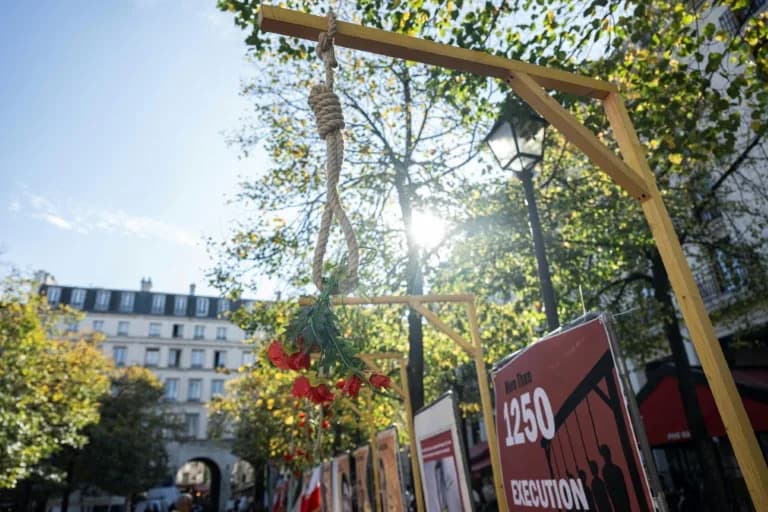
Iran executed two young men in public Tuesday in Isfahan's Shahid Alikhani Square for alleged roles in the Jan. 8 protests, prompting onlookers to chant "Dishonorable" while security forces used tear gas. The judiciary says the two were convicted of moharebeh, efsad-fil-arz and other violent offenses; rights groups, U.N. experts and the NCRI say the trials were closed, lacked due process and relied on coerced confessions. The executions are part of a wider crackdown on nationwide protests that began in late December, and U.N. experts warn remaining defendants face imminent risk of execution.
Iran Publicly Hangs Two Men After January Protests; Crowd Shouts 'Dishonorable' As Security Fires Tear Gas
Iran protests
Iran publicly executed two young men on Tuesday in Isfahan's Shahid Alikhani Square for their alleged roles in the Jan. 8 anti-government demonstrations, witnesses and the exiled National Council of Resistance of Iran (NCRI) said. Onlookers reportedly chanted "Dishonorable, dishonorable!" before security forces fired tear gas and deployed personnel on rooftops and surrounding streets to disperse the crowd.
What Authorities Say
Iranian state media and the judiciary identified the executed men as Abolfazl Sepahi Badjani and Amirhossein Safari Hosseinabadi. The judiciary said they were convicted of moharebeh (commonly translated as "enmity against God"), efsad-fil-arz ("corruption on Earth"), arson and destruction of public property, and actions linked to the deaths of four State Security Force officers. Officials also alleged the defendants had firearms and Molotov cocktails and said convictions relied on police reports, cellphone evidence, witness testimony, confessions and a crime scene reconstruction.
Rights Groups and U.N. Concerns
Human rights organizations, the NCRI and U.N. experts challenged the fairness of the proceedings. They say several defendants were arbitrarily detained — in some cases after enforced disappearance — denied meaningful access to counsel, subjected to ill-treatment, and convicted following closed-door hearings without clear individual culpability. The U.N. experts warned this week that the remaining defendants in the Alikhani Square case face an imminent risk of execution.
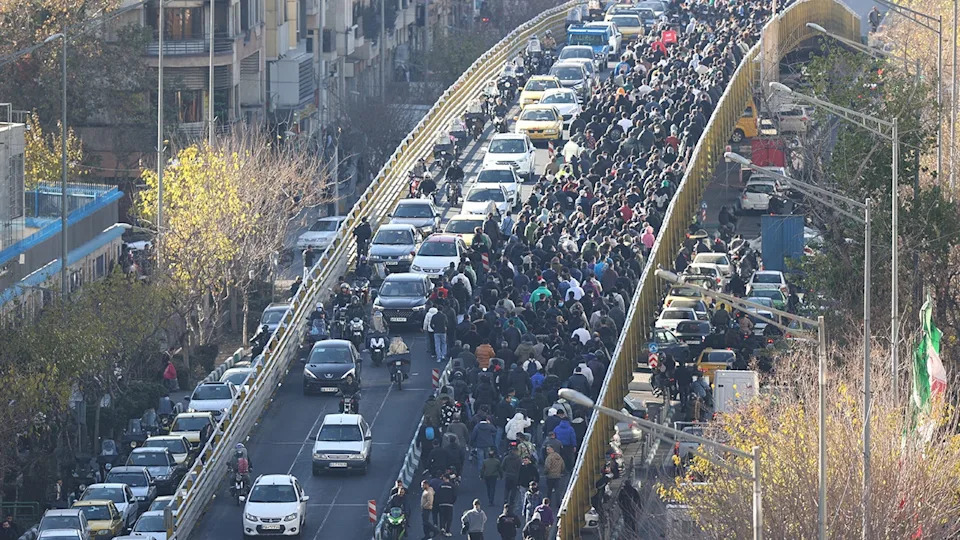
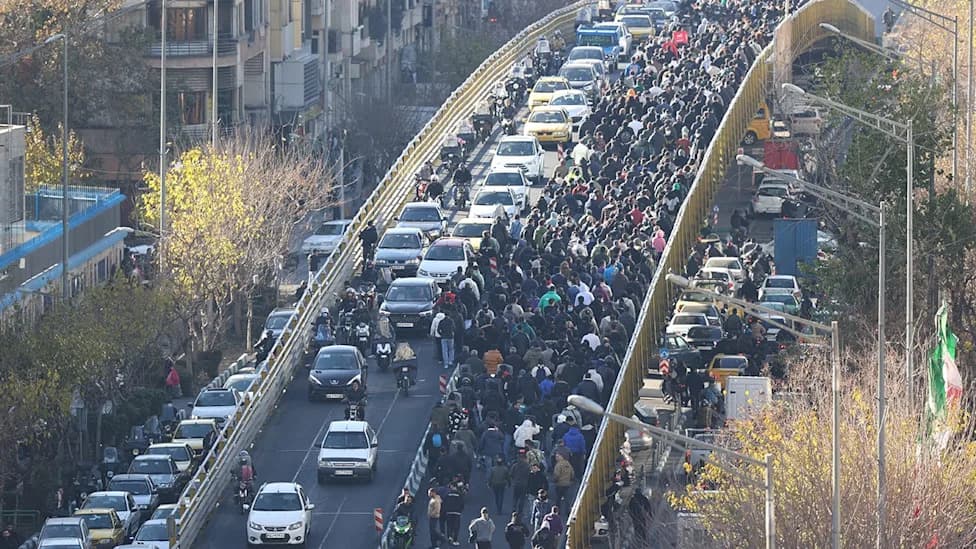
Protesters march in downtown Tehran, Iran, Monday, Dec. 29, 2025.
"Fearing public outrage over this brutal crime, the regime's suppressive forces had deployed agents in the surrounding streets and on rooftops," NCRI President-elect Maryam Rajavi said in a statement posted on X.
Human Rights Watch has reported that at least 50 people have been executed in the past four months on broadly defined national security charges, a figure cited by rights groups to underscore the scale of recent capital punishments. Iran Human Rights director Mahmood Amiry-Moghaddam described public executions as a tactic intended to instill fear and deter further protests, calling them a "cruel form of state terror."
Case Context
The two men were among 12 defendants sentenced to death in the case tied to events in Alikhani Square; two other defendants, Erfan Esfandiari and Gol Mohammad Mohammadi, were executed on July 19, bringing the number executed in this case to four. The protests that began in late December — initially driven by economic grievances and broader social discontent — escalated into a nationwide movement that authorities have met with sweeping arrests and harsh sentences.
This incident deepens international concerns about due process and the use of capital punishment in politically charged cases. International observers and rights groups continue to call for transparent investigations, access to counsel, and for all defendants' sentences to be reviewed under fair-trial standards.
Help us improve.