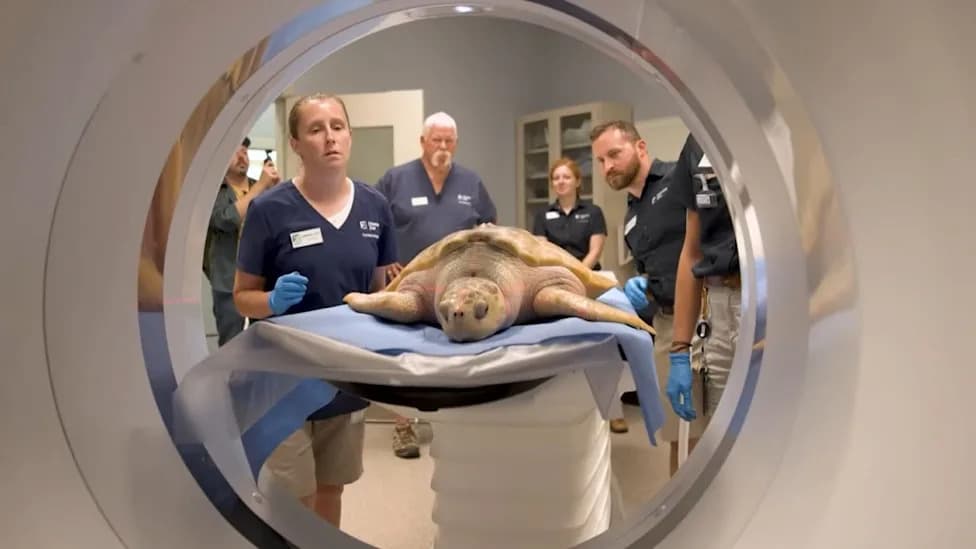
DoE volunteers rescued a 400‑pound adult female green sea turtle from a ground‑level pool at Rum Point on July 16, lifting, health‑checking, tagging and releasing her. Officials say artificial light, removed coastal vegetation and built features can disorient nesting turtles and hatchlings. The DoE urges property owners to reduce beachfront lighting, preserve native vegetation and secure or raise ground‑level pools during nesting season.
Cayman Rescue: 400‑Pound Green Sea Turtle Pulled From Pool and Returned to Sea
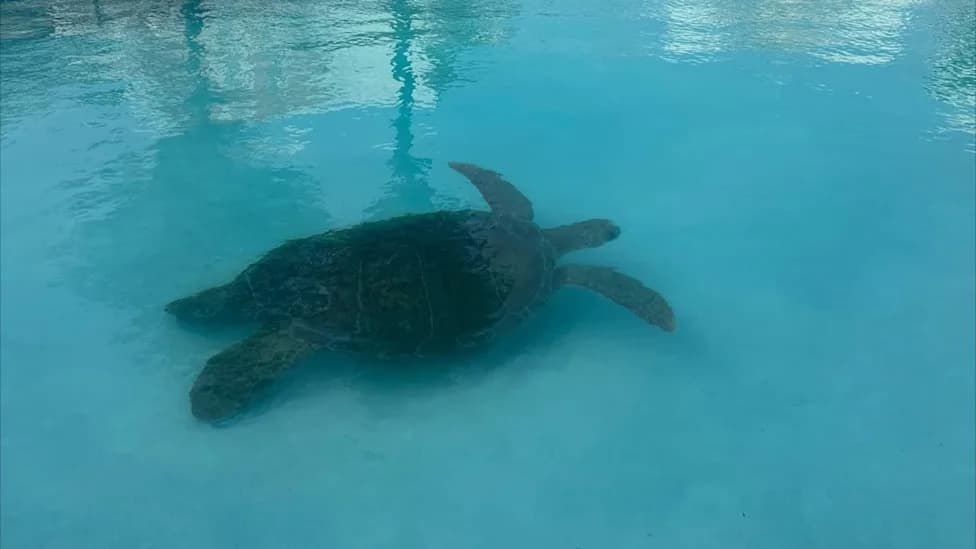
Photo Credit: Cayman Islands Department of Environment
A routine beach‑monitoring patrol in the Cayman Islands turned into an extraordinary wildlife rescue on July 16, when Department of Environment (DoE) volunteers found a 400‑pound adult female green sea turtle trapped in a swimming pool at Rum Point.
Rescue, Check and Release
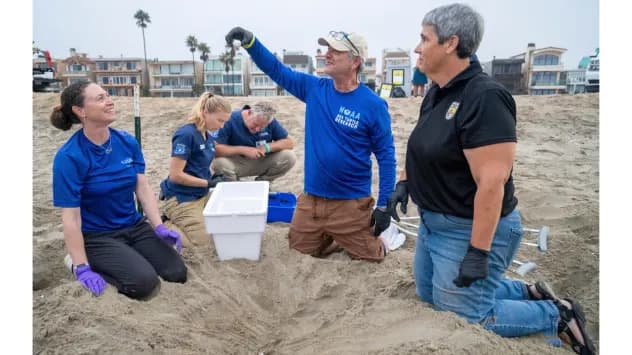
Conservation staff and members of the islands' Turtle Team worked together to lift the turtle from the pool, perform a health check, fit her with a tag, and return her to the ocean. Officials said the animal did not appear to be in poor condition.
"Getting a 400‑pound turtle safely out of a swimming pool is no small feat, but the team removed her, checked and tagged her, and released her back to sea," the DoE wrote on Facebook.
Why This Happens
Rescuers believe the turtle became disoriented after coming ashore to nest and wandered inland into a developed area instead of returning to the water. Artificial beachfront lighting, the removal of natural coastal vegetation, and built features such as ground‑level pools can mislead or trap nesting adults and hatchlings.
Hatchlings rely on a behavior called sea finding, which normally directs them toward the ocean's bright, low horizon under moonlight and starlight. Artificial lights from buildings, flashlights, or other development can lure them inland and away from safety.
Practical Steps To Reduce Risk
The DoE used the rescue to urge beachfront property owners and visitors to take simple precautions during nesting season:
- Keep native coastal vegetation intact to provide natural shade and guidance.
- Reduce artificial light visible from the beach—close blinds, use turtle‑friendly bulbs, and shield lights.
- Remove beach furniture, small craft and other obstacles from the sand overnight.
- Consider raised pools, perimeter barriers, or fencing for ground‑level pools; do not leave empty ground‑level pools unfenced during nesting season.
- Visitors: avoid unnecessary lighting, don't use flashlights on the beach, and keep beach access flat and unobstructed.
Community Impact
The incident, first reported by Good Good Good, highlights how everyday features of developed coastlines can pose serious hazards for vulnerable sea turtles during nesting season. The DoE emphasized that practical beachfront management can help keep more nesting turtles out of danger.
Status: This turtle was safely returned to the sea. The DoE continues to monitor nesting activity and encourages residents and visitors to follow recommended measures to protect turtles.
Help us improve.