Amadou Diol was sentenced to five years for a scheme that used real and forged IDs to rent more than 20 vehicles and route them to buyers who exported the cars overseas. CBP's Baltimore Field Office recovered 307 stolen vehicles in FY2025 (a 23% increase), even as national auto theft fell 23%, indicating an organized export‑oriented trade. Most intercepted cars are 2020–2025 mid‑size SUVs — the same profile as rental fleets — and once a container sails recovery is unlikely. Experts say the solution requires stronger identity verification at rental counters, not better car alarms.
Stolen Rental SUVs Shipped Abroad For a Year — Identity Fraud, Not Hot-Wiring, Fueled The Operation
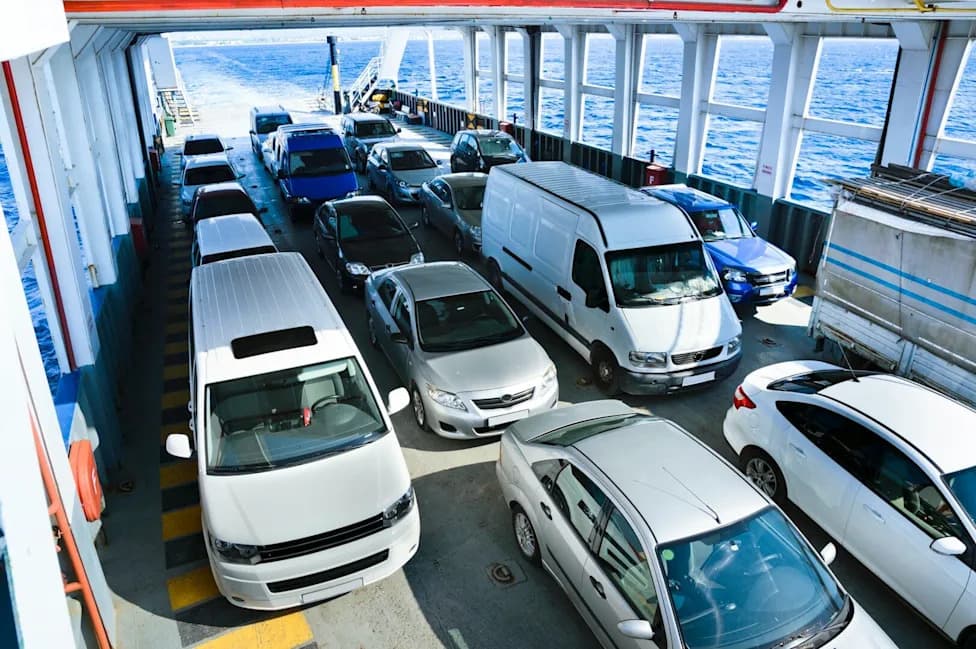
A Rental Car Theft Ring Shipped Stolen SUVs to Ghana for a Year. The Weak Link Wasn't the Car.
Amadou Diol was sentenced to five years in federal prison after admitting to stealing more than 20 rental vehicles — but that prosecution scratches only the surface of a broader, more organized problem.
Federal filings and Customs data show many of those cars likely ended up overseas — often in West Africa, parts of Southwest Asia, and other markets — wearing VINs and paperwork that belonged to people who never authorized the transactions. In practice, the scheme operated less like a traditional smash‑and‑grab car theft ring and more like an identity‑theft business that used rental fleets as its conduit.
How the Scheme Worked
According to the U.S. Attorney's Office for the Eastern District of Pennsylvania, Diol and co‑conspirators spent roughly a year (Dec. 2020–Dec. 2021) renting vehicles across the central and eastern United States, then funneling them to buyers who exported the cars overseas. Diol pleaded guilty to conspiracy and two counts of transporting stolen vehicles; in July a federal judge sentenced him to 60 months in prison plus three years of supervised release.
What made the operation efficient was its minimal reliance on physical tampering. Rather than breaking into cars or defeating immobilizers, conspirators obtained legitimate rental agreements: a signature, a license, and a paid deposit. They used authentic driver's licenses stolen or borrowed from real people who were unaware their identities were being used — and when real IDs weren't available they produced convincing forgeries.
Why Rental Fleets Were Vulnerable
Rental counters are optimized for speed and convenience: a clerk verifies a license, swipes a payment card, and hands over keys. They rarely run biometric checks or deep background screening because extra friction at checkout costs revenue. That design makes late‑returning rentals harder to flag; by the time fraud is noticed the vehicle may already be in another state or loaded into an export container.
Payment methods described in DOJ filings included cash, peer‑to‑peer money‑transfer apps, and in one reported case, barter — a luxury car was traded for a stolen rental. Those informal channels help keep this business largely outside standard financial oversight.

A 2017 Ferrari 488 Spider intercepted by CBP officers in Baltimore before it could be exported to Ghana. (U.S. Customs and Border Protection)
Rising Exports, Falling Domestic Theft
U.S. Customs and Border Protection (CBP) reported that its Baltimore Field Office recovered 307 stolen vehicles destined for export in fiscal year 2025, with an estimated value of $14.5 million — a 23% increase over the prior year. Nationally, CBP recovered 1,251 stolen vehicle exports last year. Remarkably, the National Insurance Crime Bureau simultaneously reported a 23% decline in overall U.S. auto thefts — the lowest level in decades. That divergence suggests export‑focused theft has become a specialized and growing criminal trade distinct from the typical vehicle‑theft patterns that most consumers fear.
"Our seaports are not gateways for criminal organizations to export stolen vehicles," said Matthew Suarez, CBP's acting director of field operations in Baltimore — a reminder that the seaport is the last real chance to stop these shipments.
Where The Cars Go — And What They Are
CBP says about 65% of Baltimore's recoveries were bound for West Africa (including Ghana, Nigeria, Togo, Guinea, Benin, Liberia, Ivory Coast and Senegal) and roughly 20% for Southwest Asia (Iraq, Turkey, the United Arab Emirates and growing demand in Lebanon).
Most intercepted vehicles are mainstream SUVs — not supercars. SUVs made up 73% of recoveries, with the Honda CR‑V, Toyota Highlander, Dodge Durango and Land Rover Range Rover Sport among the most common models. Eighty‑four percent were 2020–2025 model years: new enough to appear showroom‑fresh on arrival, but ordinary enough to avoid special scrutiny at export — in short, the exact profile of rental‑fleet inventory.
Why Recovery Is Difficult
The seaport inspection is typically the final practical checkpoint. CBP officers reconcile manifests, scan containers and run VINs through law‑enforcement databases before a vessel departs. Once a container clears and a ship sails, recovery is functionally unlikely — tracing and retrieval after arrival in places such as Lagos or Accra is extremely difficult.
That difficulty is compounded by long legal timelines. Diol's scheme occurred in 2020–2021 and his sentencing did not occur until July 2025. A multi‑year prosecution cycle provides limited near‑term deterrence to a trade that can convert a stolen SUV into cash in days.
What Needs To Change
The core vulnerability is identity verification at rental counters. Better ID authentication — biometric checks, document‑authentication technology, stronger fraud detection linked to payment processors and law enforcement databases — is more likely to blunt this pipeline than any improvement to vehicle immobilizers. Until rental companies, payment networks and regulators upgrade those controls, the export‑oriented theft market will likely persist.
Bottom line: This is a theft problem disguised as a paperwork problem — and the fix is procedural and technological, not mechanical.
Help us improve.