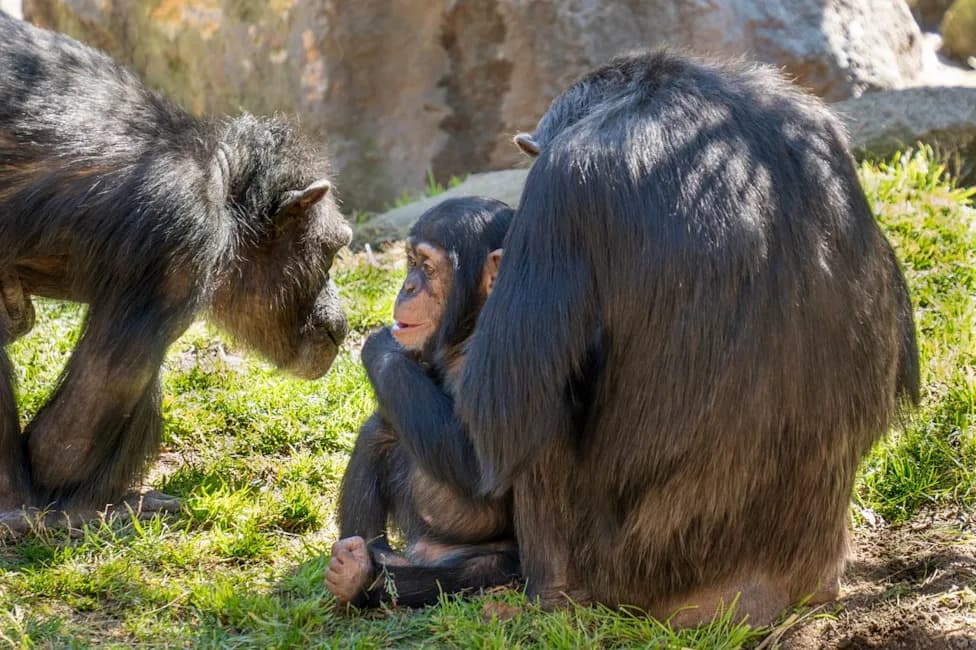
Durham University researchers observed 116 chimpanzees and bonobos across five semi-wild groups using a controlled "peanut swing" to film 60 feeding events. They found that pre-meal touching — hugs, pats and kisses — was associated with calmer, side-by-side eating, though effects varied by group and species. Bonobo reassurance was typically driven by females, while chimpanzee reassurance was led by males and sometimes included the extreme trust signal of placing a hand inside another's mouth. Follow-up studies will test whether these gestures lower stress hormones and promote food sharing.
Hug Trains and Hand-in-Mouth Trust: How Chimps and Bonobos Use Touch to Prevent Food Fights
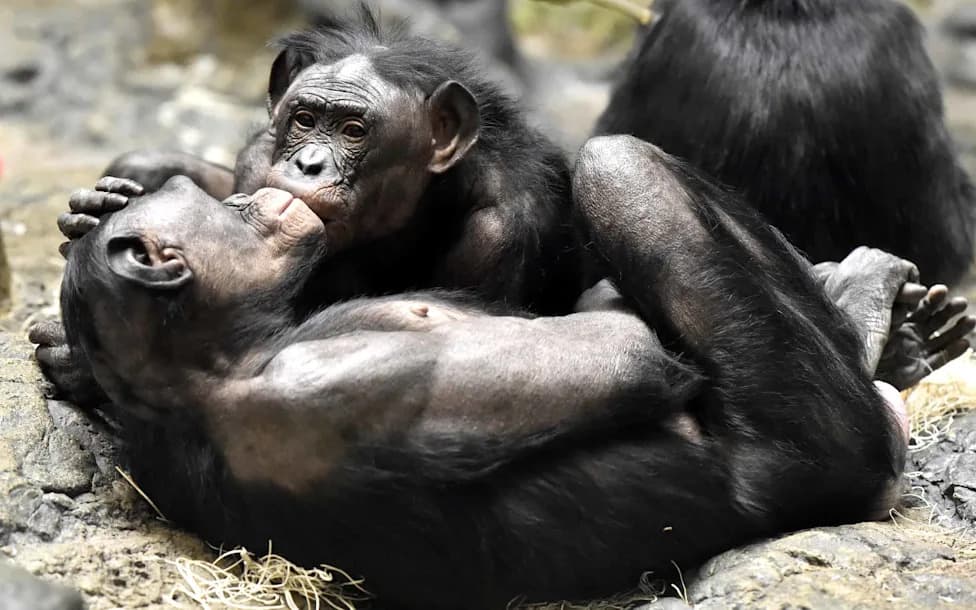
Bonobo kissing© Jeff McCurry/iStock via Getty Images
A new study suggests that chimpanzees and bonobos often defuse potential mealtime conflict not with dominance displays but with physical reassurance — hugs, pats, kisses and even startling gestures of trust.
Study Overview
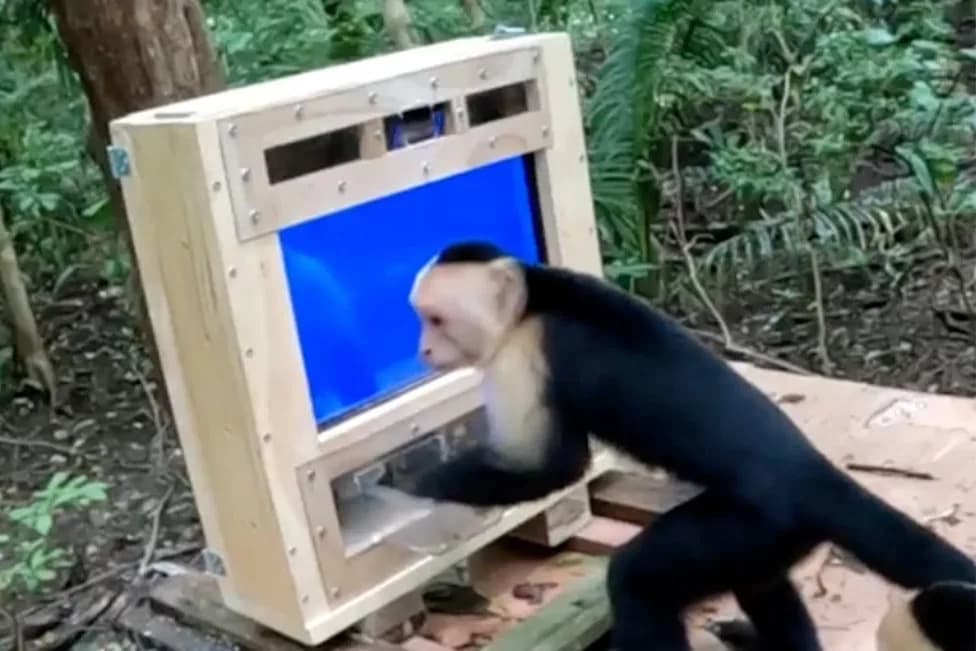
Published in the Proceedings of the Royal Society B, the research was led by Dr. Jake Brooker and Professor Zanna Clay of Durham University. The team observed 116 apes across five semi-wild groups at two African sanctuaries — Lola ya Bonobo Sanctuary (Democratic Republic of Congo) and Chimfunshi Wildlife Orphanage Trust (Zambia). Using a controlled "peanut swing" method, researchers assembled groups, waited roughly five minutes, then dropped food into the centre while filming behaviour before, during and after feeding. The study captured 60 separate feeding encounters.
What They Found
Apes that engaged in more pre-meal touch — including embraces, light pats and kisses — were more likely to eat peacefully side-by-side once food was available. This pre-feeding contact appeared to reduce visible tension while the group waited for food.
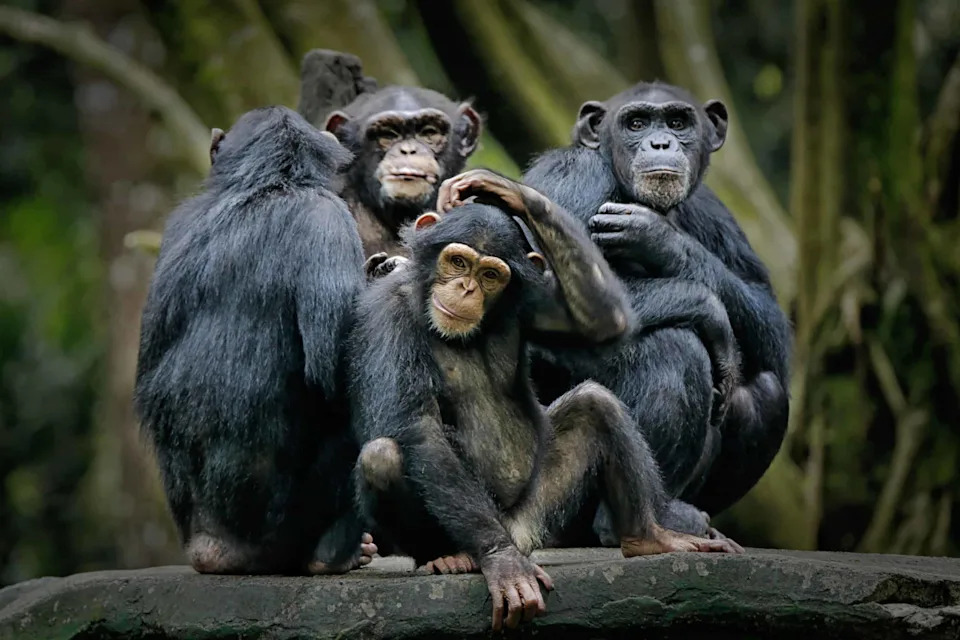
Chimpanzees are highly social animals and were one species involved in the study.©Ari Wid/Shutterstock.com
However, the pattern varied across groups and species. In one chimpanzee group, extensive pre-meal touching coincided with reduced communal sharing after food arrived. Groups with stronger dominance hierarchies were less likely to engage in pre-meal touching, suggesting that social structure shapes whether reassurance behaviours occur.
Species and Sex Differences
Bonobo reassurance tended to be driven by female bonds: females were most often the initiators of pre-meal touch. Chimpanzee groups rely more on male alliances, and males were typically the ones initiating comforting gestures. Among chimpanzees, researchers also recorded particularly striking trust behaviours: individuals slipped fingers or entire hands into another chimp's mouth. Because chimpanzees can and do bite fingers during intense conflict, this act is interpreted as a strong signal of trust.
"You watch males place their teeth onto others' backs and shoulders or shove their hands into each other's mouths and hold them there while panting and making soft calls," Dr. Brooker told Earth.com.
Hug Trains and Reassurance Trains
Brooker described an observed pattern in which males formed a chain of embraces — one male hugging another from behind, a second joining, and so on — which the researchers labeled a "reassurance train" (colloquially described as a "hug train"). This behaviour appears to soothe tension across multiple group members before competition for food begins.
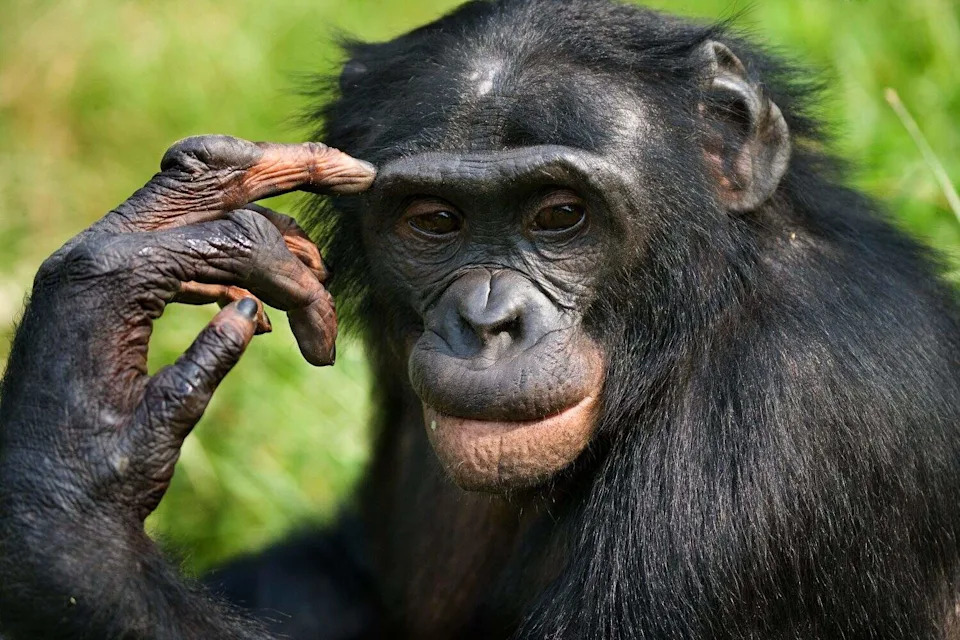
Bonobos were the second species involved in the study.©GUDKOV ANDREY/Shutterstock.com
Interpretation and Next Steps
Researchers caution that while pre-meal touching correlated with calmer communal eating, the study does not prove causation: groups that are already less tense might simply be more likely to touch. To test causality, the team plans follow-up work measuring physiological stress (for example, stress hormones) to see whether reassurance gestures reduce stress levels. They also plan to investigate whether pre-meal reassurance increases subsequent food sharing.
The findings resonate with human behaviour: our tendency to hug or hold hands when stressed may reflect an ancient capacity shared with our last common ancestor. Humans share roughly 98.7–98.8% DNA with bonobos and chimpanzees, underscoring the evolutionary relevance of touch in social bonding and conflict management.
Why It Matters
This study highlights how subtle social behaviours—rather than overt aggression—can manage competition in highly social species. Understanding these dynamics in our closest living relatives improves our knowledge of the evolution of cooperation, trust and conflict resolution.
Help us improve.