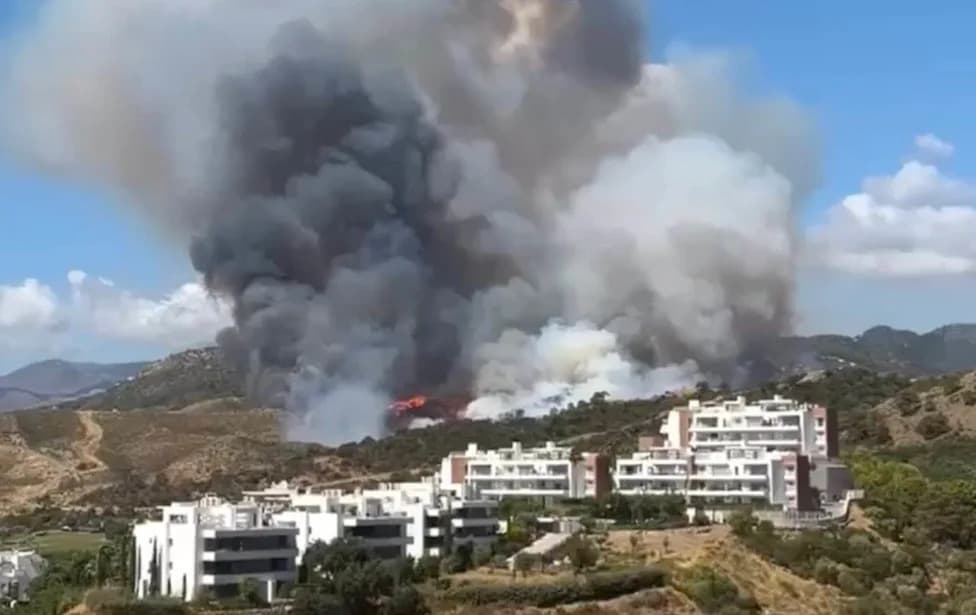
France and Spain are facing an intense wildfire emergency, with roughly 360,000 people ordered to evacuate and about 386 sq miles burned so far. The Bordeaux area and regions around Madrid are among the hardest hit, with large-scale evacuations, destroyed homes and injured firefighters. Authorities warn that an imminent 40°C heatwave, a persistent high-pressure system and drier conditions linked to climate change could worsen the situation.
Europe’s Wildfire Crisis: France and Spain Battle Record Blazes as Heat Wave Looms
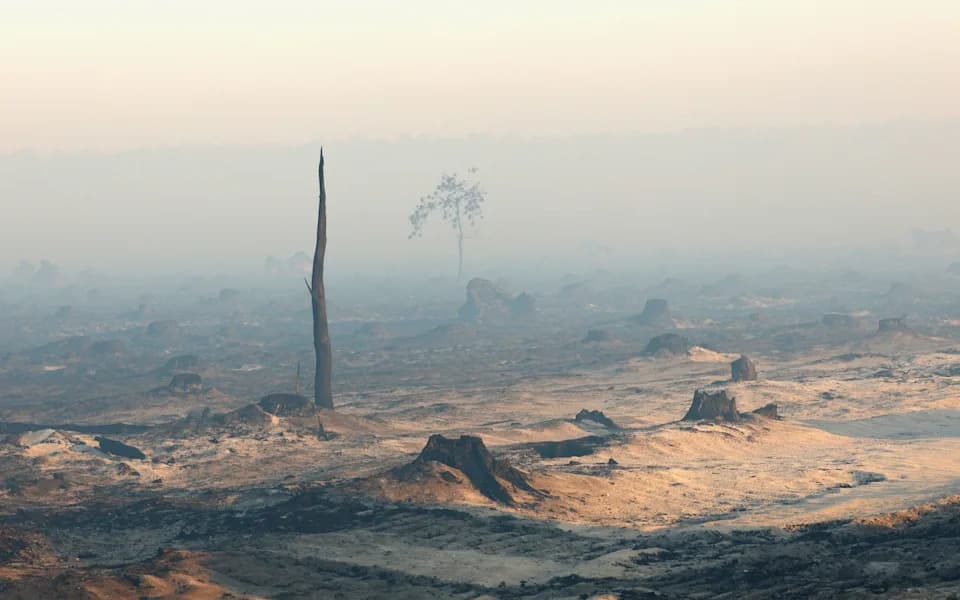
A burnt forest following wildfires near Saumos in Gironde, France. Emmanuel Macron has called for urgency and resilience - Reuters
France and Spain are confronting one of the most severe wildfire seasons in recent memory. Authorities have ordered roughly 360,000 people to evacuate across the two countries, and an additional 4,000 people were moved from their homes in France on Tuesday morning alone. In total, fires have scorched about 386 sq miles of land so far.
France: Devastation Around Bordeaux
Firefighters are racing to contain a major blaze south of Bordeaux as authorities brace for a forecast 40°C heatwave. The fire front is roughly nine miles from the southern edge of the city, an important hub for the region’s wine industry. More than 220,000 people in south-west France have been evacuated since the fires began; local officials report 240 homes destroyed and 93 firefighters injured.
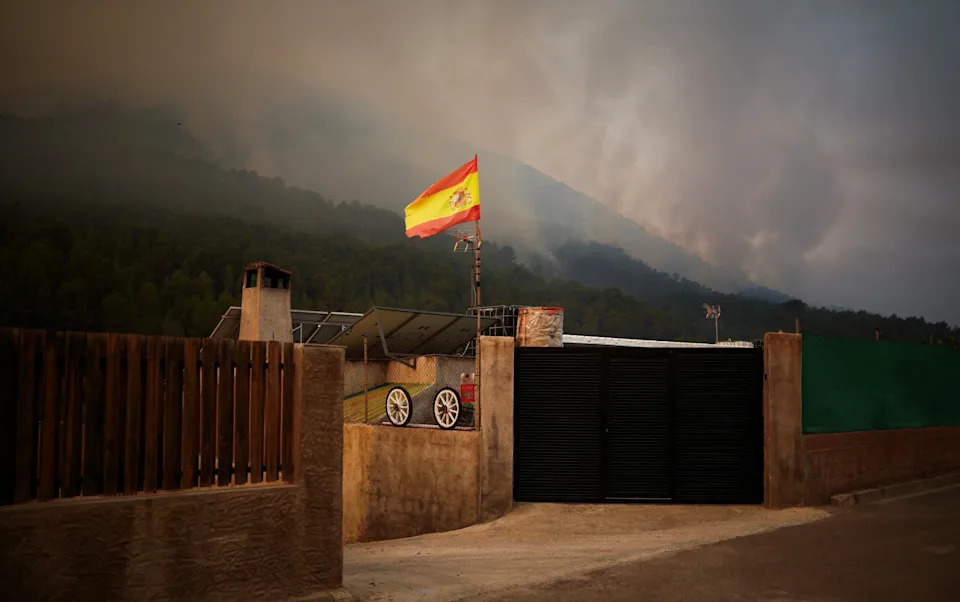
A Spanish flag at a house near a wildfire in Onda, Spain. The country's firefighters are 'turning the tide', according to Pedro Sanchez - Reuters
Over the past two weeks, the Nouvelle-Aquitaine region logged 493 fire alerts—about 89% of all alerts in France during that period, according to Global Forest Watch. The largest blaze south of Bordeaux consumed more than 162 sq miles in under four days. Data from the European Forest Fire Information System (EFFIS), via the Copernicus Climate Change Service, indicate that 334 sq miles have burned in France in 2026 so far—more than at the same point in any previous year.
Spain: Fires Around Madrid and Beyond
Officials in and around Madrid say they are fighting the worst wildfires the region has ever seen. In the Comunidad de Madrid alone, more than 56,500 people have been evacuated and a further 27,797 were ordered to remain at home. Regions outside Madrid have seen large-scale blazes that, collectively, have burned roughly 297 sq miles.

Sign up to the Cables newsletter
In the past fortnight, Castilla y León recorded about 367 fire alerts, Castilla-La Mancha 202, and Comunidad de Madrid 125. EFFIS reports that approximately 679 sq miles have burned in Spain so far in 2026, though reporting lags could raise the final total. Global Forest Watch listed 1,287 “high confidence” fire alerts in Spain up to July 27—well above typical totals at this time of year.
Leadership, Response and Data
Emmanuel Macron: “We have a situation that is more difficult than at any time since the Second World War. We must be realistic: the coming weeks will be tough, and we must persevere. The key is urgency, resilience.”
Pedro Sánchez: “We are indeed turning the tide, and we can begin to see light at the end of the tunnel in the fight against these fires, with every precaution, especially during the complex days and hours ahead.”
Climate Context And Outlook
Experts say hotter, drier conditions linked to climate change are making fires spread faster and burn more intensely. Global Forest Watch notes that France’s wildfire season typically runs from mid-June for roughly ten weeks, while Spain’s season is usually around 15 weeks; forecast heat and a high-pressure system next week raise concerns that the season could lengthen and intensify. Copernicus reports that June 2026 was the warmest June on record in Western Europe and the second warmest globally.
Sources
Key datasets and agencies cited in reporting include the European Forest Fire Information System (EFFIS), the Copernicus Climate Change Service, Global Forest Watch, and news agencies such as Reuters and The Telegraph.
Help us improve.