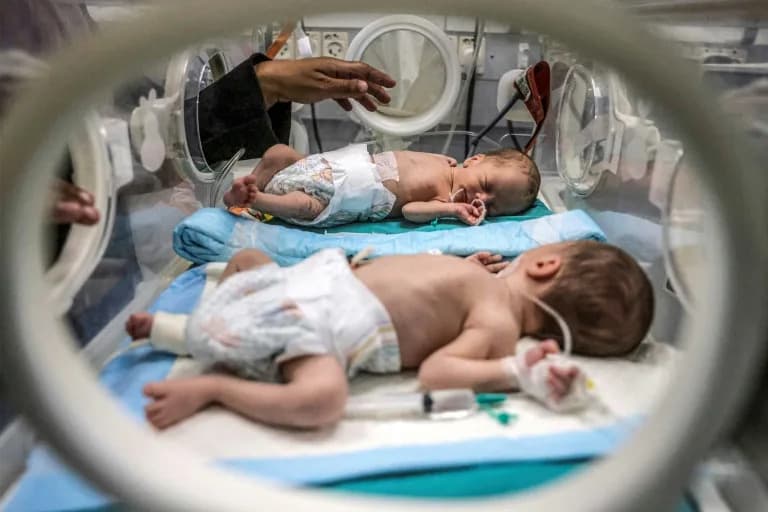
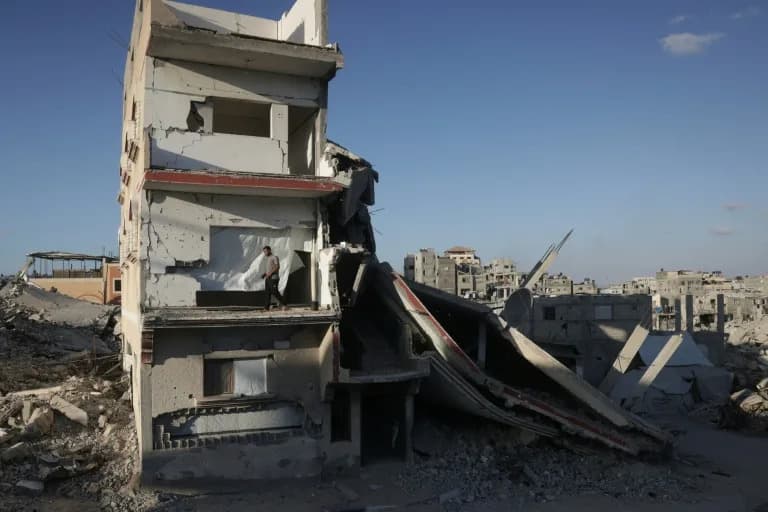
Medical staff and women across Gaza report a sharp rise in miscarriages, stillbirths and premature births since the conflict that began in October 2023. Clinicians link most losses to bombardment, repeated displacement, malnutrition, psychological stress and a collapsing health system. Hospitals face shortages of medicines, staff, power and equipment, worsening maternal and newborn outcomes. The human cost persists long after temporary ceasefires, as families grieve and prenatal care remains disrupted.
‘The Dream I Carried Is Gone’: Miscarriages Surge as Maternal Care Collapses in Gaza
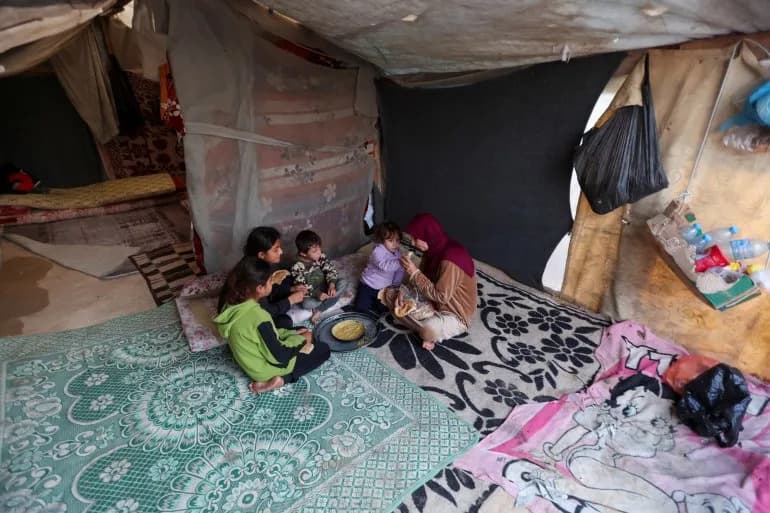
A displaced Palestinian mother has a meal with her children inside a tent in Deir el-Balah. The war has led to malnutrition and psychological strain, which has taken a particular toll on pregnant women [File: Ramadan Abed/Reuters]
Deir el-Balah, Gaza — For years Nuha Abu Lebda dreamed of becoming a mother. She says the conflict that began in October 2023 and the repeated displacements that followed transformed that dream into repeated loss.
Firsthand Accounts
Abu Lebda says she lost three pregnancies after months of bombardment, hunger, fear and inadequate medical care. "I miscarried because of the air strikes, the displacement, the difficult conditions, the lack of clean water and malnutrition," she told Al Jazeera.
"When I lost my baby, I was exhausted. I woke up hoping my baby was still inside me. But the dream I carried for 10 years was gone."
She sold jewelry and nearly everything she owned to pay for heparin injections prescribed to some pregnant women to reduce blood clotting. Despite the treatment, her pregnancies did not reach term. "I cried so much because I lost the baby I dreamed of every single day," she said.
Other Families’ Losses
Across Gaza, women describe miscarriages, stillbirths, premature births and newborn deaths amid bombardments, displacement and a collapsing health system. Mai Zaqout said she lost a daughter who had died in utero because she could not access necessary medical care. "She had already died inside my womb for a month, but I could not deliver her because the medical resources and support I needed were not available," she told Al Jazeera. Her husband had also been killed shortly before the loss.
Sara al-Awad experienced placental abruption after powerful explosions near her neighborhood. With ambulances unable to reach her, she was taken to hospital in a wheelchair and required an emergency C-section. Her son, born at 1.1 kg, spent more than a month in an incubator while fighting continued and the family remained separated from him.
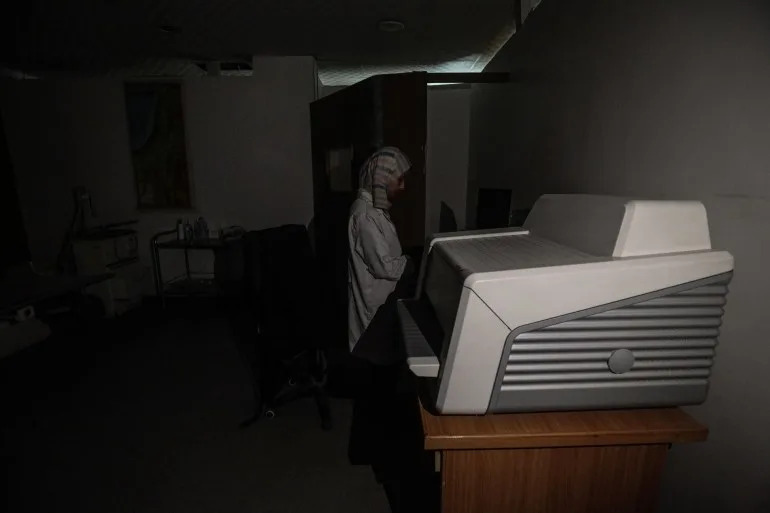
A medical staff member works in the dark at al-Awda Hospital during Israel's war when the facility had to suspend medical services due to running out of fuel needed to operate its electric generators in December 2025 [File: Moiz Salhi/Anadolu Agency]
Others spoke of trauma, malnutrition and toxic fumes from bombardments. "Fear and trauma caused me to lose them," said Nuha Salameh of the twins she carried. Nidaa Seyam reported a second miscarriage and said doctors attributed complications to psychological stress and lack of food.
Medical Perspective
Clinicians in Gaza report a sharp rise in pregnancy losses and complications. Dr Yasser Saadeddine, maternity director at al-Awda Hospital in Deir el-Balah, told Al Jazeera that roughly 70 percent of the pregnancy losses his team treats are linked to the conflict and the blockade.
Doctors point to multiple, interacting causes: prolonged displacement, malnutrition, interrupted prenatal care, shortages of medicines and equipment, poor hygiene, environmental contamination and severe psychological stress. Hospitals also face fuel shortages that at times forced services to scale back or suspend operations, complicating neonatal care such as incubator support.
Wider Consequences
Medical staff warn that miscarriages are part of a broader maternal and newborn crisis that includes stillbirths, preterm deliveries and life-threatening pregnancy complications. Many women have lost medical records and routine check-ups during repeated moves, and health facilities are strained by shortages of staff and supplies.
For grieving families, the effects linger beyond ceasefires. "The war did not end with the ceasefire," one clinician said; for many women, the conflict continues in every lost pregnancy and in every deferred dream of motherhood.
File photos referenced in original reporting show displaced families, crowded tents and hospitals operating under fuel shortages, with generators reportedly running out in December 2025.
Help us improve.