After staff at Fountains Abbey left strips of grass uncut for the filming of Danny Boyle’s 28 Years Later, hundreds of orchids unexpectedly reappeared on the site. The species had not been recorded at the abbey since the 1850s, making the discovery roughly 170 years after the last sightings. The National Trust believes reduced mowing created favourable conditions and plans to adapt site management to protect the orchids while keeping the grounds accessible.
170 Years Later: Orchids Bloom Again at Fountains Abbey After Lawn Was Left Unmown for Film

170 Years Later: Flowers return after lawn abandoned for film shoot
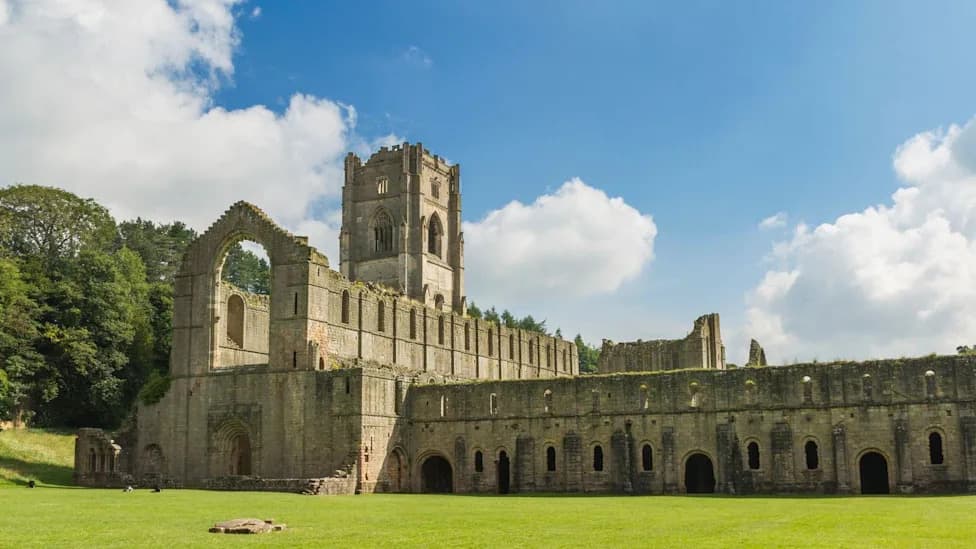
Two years ago staff at Fountains Abbey, near Ripon in North Yorkshire, were asked to leave a patch of grassland uncut to create an “abandoned” look for the filming of Danny Boyle’s 28 Years Later. When filming finished in 2024 and the film was released earlier this year, the National Trust team discovered an unexpected reward: hundreds of orchids carpeting the previously mown lawns.
Unexpected Return
These orchids had not been recorded at the abbey since the 1850s, and there was no living memory of them on the site. The sudden reappearance — roughly 170 years after they were last noted — has puzzled staff and ecologists. The plants are clustered in particular areas of the ruins rather than evenly spread across the grounds and are not confined to formal garden beds.
Experts Call It A Small Mystery
“This is the mystery: how have the orchids survived over time to suddenly come back to life now?” said Mark Newman, an archaeologist with the National Trust.
Newman suggested that orchids such as the early purple would have been common in past centuries and may not have been specifically recorded. He added that reduced mowing likely created the conditions these sensitive plants need to germinate and thrive.
Changing How The Site Is Managed
Rather than returning immediately to regular mowing, Trust staff plan to adapt their land-management approach to help the orchids persist while keeping the site accessible to visitors. “We undoubtedly will adjust how we care for the site in a way that optimises circumstances for the orchids,” Newman said. “They are tricky little devils and picky about what they like and don’t like, so hopefully we will take the best advice and do the right things by them.”
The discovery highlights how small changes in maintenance — in this case leaving some grass uncut for a film shoot — can restore habitats that had been suppressed by modern mowing practices. Newman noted orchids likely thrived "before the age of the lawnmower," when grasslands were more botanically diverse.
Context and Conservation
Fountains Abbey was dissolved in the 16th century and its land was later incorporated into the landscaped Studley Royal Park and water gardens in the 18th century. The National Trust will work with botanists and conservationists to monitor the orchids, adapt mowing schedules, and ensure their long-term protection while balancing visitor access and site management.
Why It Matters: The find is a vivid reminder that even small changes in how we treat urban and historic landscapes can allow locally rare or long-absent species to return.
Help us improve.