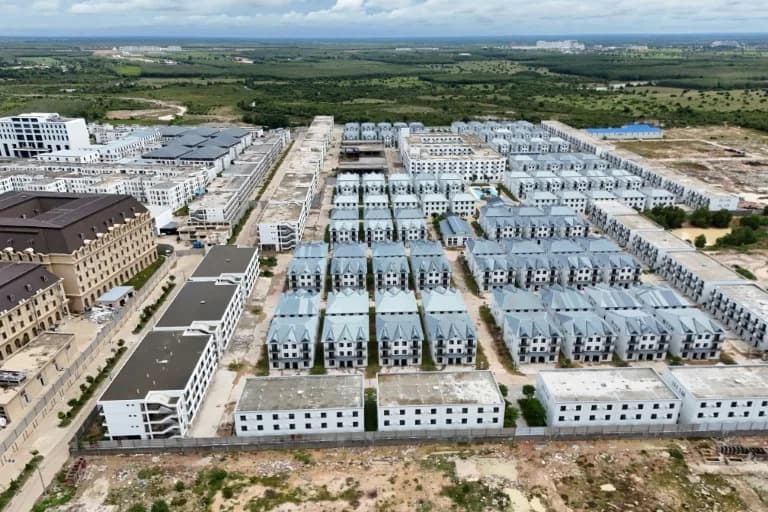
The IOM warns that trafficking networks are forcing hundreds of thousands of people to work in organised online scam centres worldwide. Victims—often recruited with false job offers—are confined and coerced; traffickers now increasingly target English‑speaking university graduates from Africa. The IOM estimates about 300,000 people work in these centres, UNODC estimates $114.1 billion in regional losses last year, and the IOM helped rescue more than 3,500 people between 2022 and 2025.
Growing Crisis: Hundreds of Thousands Trafficked Into Online Scam Centres, UN Agency Warns
FILE PHOTO - A view of the logo of the United Nations at the General Debate of the UN General Assembly in New York. (is associated with: «UN says human trafficking for online fraud rising rapidly») Kay Nietfeld/dpa
The United Nations' International Organization for Migration (IOM) has warned that hundreds of thousands of people are being exploited each year by trafficking networks that force them to work in organised online fraud operations.
What Is Happening?
Victims are frequently enticed abroad with false promises of well-paid employment, only to find themselves confined, closely monitored and coerced into participating in scams. Criminal gangs operating these so-called "fraud centres" have, the IOM says, turned this into one of the fastest-growing forms of human trafficking.
The IOM estimates roughly 300,000 people worldwide are working in such centres, though not all are necessarily victims of trafficking, the agency's director Amy Pope has said.
Who Is Being Targeted?
According to the IOM, traffickers are increasingly targeting people with strong English skills and university degrees, with recruitment notably rising in parts of Africa. Many prospective workers are so desperate for jobs that they do not carefully vet offers. A common red flag is being asked to travel on a tourist visa to work abroad.
Scale and Impact
The United Nations Office on Drugs and Crime (UNODC) in Vienna estimates losses from organised fraud centres reached about $114.1 billion last year across East and South‑East Asia, Australia and New Zealand. Between 2022 and 2025 the IOM assisted more than 3,500 people from 39 countries who had been held against their will in such centres and were later freed. Rescued nationals include people from Indonesia, Bangladesh and Kenya.
What To Watch For
- Unsolicited job offers promising unusually high pay with minimal screening.
- Requests to travel on a tourist visa for supposed employment.
- Controlled movement, restricted communication, or constant surveillance after arrival.
If you or someone you know is facing exploitation, contact local authorities or an accredited international organisation for assistance and verification of job offers before traveling.
Help us improve.