Nicole Russell contends that policies now tagged "far right" — like stronger border enforcement and public-safety priorities — were once common ground among Democrats, citing Barack Obama (2006) and Hillary Clinton (2014). She uses Elon Musk's July 23 interview with The Economist as a lens to argue that media and progressive rhetoric have shifted the Overton window. Russell warns that this reframing deepens polarization by casting formerly mainstream positions as extreme.
When Democrats Once Spoke Like Trump: How the Overton Window Shifted
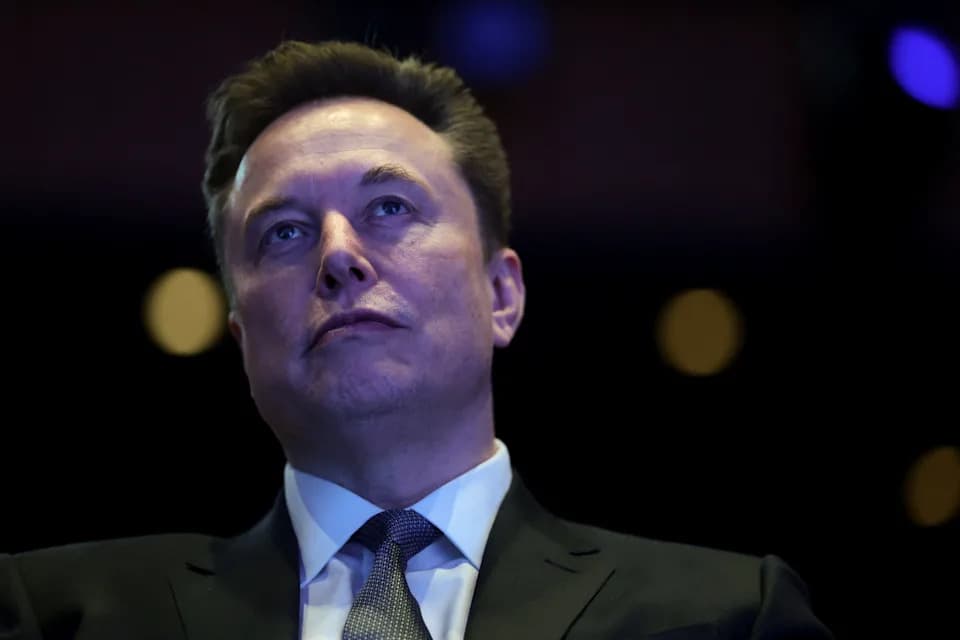
Elon Musk attends the U.S.-Saudi Investment Forum in Washington, DC, on Nov. 19, 2025.
Riddle me this: who said the following lines, and which party did they represent?
"The American people are a welcoming and generous people. But those who enter our country illegally, and those who employ them, disrespect the rule of law. ... Americans are right to demand better border security and better enforcement of the immigration laws."
"We have to send a clear message. Just because your child gets across the border, that doesn't mean the child gets to stay."
If those passages sounded like something from President Donald Trump or his MAGA allies, you'd be surprised: the first was spoken by Barack Obama in 2006, and the second by Hillary Clinton at a 2014 CNN town hall. Two decades later, statements like these feel discordant with the tone many Democrats now use on immigration policy.
How Political Language Moved
Nicole Russell argues that what is now labeled "far right" once fell well within mainstream Democratic rhetoric. To illustrate that shift, she highlights Elon Musk's July 23 interview with Zanny Minton Beddoes of The Economist, where a broad discussion of artificial intelligence and geopolitics turned into a heated debate about politics and the media.
Musk contended that positions he and many others hold — secure borders, safe cities and sensible fiscal policy — were mainstream not long ago and that critics on the left now brand those ideas as extreme. He challenged Beddoes to identify which of those three goals is inherently "far-right fringe."
The Media, Musk, and Polarization
The interview escalated when Beddoes accused Musk of supporting the populist and far right; Musk rejected that label and urged that the exchange be left intact in the published interview. He also pushed back on the press, arguing that journalists enjoy low favorability and that media coverage has helped widen the partisan chasm.
Russell cites historical examples — including Obama's charge that drew the "deporter-in-chief" label and Clinton's town-hall comment — to argue that the Overton window has shifted, making previously common-sense positions appear extreme to parts of the left and to some outlets.
Examples And Implications
The column uses a few contemporary anecdotes to underscore its point: reality-TV personality Spencer Pratt ran for Los Angeles mayor on a law-and-order platform and was labeled "MAGA" by the city's mayor, illustrating how ordinary public-safety proposals can quickly be rebranded as ideologically extreme.
Throughout the piece, Musk's broader theme is that mainstream media and progressive activists have helped redefine acceptable political language, deepening polarization and narrowing bipartisan consensus.
Author note: This is an opinion column by Nicole Russell of USA TODAY. She writes about conservative values, family and religion and lives in Texas with her four children.
Help us improve.