The military-backed Myanmar parliament has passed the Anti-Online Scam Bill, retaining a provision for the death penalty for those who detain or violently coerce people to work in scam centres. The law prescribes sentences from 10 years to life, and mandates capital punishment if an offence causes death. It also includes life terms for running scam centres and for crypto-related scams. The bill is the first legislation enacted by the junta-led government of Min Aung Hlaing, a move critics say was approved by a largely pro-military parliament.
Myanmar Parliament Approves Anti‑Online Scam Law, Retains Death Penalty for Forced Scam Labour
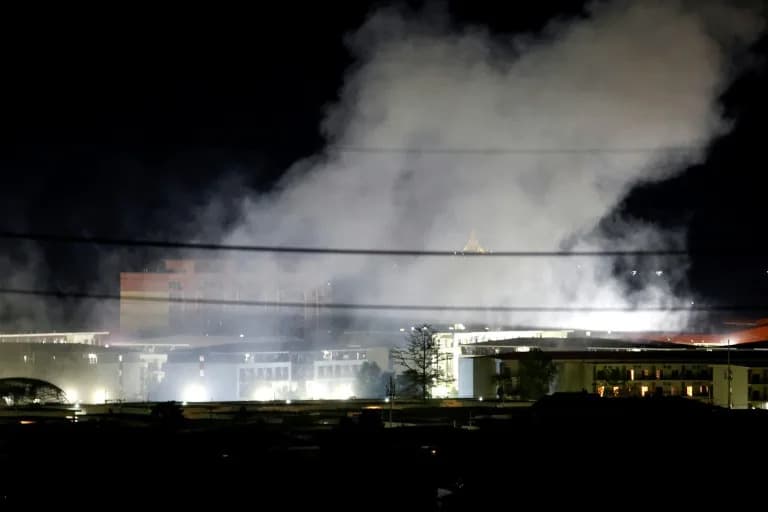
Smoke rises over buildings following an explosion in the KK Park compound in eastern Myanmar, as pictured from Mae Sot District in Thailand's Tak Province on October 24, 2025 (Sarot Meksophawannakul)
Myanmar's military-backed parliament on Tuesday approved the Anti-Online Scam Bill, retaining a provision that allows capital punishment for people who detain or violently coerce victims into working in online scam centres, officials said.
Union Parliament Speaker Aung Lin Dwe announced the bill's passage after lawmakers from both the lower and upper houses agreed on amendments at a combined session in the capital, Naypyidaw. Lower house MP Aye Chan confirmed to AFP that the approved version keeps the death penalty.
Earlier drafts published in May prescribed penalties ranging from 10 years to life imprisonment for those who use "violence, torture, unlawful arrest and detention, or cruel treatment" to force others to commit online scams. The draft states that if such conduct causes a death, "the death penalty shall be imposed."
The legislation also proposes a maximum sentence of life imprisonment for individuals who run online scam centres and for those convicted of digital currency or cryptocurrency scams.
Context and Concerns
Internet fraud factories have proliferated in Myanmar amid the country's civil conflict, forming part of a wider Southeast Asian scam economy that targets victims worldwide with romance and cryptocurrency investment fraud. The sector generates a multibillion-dollar black market and draws both willing workers and, according to some repatriated foreign nationals, trafficked victims who report torture by scam centre operators.
This anti-scam law is the first statute enacted by the government led by former junta commander Min Aung Hlaing. He led a 2021 coup that ousted the elected administration of Aung San Suu Kyi and triggered an ongoing civil war. In April, Min Aung Hlaing assumed the role of civilian president after tightly controlled elections that excluded the detained Nobel laureate and her party.
Analysts and international observers have widely criticised the military-backed parliament as a rubber-stamp body, noting that pro-military deputies dominated the vote. Human rights groups and Western governments have expressed concern about both the political context of the law's passage and the inclusion of capital punishment for offences linked to online scams.
"There were not many significant changes to the proposed draft bill after discussions between the lower house and upper house. The important parts of the bill remained the same," MP Aye Chan said.
Monitors warn that instability from the civil war has created permissive conditions for organised criminal groups to establish fortified compounds that run transnational scam operations. The new law aims to punish the most violent and coercive forms of cyber-enabled fraud, but its passage under a military-backed legislature raises questions about enforcement, accountability, and human rights safeguards.
Help us improve.