At a Detroit cafe, U.S. Rep. Haley Stevens met Jai Singletary, who said he had already voted for her pro‑Palestinian rival Abdul El‑Sayed because of U.S. aid to Israel. The exchange highlights whether Israel policy is driving Michigan voters and whether pro‑Palestinian sentiment crosses racial lines in Detroit's majority‑Black communities. The contest is intensified by nearly $30 million in outside spending from AIPAC supporting Stevens and lingering questions about party unity ahead of the Aug. 4 primary.
In Detroit Cafe, Haley Stevens Confronts Voter Who Backed Pro‑Palestinian Rival Over Israel Aid
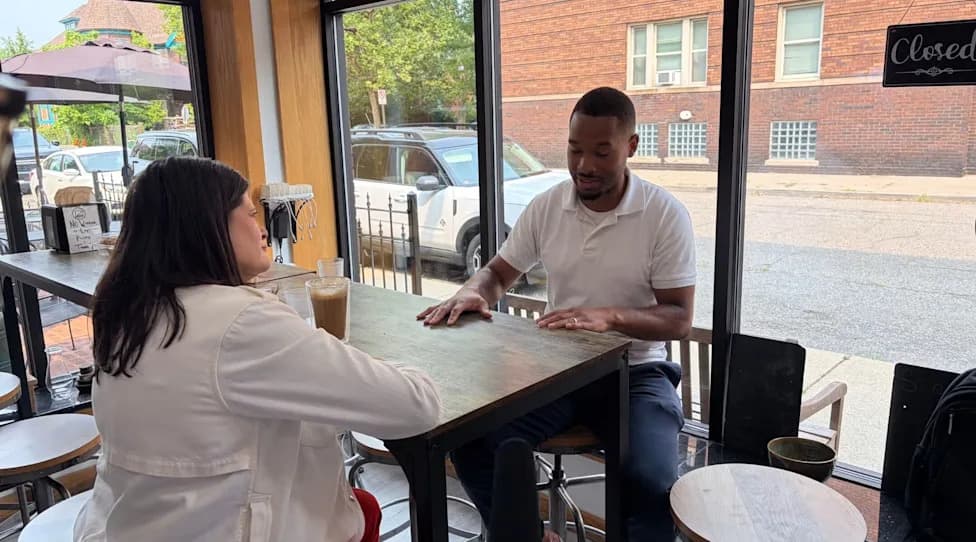
US Rep. Haley Stevens (l), candidate for the Democratic Senate nomination in Michigan, discusses Israel with Jai Singletary, director of a Detroit neighborhood improvement association, in Detroit, Michigan, July 27, 2026. (photo credit: ANDREW LAPIN/JTA)
Hours before a high-stakes televised debate, U.S. Rep. Haley Stevens stopped at The Roost, a cafe and wine shop in Detroit’s Woodbridge neighborhood, for a routine campaign visit that took an unexpected turn.
Stevens, the Democratic candidate in Michigan’s U.S. Senate primary, spoke warmly with owner Jeff Tatum about her record supporting small businesses, even making a cappuccino and joking that the shop used Dial soap like her father’s store once did. She also sought to signal party unity when asked by the Jewish Telegraphic Agency about Jewish Democratic donors who said they might support Republican Mike Rogers if she lost: "I'm on the Democratic team. I'm on the Beat Mike Rogers team."
The conversation shifted when Jai Singletary, director of a local neighborhood development association and a community soccer coach, revealed he had already cast an early ballot for Stevens’ primary rival, former county health director Abdul El‑Sayed. Singletary said Israel policy — specifically continued U.S. aid to Israel — was the decisive issue in his vote.
“Genocide isn't a Palestinian issue. We've all got to care about this,” Singletary told Stevens, adding that he believed the United States bore responsibility for helping achieve peace. “We've got to have the money stay here. I don't think we should be giving any more aid to the State of Israel while they're committing the atrocities they're committing in widespread collective punishment.”
The encounter underscored two central questions shaping Michigan's closely watched Democratic primary: How heavily are voters weighing the Israel‑Palestine conflict when choosing between candidates, and does pro‑Palestinian sentiment cut across racial and community lines in Detroit’s majority‑Black neighborhoods?
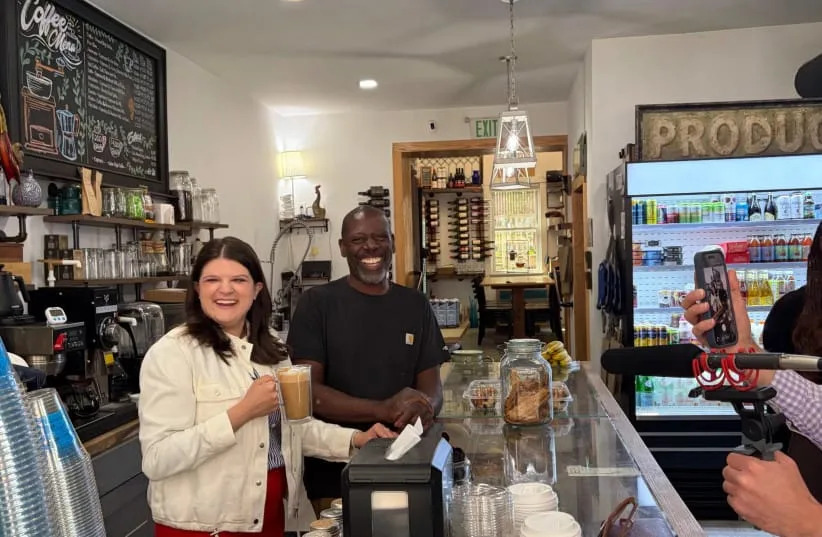
Democratic US Rep. and Michigan US Senate candidate Haley Stevens (l) tries a cappuccino she made during a campaign stop at a cafe in Detroit, Michigan, July 27, 2026. (credit: ANDREW LAPIN/JTA)
Stevens is generally viewed as a pro‑Israel centrist and has been the beneficiary of extensive outside spending; CBS News reports the American Israel Public Affairs Committee (AIPAC) has spent nearly $30 million in outside support for her—its largest single‑race investment to date. El‑Sayed and the insurgent progressive movement backing him have made opposition to U.S. aid to Israel a central theme of his campaign, seeking to turn Stevens’ AIPAC ties into a liability.
Singletary — who told reporters he was not formally affiliated with the El‑Sayed campaign and had dropped in at the cafe at the owner’s invitation — said his vote was "100% exclusive" to the Israel issue. He compared the situation in the occupied territories to Apartheid‑era South Africa and questioned whether U.S. funds (he cited roughly $3.3 billion) could be better spent addressing domestic needs.
The broader contest has exposed fractures within the Democratic Party. Some establishment Democrats have expressed unease with El‑Sayed’s alliances; Representative Hillary Scholten declined to promise she would back El‑Sayed in a general election, citing controversial associations and statements linked to a left‑wing online figure. Meanwhile, Governor Gretchen Whitmer has endorsed Stevens as the primary heads toward a final debate and the Aug. 4 primary.
At the cafe, Stevens listened and engaged: she reiterated support for a two‑state solution, noted a Palestinian supporter among her backers, and mentioned bipartisan work on China‑related legislation with Rep. Ro Khanna — a critic of Israeli policy who has endorsed El‑Sayed. As she left, Stevens appeared to welcome the conversation, pointing out to staff that the man at the table had voted for her opponent but came to speak with her anyway.
The encounter in Woodbridge crystallizes the stakes of the Michigan primary: competing visions of U.S. foreign aid and human rights are influencing Democratic voters and raising questions about party unity ahead of the general election.
Help us improve.