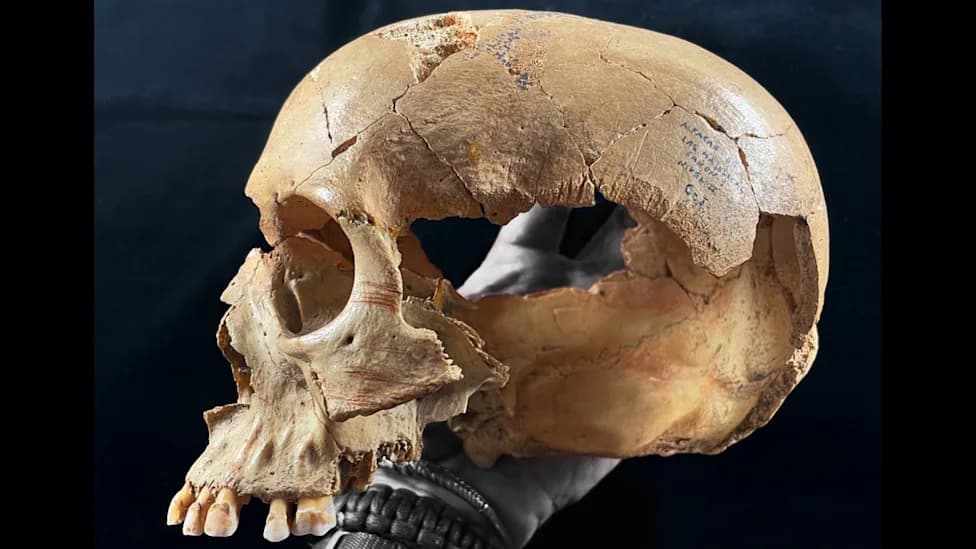
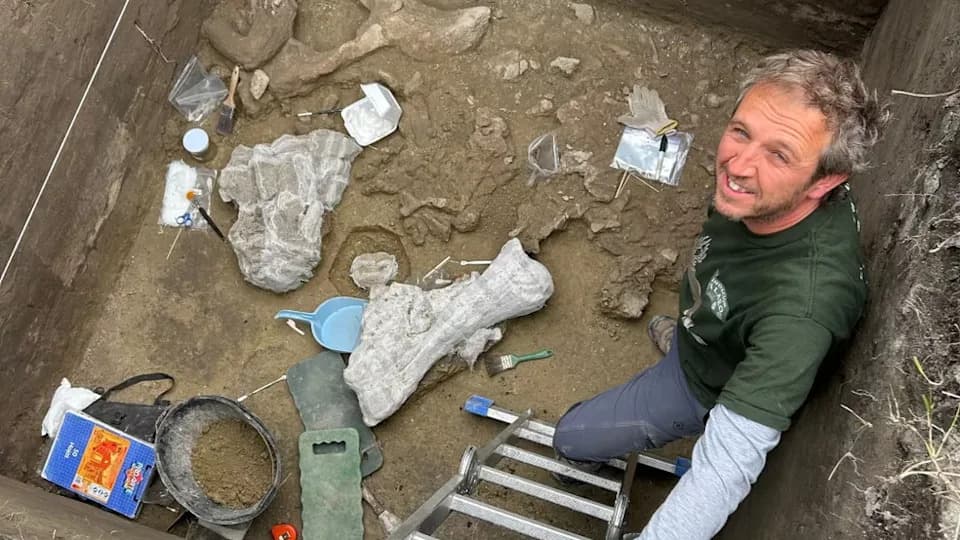
Archaeologists at Gran Dolina (Sierra de Atapuerca) have recovered cut-marked bones and teeth showing that Homo antecessor practiced cannibalism about 850,000 years ago. The new material raises the minimum number of individuals to 13 and includes several adults, overturning earlier views that victims were mostly children. Stone tools matching the cut marks, animal butchery parallels, and human bite marks strengthen the interpretation that bodies were consumed. Further analyses aim to determine frequency, motive, and social context.
Ancient Cannibalism Revealed: Adults and Children of Homo antecessor Found at Gran Dolina (≈850,000 Years Ago)
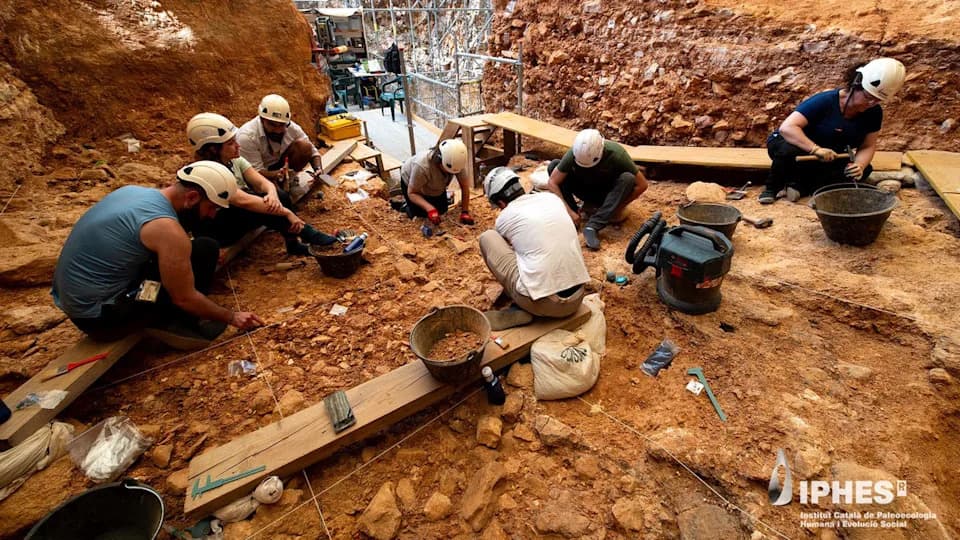
Excavation work at Gran Dolina in Spain, where researchers found evidence of cannibalism inHomo antecessoradults. | Credit: Maria D. Guillén / IPHES-CERCA
Archaeologists excavating Gran Dolina in the Sierra de Atapuerca, northern Spain, have uncovered new fossil evidence showing that the extinct human relative Homo antecessor engaged in cannibalism about 850,000 years ago. The recently recovered material includes cut-marked bones and teeth from multiple individuals — including adults — together with stone tools and animal remains that match the butchery patterns seen on the human bones.
What Was Found
The team from the Catalan Institute of Human Paleoecology and Social Evolution (IPHES) reported about two dozen bones and three isolated teeth from at least 13 individuals. The assemblage contains fragments of skull, vertebrae, arm and leg bones, and notably the first ulna attributed to an adult H. antecessor at Gran Dolina. Roughly half of the minimum number of individuals are now classified as adults.
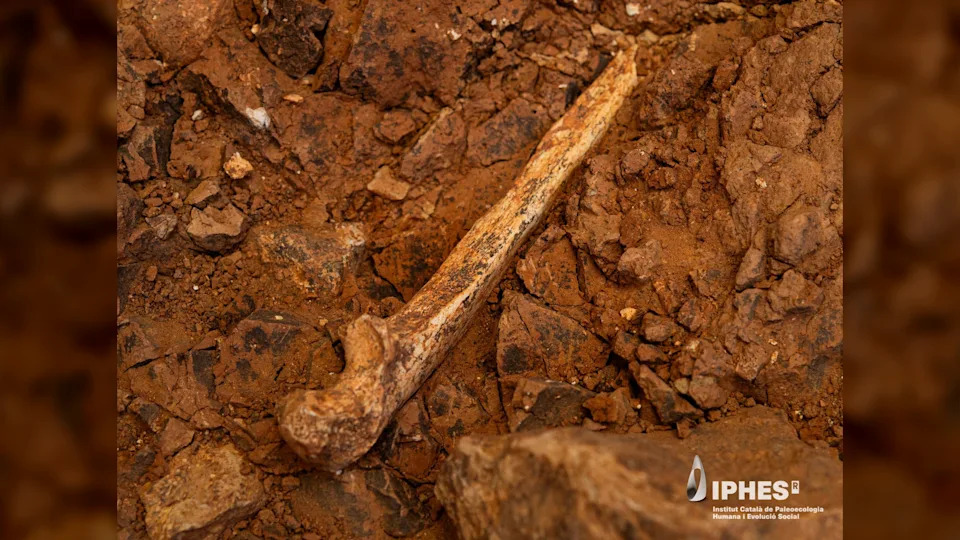
The first-ever ulna (forearm bone) discovered from an adultHomo antecessorindividual at Gran Dolina in Atapuerca, Spain. | Credit: Maria D. Guillén / IPHES-CERCA
Evidence for Cannibalism
Several human bones bear cut marks consistent with stone-tool butchery. Stone tools made of flint, quartzite and sandstone recovered at the site match the orientation and type of marks on the bones. Animal remains from hyenas, beavers, deer, horses and rhinoceroses show similar butchery patterns, strengthening the interpretation that the same techniques were applied to human bodies. Some human bones also preserve human bite marks — one of the clearest direct indicators that the remains were consumed.
Researchers' Observations
Palmira Saladié, a biological anthropologist at IPHES, notes that the presence of adults with cut marks shows cannibalism was not limited to infants and juveniles as previously thought. Andreu Ollé, an IPHES archaeologist, says the expanded sample size gives a more complete view of this population.
Why This Matters
Gran Dolina has long produced the earliest clear evidence of cannibalism among human relatives, and these new finds shift understanding of who was targeted. Earlier work suggested mostly infants and children were victims; the addition of adults challenges that interpretation and raises new questions about the social, nutritional or ritual contexts of the behavior.
Next Steps
Researchers are conducting further analyses to determine age-related patterns, the number and timing of cannibalistic episodes, and what these behaviors reveal about H. antecessor social organization and subsistence. Excavations in the newly opened area of the site continue, and scientists emphasize the potential for more discoveries as work proceeds.
Site: Gran Dolina, Sierra de Atapuerca, Spain
Species: Homo antecessor
Age: Approximately 850,000 years ago
Key evidence: Cut marks matching stone tools, human bite marks, animal butchery parallels, at least 13 individuals (about half adults)
Help us improve.