Aerostar has tested its Lightning high‑altitude balloon launching a single Icarus Apollo‑R drone as a step toward larger Thunderhead "drone motherships" that could carry multiple long‑endurance UAS. Lightning operates near 50,000–78,000 ft for up to ~3 days with a 45 lb payload; Thunderhead targets 55,000–75,000 ft for 60+ days with up to 200 lb. Platforms provide GPS station‑keeping, mesh radios (>100 mile line‑of‑sight links, ~40 Mbps) and enable persistent ISR, comms relay, EW and other effects from austere locations.
Aerostar's Stratospheric 'Drone Motherships': Balloons Launch Long‑Endurance UAS for Persistent ISR and Effects
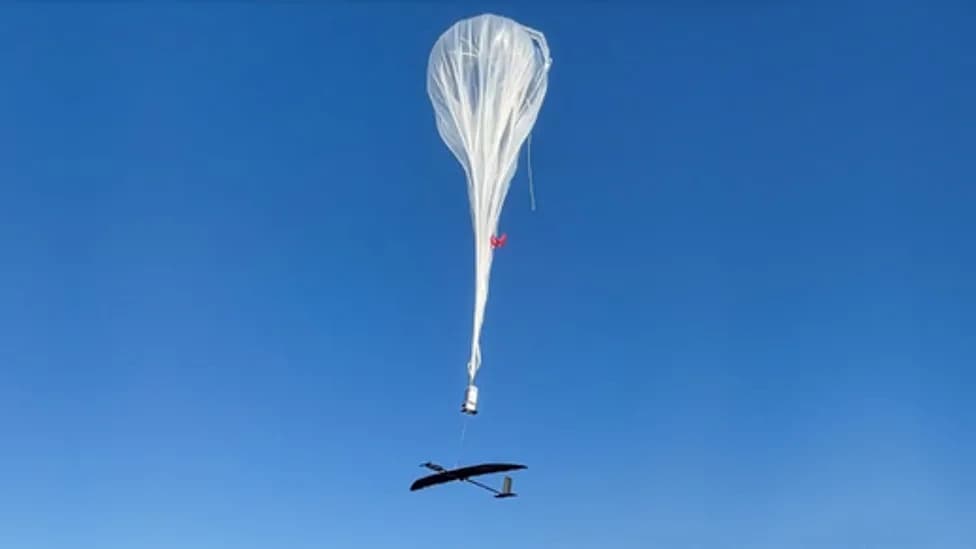
Aerostar is developing stratospheric balloons that act as mobile launch platforms and communications nodes for long‑endurance uncrewed aircraft, a concept the company calls a "drone mothership." Recent tests paired Aerostar's Lightning micro‑balloon with the solar‑assisted Icarus Apollo‑R UAS, demonstrating a tactical configuration that Aerostar says will scale to larger, multi‑aircraft Thunderhead platforms.
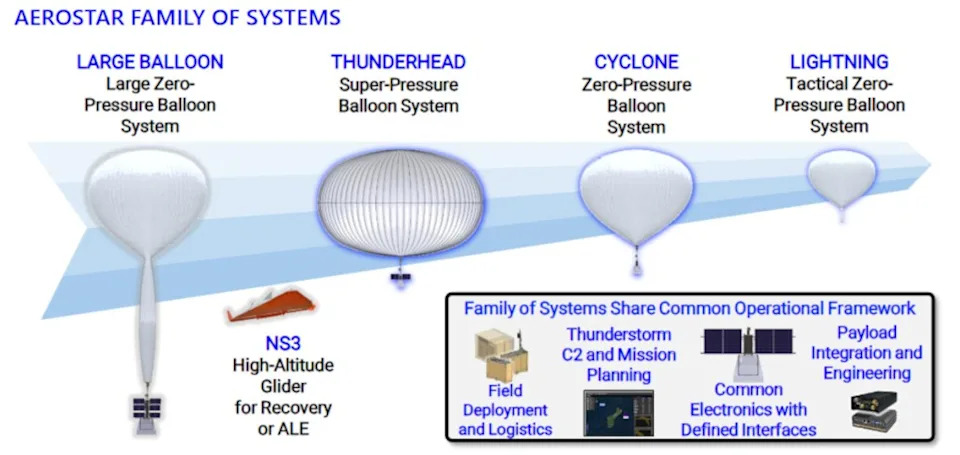
A graphic offering a general overview of Aerostar's full family of high-altitude balloons.Aerostar
What Aerostar Tested
In a recent trial, Aerostar flew its Lightning balloon carrying a single Apollo‑R. The Lightning is a small, tactical balloon designed to operate roughly between 50,000 and 78,000 feet for up to about three days while carrying payloads up to 45 pounds. Aerostar contrasts that with its larger Thunderhead platform, which is designed for typical operations between roughly 55,000 and 75,000 feet, payloads up to about 200 pounds, and on‑station endurance measured in tens of days (60+ days in company materials).
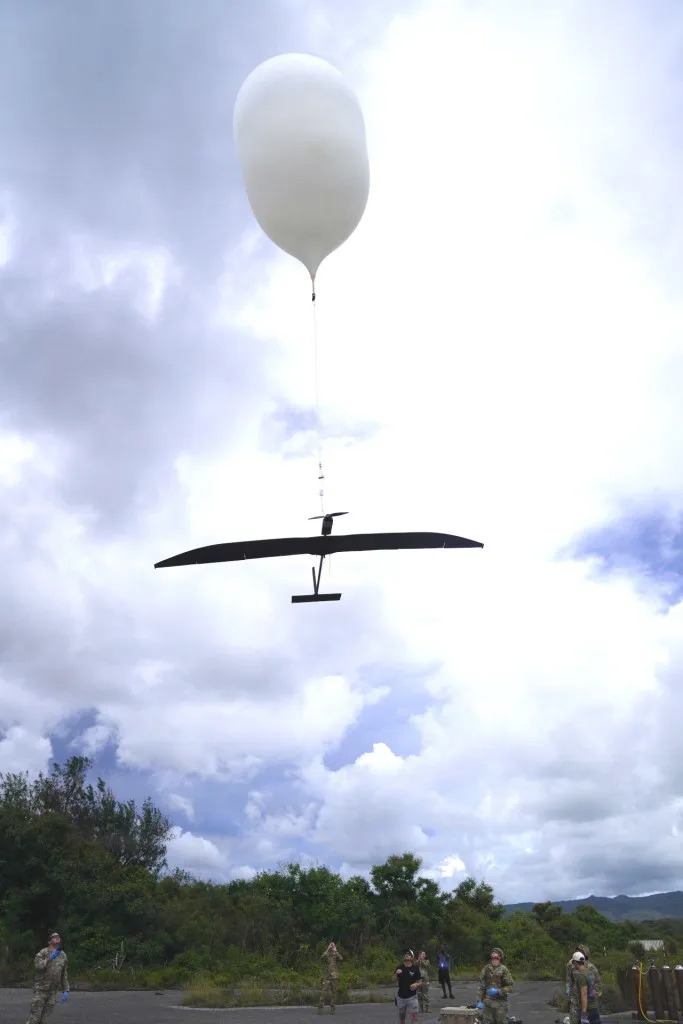
An Urban Sky high-altitude balloon carries an Apollo-R drone aloft during Exercise Valiant Shield 2026.US Army/Sgt. 1st Class Ondirae Abdullah-Robinson
Platform And Drone Capabilities
The Apollo‑R is a solar‑assisted, glider‑style powered UAS optimized for high‑altitude, long‑endurance flights. Icarus and Aerostar have said the baseline Apollo can climb to around 60,000 feet and remain airborne for weeks; the R variant tested is recoverable and intended to be reflown for ISR and relay missions. Aerostar estimates the Apollo‑R price is in the low six figures and notes it can be used in recoverable roles or, if mission needs require, as a one‑way effect.
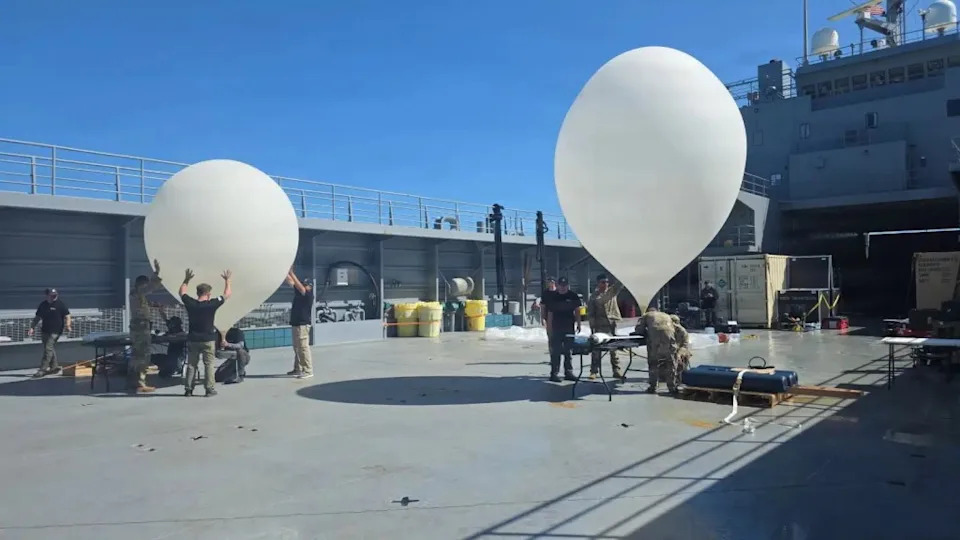
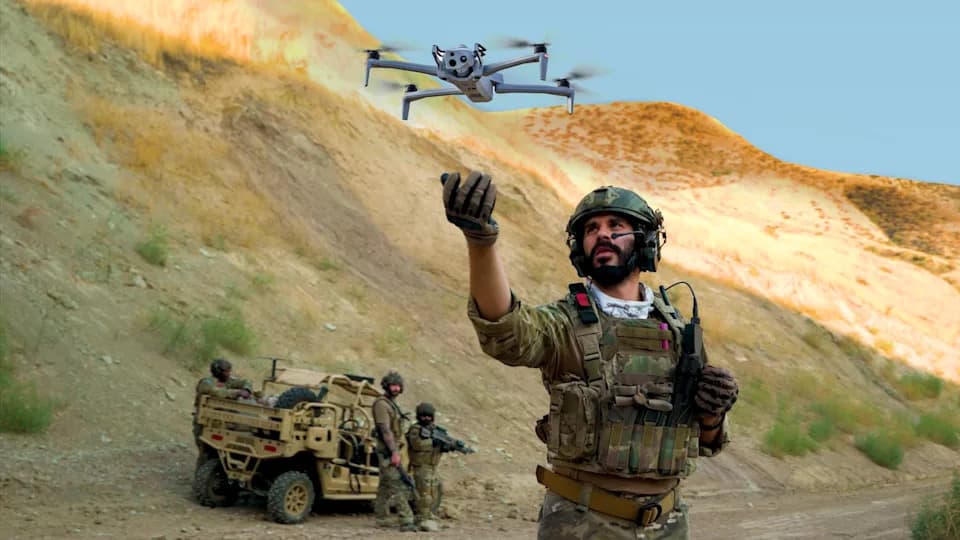
U.S. military personnel prepare to launch balloons with drones attached from the USAVMaj. Gen. Charles P. Grossduring Exercise African Lion 26.Zachary Pickard/US Military
"In the current test configuration with the Aerostar Lightning balloon, it's one Apollo UAS per balloon — the Lightning is our smaller, tactical micro‑balloon designed to carry a single payload. However, the architecture is scalable," said Russ Van Der Werff, Aerostar's Vice President of Stratospheric Solutions.
Communications And Networking
Aerostar equips its balloons with GPS navigation and altitude‑control systems that allow them to transit to an area of interest and hold a general station by modulating altitude. They also carry mesh‑network radios and satellite or line‑of‑sight links. Aerostar reports line‑of‑sight mesh ranges exceeding 100 miles and throughput up to about 40 Mbps, enabling balloons to act as high‑altitude communications towers that extend a UAS's data and control reach well beyond ground‑based links.
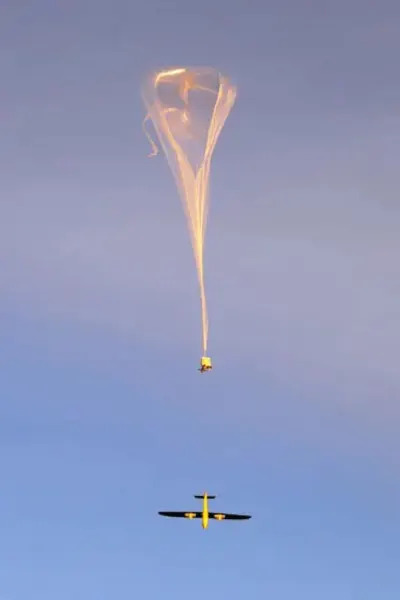
A Tempest drone, with a CICADA under each wing, falls from a high-altitude balloon during a test.USN
Operational Benefits And Use Cases
Balloons provide several operational advantages: expeditionary launch from small teams or ships without runways, extended persistence above conventional air defenses, and a lower per‑unit cost that makes them more attritable than high‑value ISR systems. Potential missions include persistent ISR, communications relay, electronic warfare, decoy operations, and hosting or launching air‑launched effects (ALE) including loitering munitions.
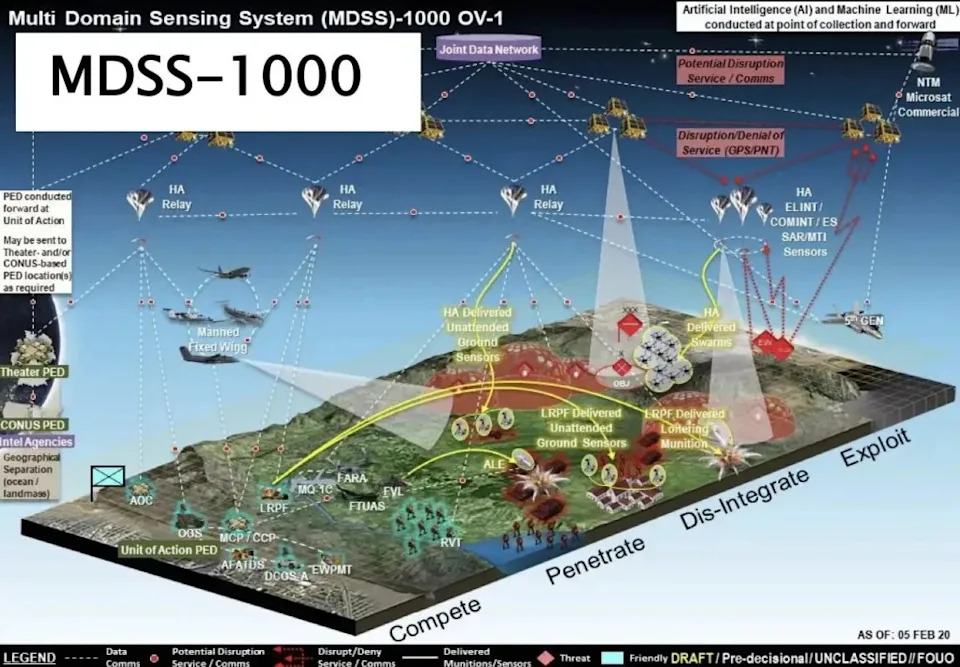
A graphic the Army previously released showing a notional "operational view" for a Multi Domain Sensing System (MDSS), a system of systems that would include high-altitude balloons and other assets.US Army
Context And Program Activity
U.S. services and allied partners have experimented extensively with balloon‑launched drones. The Army demonstrated Apollo‑R launches from another high‑altitude balloon during Exercise Valiant Shield 2026 and supported Apollo‑R development through innovation initiatives. Earlier exercises (including African Lion 26) showed maritime or austere launch options. Internationally, actors such as China, Ukraine and Poland are pursuing related concepts ranging from surveillance balloons to tethered aerostats for early warning.
Outlook
Aerostar positions the Lightning/Apollo pairing as a near‑term tactical capability and a stepping stone to Thunderhead motherships that could carry multiple UAS and ALE kits for coordinated, persistent missions. As balloon and UAS technologies mature, the combination of persistent high‑altitude platforms, mesh networking and long‑endurance drones could change how commanders approach distributed sensing and communications in contested environments.
Contact: [email protected]
Help us improve.