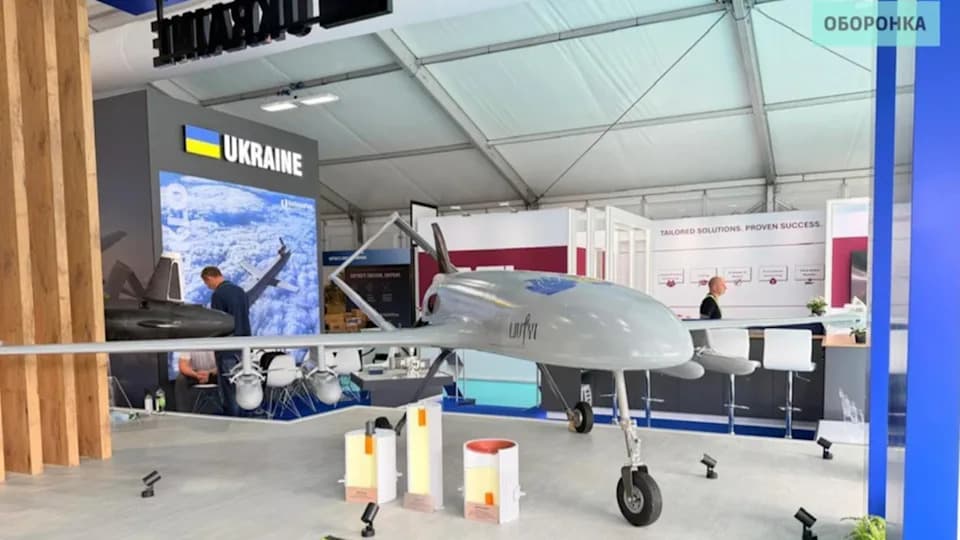
Ukroboronprom showcased a reusable An-196 Liutyi at Farnborough, now configured to carry four compact air-to-surface missiles. The original Liutyi is a propeller-driven, satellite-guided drone with a reported ~2,000 km range and a 50–75 kg warhead, used in long-range strikes. Germany has reportedly funded 500 additional units for about $100 million, while the new missiles are said to reach ~200 km and exceed 500 km/h. Key technical and combat performance details remain unconfirmed.
Liutyi Drone Reborn: Ukraine Converts Kamikaze UAV Into Reusable Missile Carrier
Credit: Oboronka
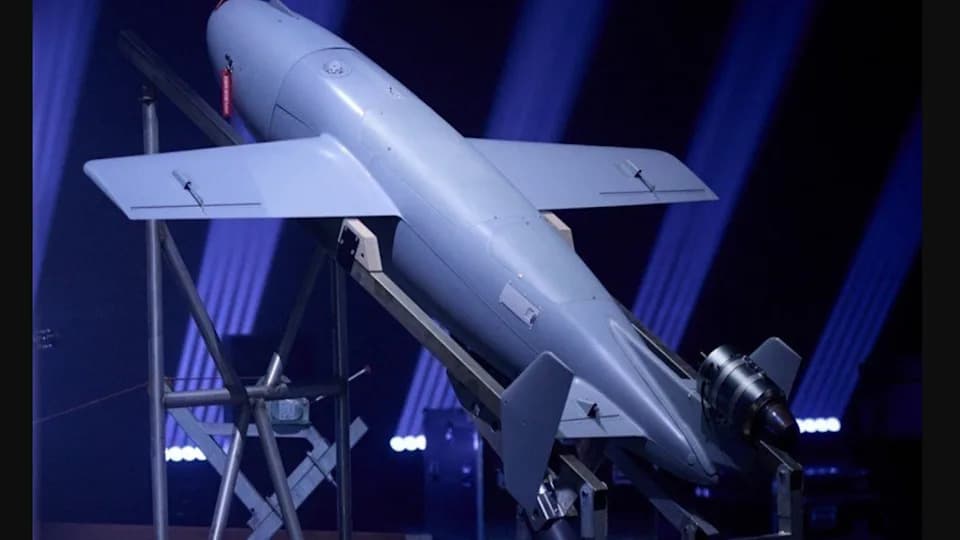
Ukroboronprom unveiled a reusable version of the An-196 Liutyi drone at the Farnborough International Airshow, marking a notable shift from one-way kamikaze strikes to a platform designed to carry and launch multiple missiles.
What’s New
The revamped Liutyi is reported to carry four compact air-to-surface missiles mounted beneath its wings. Unlike the original single-use configuration, this version is intended to return after launch, potentially extending mission flexibility and lowering long-term costs per strike.
Technical Profile
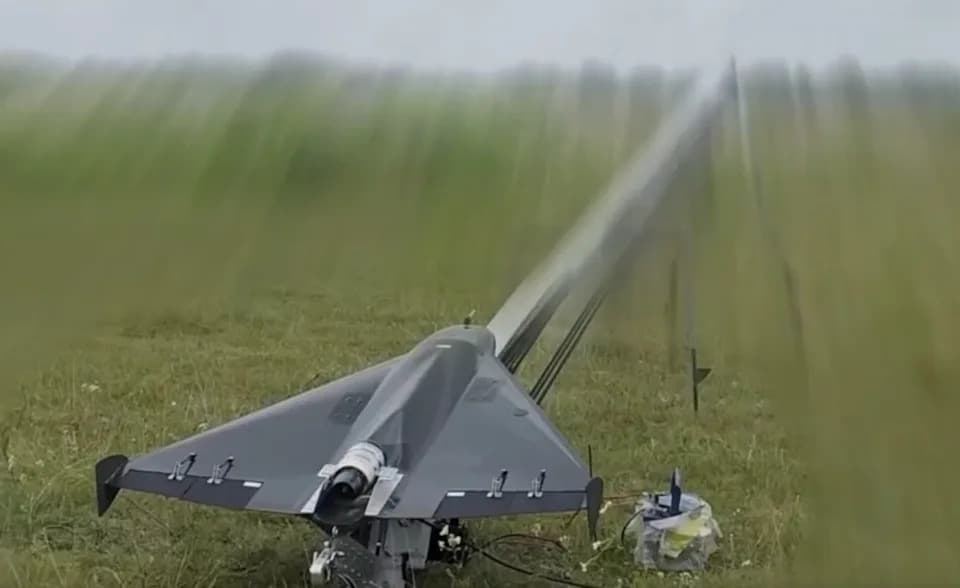
The baseline Liutyi is a propeller-driven, satellite-guided aircraft with a reported operational range approaching 2,000 km and a typical warhead weight of 50–75 kg. Navigation reportedly combines inertial guidance corrected by satellite signals for improved accuracy.
Ukrainian sources say the standard Liutyi has been used in long-range strikes, reportedly reaching targets up to around 1,700 km inside Russia (including strikes near the Urals) and striking the Izhevsk military plant roughly 1,400 km from Ukraine’s border.

Google logo on a black background next to text reading 'Click to follow TechRadar'
Missile and Cost Details
Reports indicate the new missiles have an estimated maximum range near 200 km and reach speeds above 500 km/h, achieved by a small jet engine inside each missile fuselage. Technical details for the updated airframe and munitions remain limited and unconfirmed by independent sources.
Germany has reportedly financed an additional 500 Liutyi drones as part of an approximately $100 million package. Ukroboronprom and other reports estimate each Liutyi airframe costs roughly $200,000 to produce, a relatively low price for a long-range strike platform.
Operational and Market Implications
Showing an armed, reusable Liutyi at an international airshow serves both as a military demonstration and as a commercial pitch to potential foreign buyers. A platform with a combat-tested record from hundreds of deep strikes would appeal to buyers looking for proven systems.
The reusable Liutyi could compete with Ukraine’s FP-1 drone, which is said to offer similar performance at lower cost. Observers have also compared the new munitions visually and conceptually to Western designs such as Anduril’s Barracuda-250, though reported specifications differ.
Unanswered Questions
Whether the reusable airframe and new missiles will be reliable under sustained combat conditions remains uncertain. Operational durability, reusability under contested air defenses, and logistics will determine the concept’s success.
Bottom Line: The Liutyi’s transformation from a one-way kamikaze UAV into a reusable missile carrier is a notable development with potential tactical and export implications, but key technical and operational details remain unverified.
Help us improve.