The 1976 Panmunjom Axe Murder Incident began when North Korean soldiers attacked a U.S.-led tree-trimming party, killing Capt. Arthur Bonifas and 1st Lt. Mark Barrett. The Ford administration responded with Operation Paul Bunyan: a heavily backed chainsaw operation supported by aircraft and a 300-man quick-reaction force. The operation cut the poplar to an eight-foot stump, averted further bloodshed after Kim Il-sung expressed regret, and—decades later—declassified memos revealed how narrowly the crisis avoided a far larger military strike.
How an Axe Murder and a Tree Nearly Triggered World War III: The True Story of Operation Paul Bunyan
A Plan to Chainsaw a Tree Nearly Started WWIIIWikimedia Commons
The 1953 Korean Armistice ended large-scale fighting on the peninsula but turned Panmunjom and the nearby Demilitarized Zone (DMZ) into one of the world's most dangerous flashpoints. In August 1976, what should have been a routine task—trimming a poplar tree that obstructed a sightline in the Joint Security Area (JSA)—escalated into a violent clash that nearly provoked a much larger war.
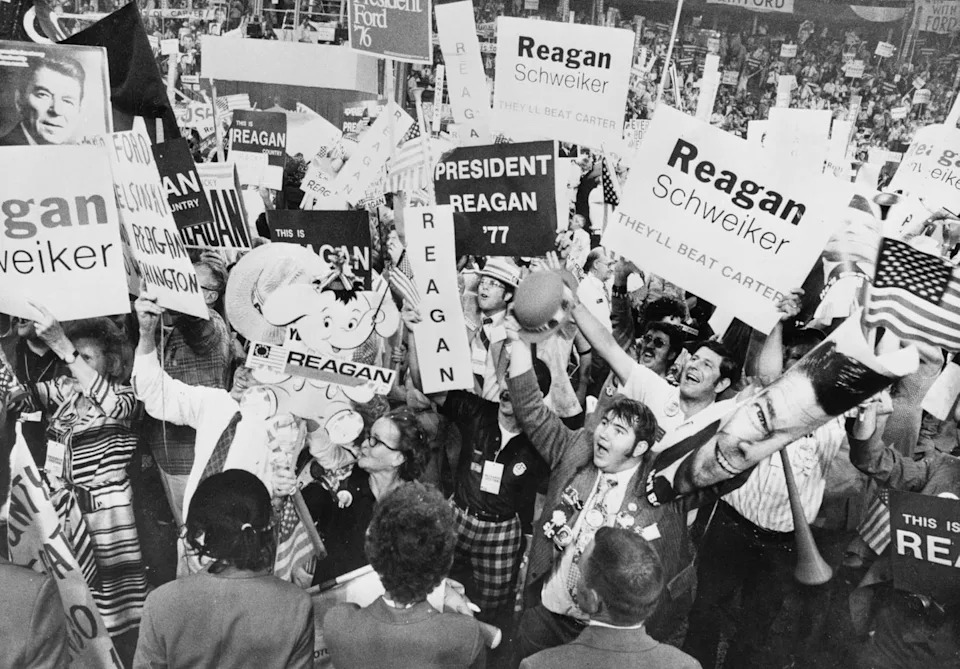
Supporters of Republican challenger Ronald Reagan take the floor of the 1976 Republican National Convention.Consolidated News Pictures - Getty Images
Background
Over the years, Panmunjom's proximity to both North and South Korean forces produced repeated tensions. On August 18, 1976, the geopolitical backdrop included tense rhetoric from Pyongyang and U.S. efforts to sustain détente in the region. Domestically, President Gerald Ford was at a pivotal moment: the Republican National Convention was underway, and stability abroad had political as well as strategic importance.
HUM Images - Getty Images
The Panmunjom Axe Murder Incident
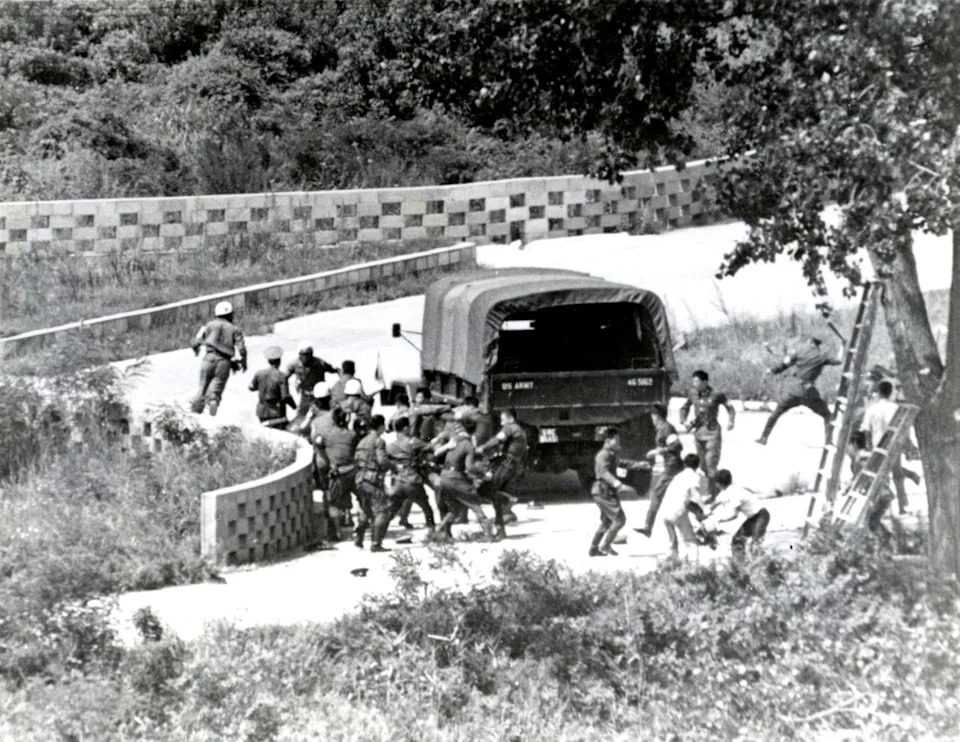
On the morning of August 18, Capt. Arthur Bonifas and 1st Lt. Mark Barrett escorted a work detail to prune a poplar tree that blocked an observation post near the Bridge of No Return. After Senior Lieutenant Pak Cheol of the Korean People's Army ordered the team to stop, Bonifas refused, believing Pak lacked the authority to issue such an order in the JSA. Pak left, returned with reinforcements, and the confrontation turned deadly:
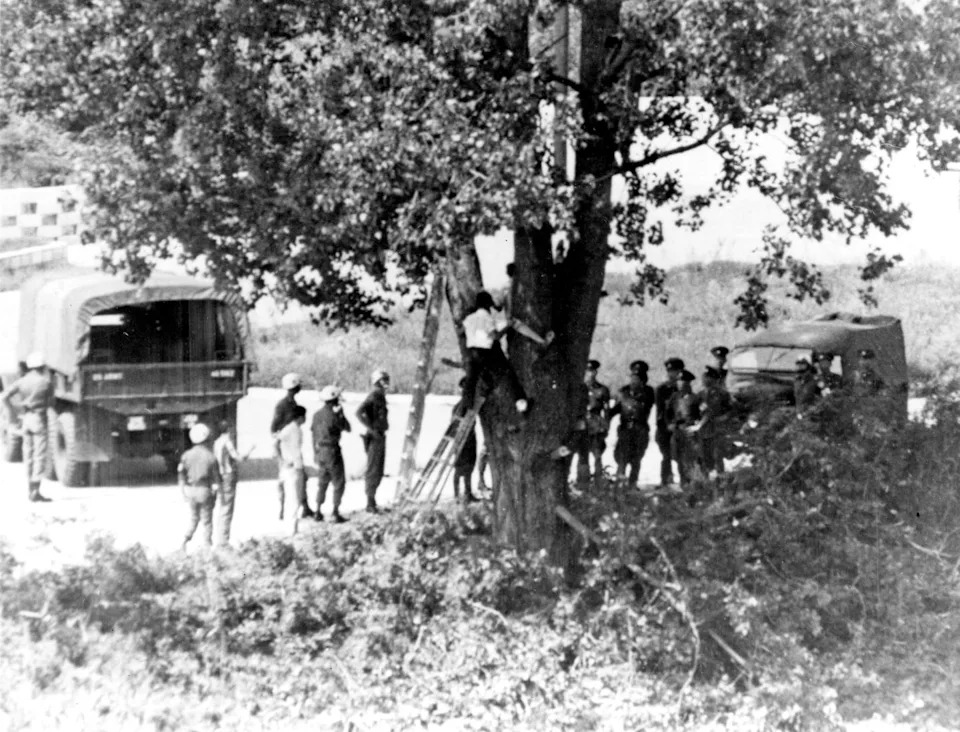
A photograph of the tree pruning that quickly escalated into the Panmunjom Axe Murder IncidentHUM Images - Getty Images
“Kill the bastards!”
North Korean soldiers rushed the work party, seized axes and used them as weapons. The attack killed Captain Bonifas and First Lieutenant Barrett and injured others. The event became known as the Panmunjom Axe Murder Incident.
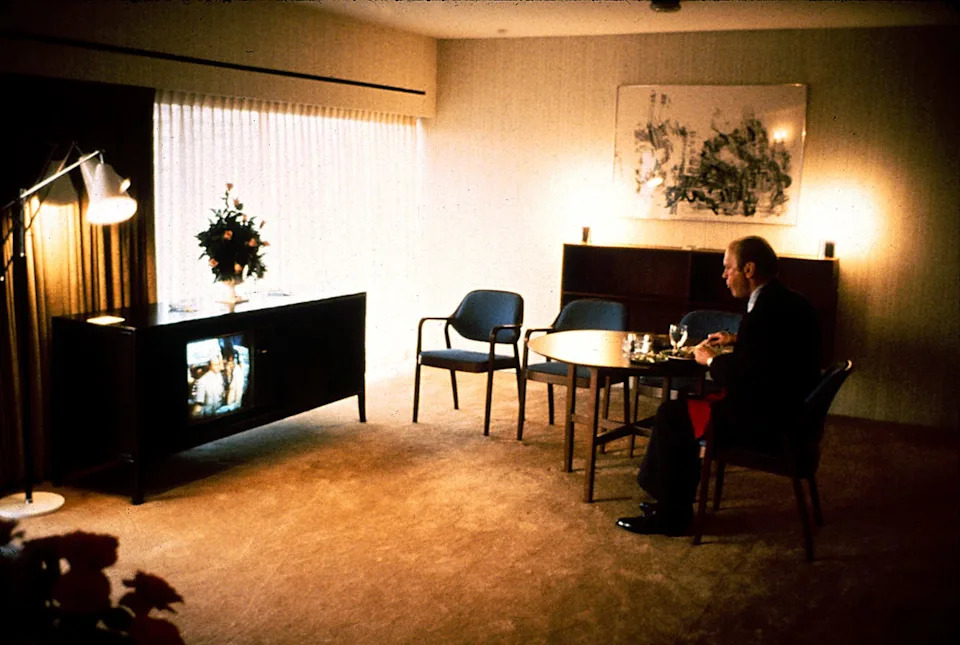
President Ford watches the 1976 Republican National Convention coverage from his hotel room while he eats. Facing serious opposition within his own party to his seeking re-election, Ford's WSAG had informed him that the North Koreans may have deliberately attacked American soldiers in the DMZ to sway the American election.Dirck Halstead - Getty Images
Washington's Response And The Options Considered
The U.S. government treated the assault as a deliberate act intended to provoke and influence public opinion during an election year. The Washington Special Action Group (WSAG) convened and presented five options to President Ford, including:
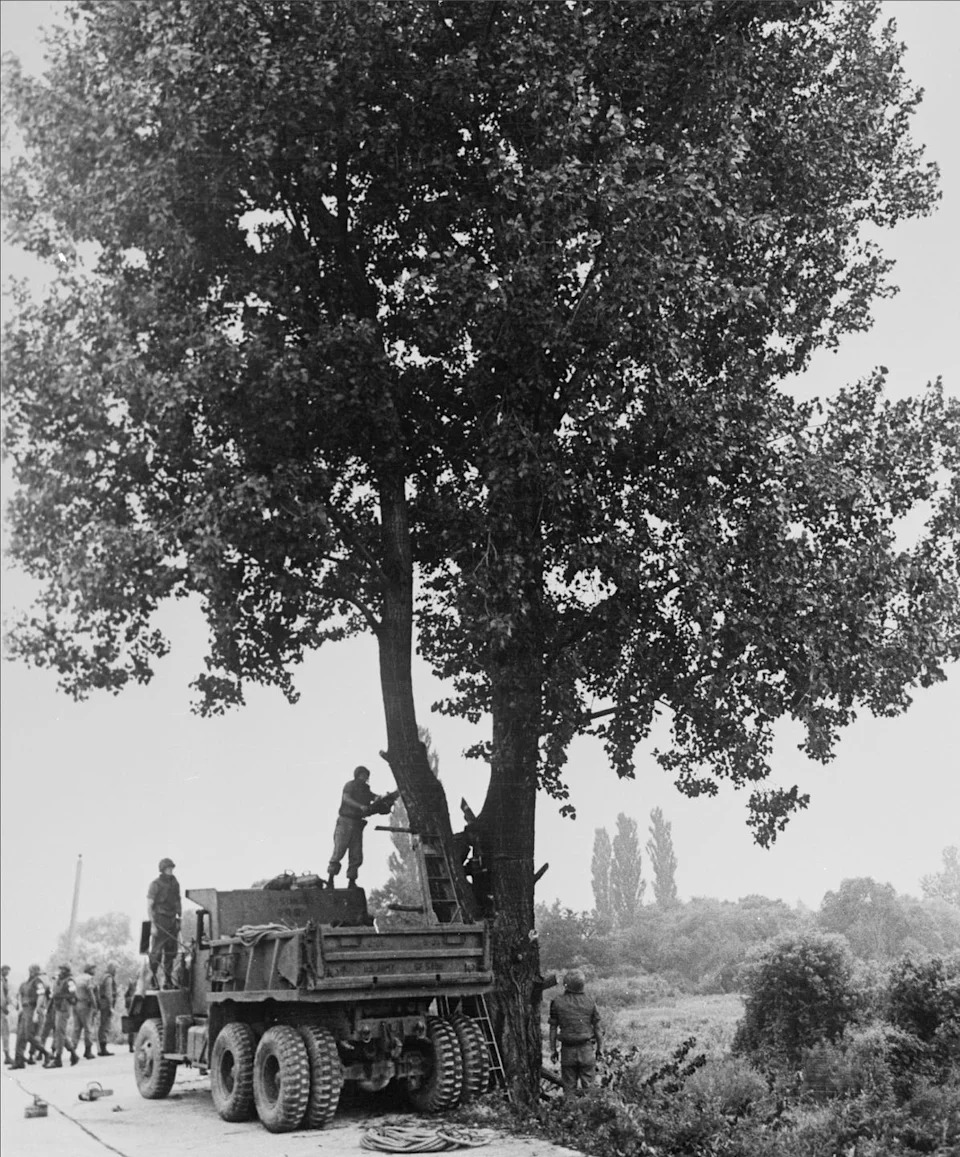
South Korean soldiers ultimately trim the tree, using chainsaws, on August 21, 1976. This is very likely the most heavily-armed act of arboriculture in history.Wikimedia Commons
- Authorize a military action to cut the tree while attempting to avoid direct confrontation.
- Schedule a B-52 exercise timed with the tree removal.
- Move a naval task force into regional waters (Sea of Japan or Yellow Sea).
- Reposition 18 F-111 tactical aircraft from Idaho.
- Prepare contingency plans to strike North Korean barracks near the JSA.
Ford assigned General Richard G. Stilwell to design a response that asserted U.S. resolve without triggering full-scale war. Stilwell argued that allowing North Korea to dictate measures meant to protect U.S. forces was unacceptable. U.S. forces in Korea were placed at DEFCON 3 during the preparations.
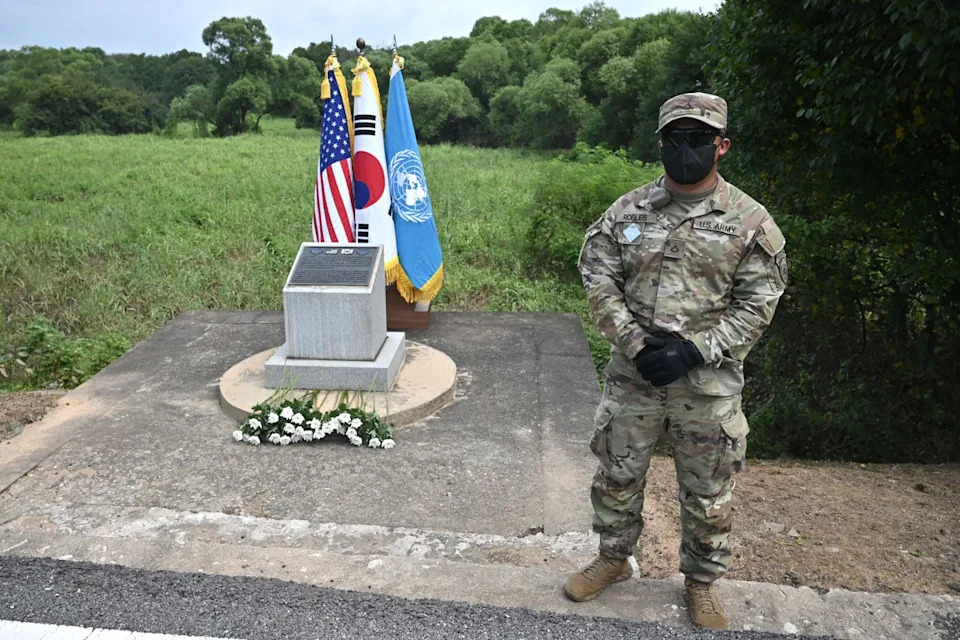
In 2022, a U.S. soldier stands at the former site of the poplar tree, which is now a memorial for the two officers killed in the Panmunjom Axe Murder Incident.JUNG YEON-JE - Getty Images
Operation Paul Bunyan
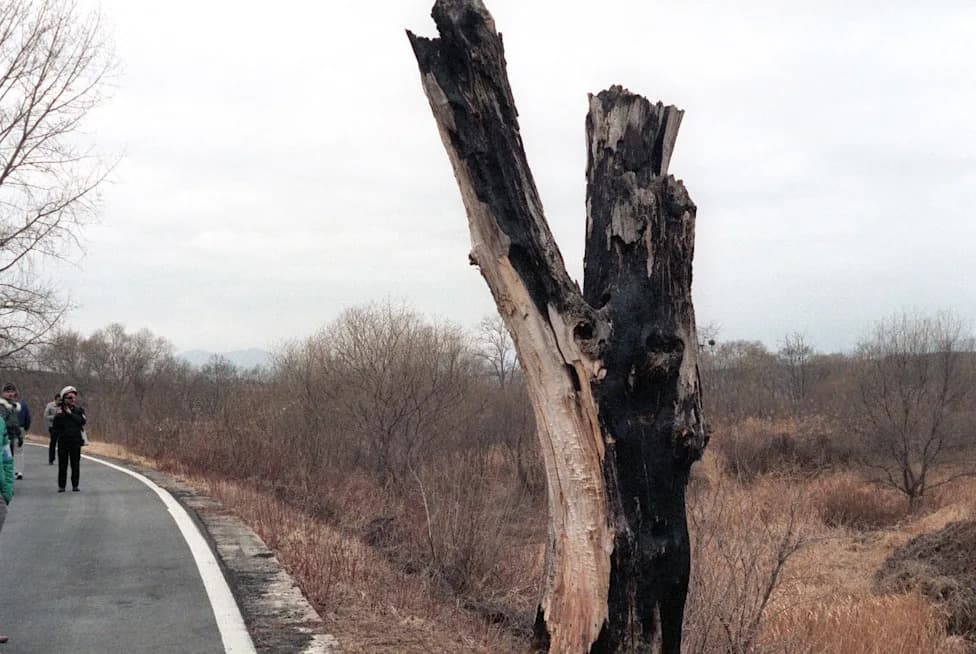
At 7:00 a.m. on August 21, 1976, Operation Paul Bunyan was executed. Two eight-person teams of U.S. and South Korean engineers entered the JSA carrying chainsaws as part of a 23-vehicle convoy. The operation was backed by an impressive show of force: circling helicopter gunships, F-4 and F-111 fighter cover, B-52 strategic bombers on alert, and a 300-man quick-reaction force on the ground. Under that protection, the teams cut the poplar down to an eight-foot stump in a deliberately swift, controlled action.
The show of force drew limited hostile fire; a U.S. observation helicopter that strayed across the Military Demarcation Line was struck by small-arms fire, but casualties were avoided. Hours after the operation, North Korean leader Kim Il-sung sent a message describing the earlier incident as "regretful," a narrowly worded concession that helped de-escalate the immediate crisis.
Aftermath And Legacy
The two American officers were later memorialized: in 1987 the stump was removed and replaced by a stone monument honoring Capt. Bonifas and 1st Lt. Barrett. In 1996, declassified WSAG memos revealed how close the crisis had come to a much more destructive response—senior officials, including Deputy Secretary William Clements and Henry Kissinger, had advocated for striking North Korean barracks, an action President Ford ultimately declined to authorize. Kissinger later observed that the president's public insistence—during his convention speech—that "not a single American is at war anywhere on the face of this Earth" influenced the decision.
Today the site serves as a sober reminder of how quickly a local clash—even over a tree—can imperil global stability when nuclear-armed states confront each other. Operation Paul Bunyan stands as an example of measured show-of-force diplomacy intended to assert resolve while avoiding catastrophic escalation.
Help us improve.