Why It Matters: Access to fertilizer is a geopolitical stake as vital as oil. In the 19th century, millions of tons of seabird guano — rich in nitrogen and phosphorus — were shipped from Pacific and Caribbean islands to fuel agricultural expansion in Europe and North America. The guano trade created the first global nutrient supply chains, relied on coerced and indentured labor, and spurred U.S. territorial expansion via the Guano Islands Act. Its legacy highlights how modern food systems depend on fragile, often exploitative, global connections.
How Bird Guano Fueled Modern Farming — And Helped Build American Power
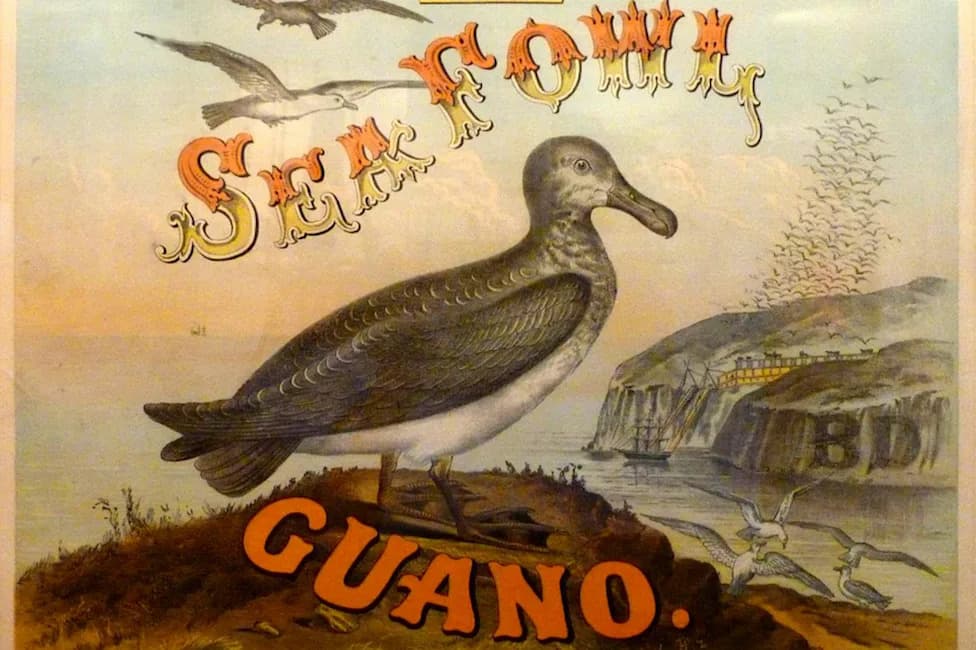
An advertisement for guano to be used as fertilizer depicts not only seabirds but also a guano island.Bradley Fertilizer Company via Garden History
The temporary closure of the Strait of Hormuz — a chokepoint that normally carries roughly one-third of global fertilizer shipments — has underscored a long-standing strategic truth: access to crop nutrients is as geopolitically vital today as access to oil.
As an environmental historian, I trace how sources of fertilizer reshaped the modern world. That story goes beyond chemistry and yields: it reveals the hidden costs of feeding industrial societies, including brutal labor systems and the expansion of imperial power.
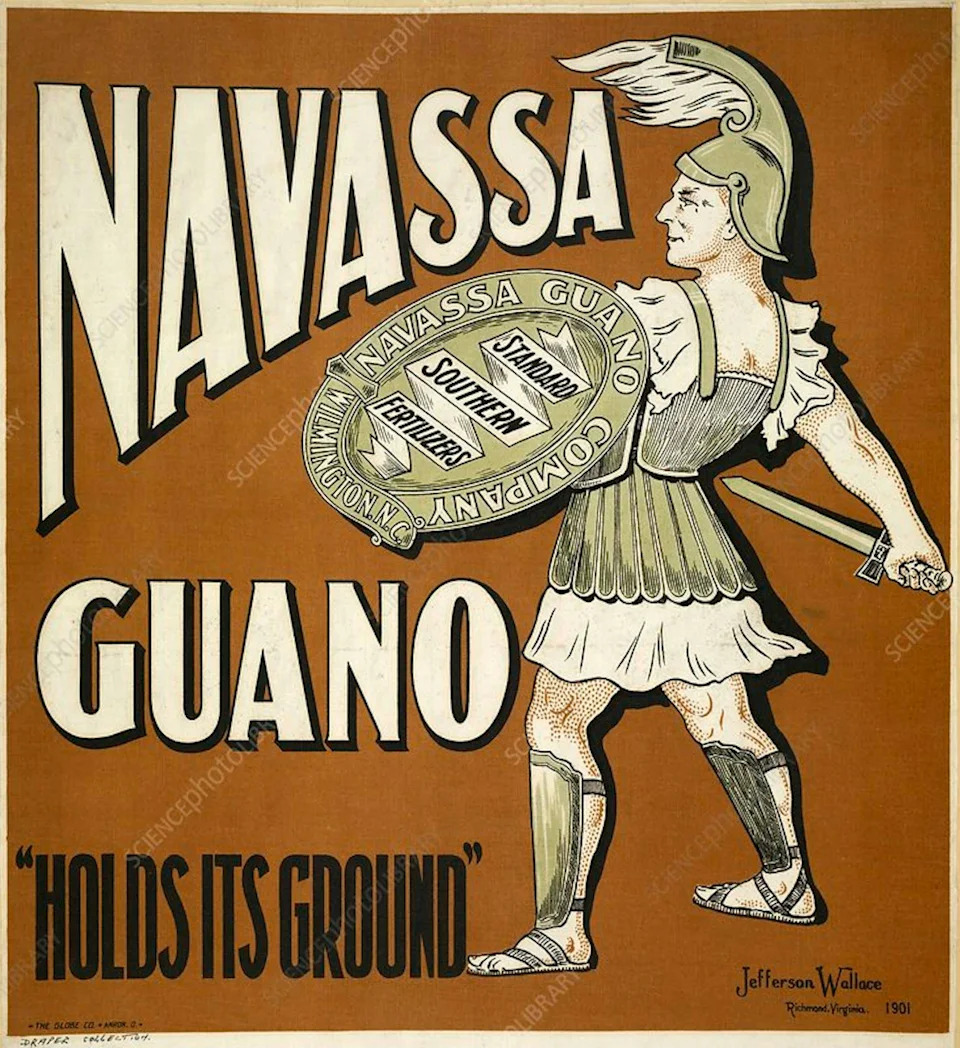
An early 20th-century ad for Navassa guano touted its soil-enriching characteristics.Navassa Guano Company via Science Photo Library
From Guano To Global Fertility
In the 19th and early 20th centuries, fertilizer firms shipped millions of tons of seabird guano from islands in the Pacific and Caribbean to farms across Europe and North America. Rich in nitrogen and phosphorus, guano dramatically increased crop yields at a time when industrializing societies demanded far more food than traditional farming systems could supply.
Guano became the first truly global fertilizer commodity. For centuries, farmers sustained soil fertility by recycling local nutrients: animal manures, crop residues, and human waste circulated within largely closed ecological systems linking soils, crops, livestock and people. But as cities grew and food moved farther from its source, nutrients accumulated in towns and were not returned to the land. Soils grew poorer and farmers looked for new sources of fertility.
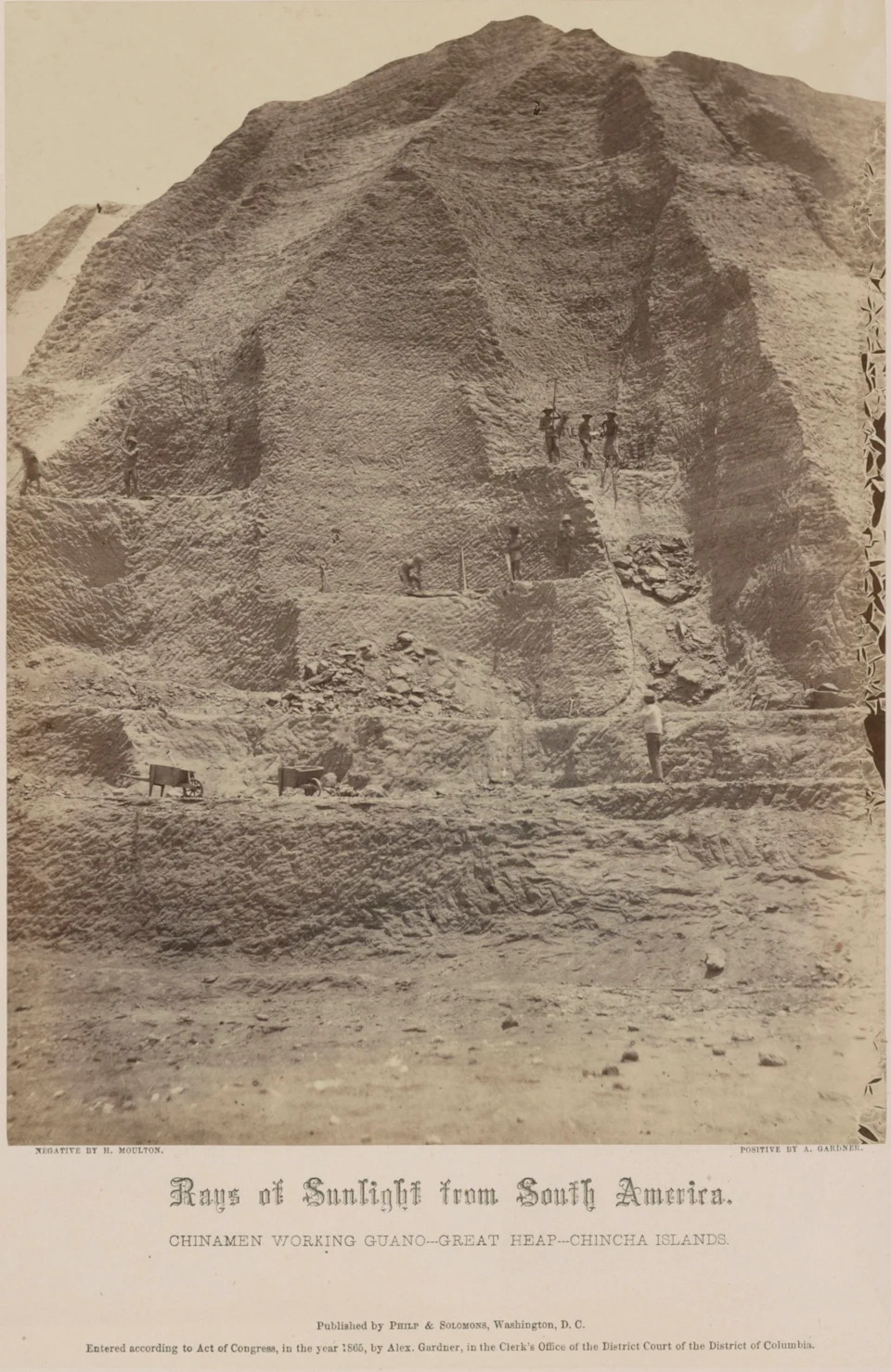
Chinese workers stand on a hill of guano on Peru's Chincha Islands, circa 1865.Henry de Witt Moulton, Alexander Gardner and Philp & Solomons, via Library of Congress
European scientists began to recognize guano’s value after 1804, when Alexander von Humboldt brought Peruvian samples to Europe. Agricultural chemists such as Justus von Liebig later emphasized that replacing nutrients removed by crops was essential to sustained growth, turning guano from an exotic curiosity into a concentrated, much-sought natural fertilizer. Decades before synthetic ammonia revolutionized agriculture, millions of tons of naturally concentrated nitrogen and phosphorus crossed oceans — a first Green Revolution that laid the groundwork for the chemically intensive farming systems of the 20th century.
Extraction, Labor, And Suffering
Guano deposits on islands like Peru’s Chincha Islands had accumulated for centuries in arid climates where rainfall could not wash the droppings away. What appeared as barren rock was often a cementlike layer of compressed guano that miners had to hack apart with picks and crowbars.
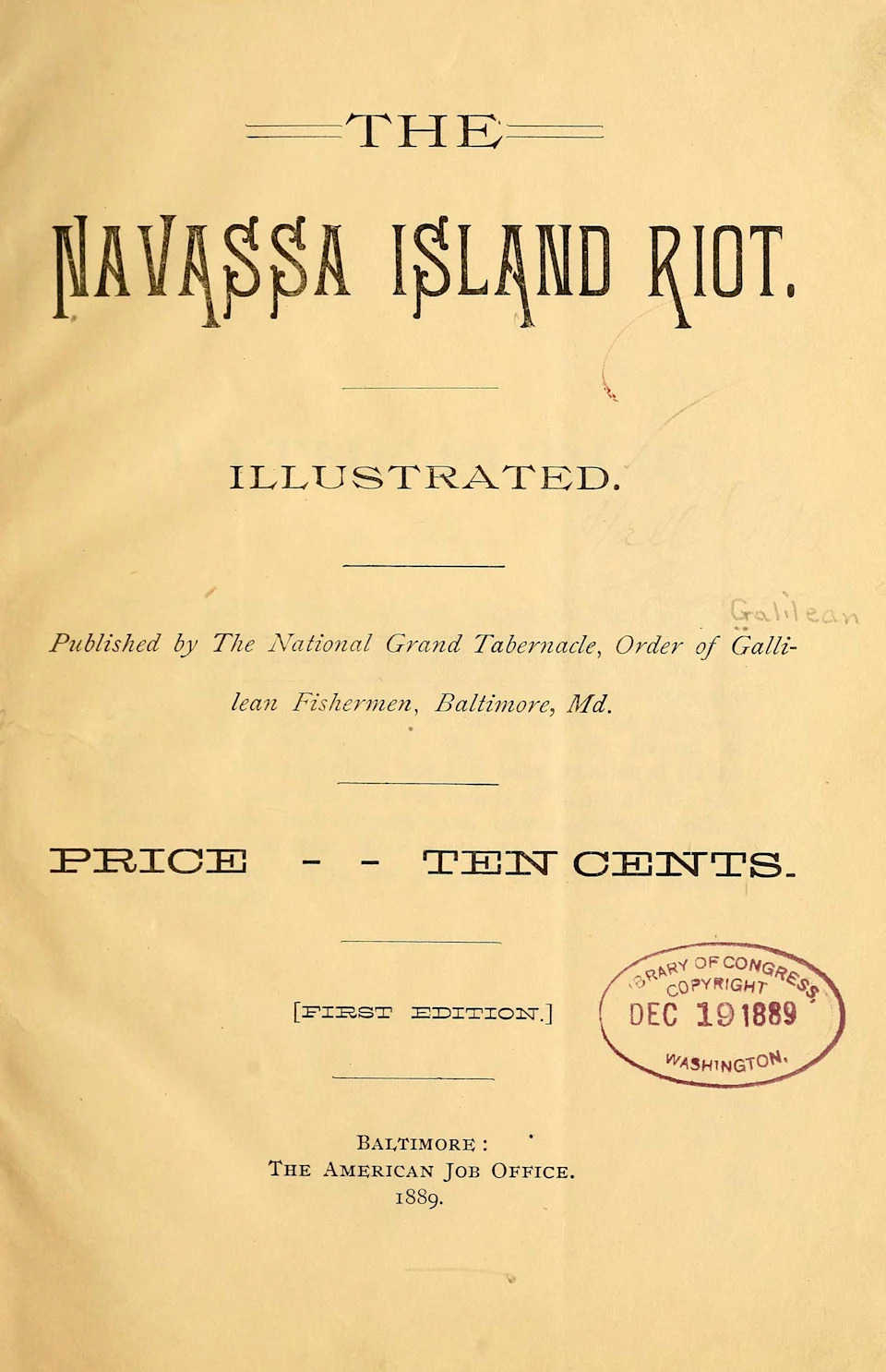
The Order of Galilean Fishermen published an account of the trial of the 18 men accused of crimes on Navassa.Thomas L. Hall and Columbus Gordon via Library of Congress
The extraction depended on human labor drawn across oceans. As the Atlantic slave trade declined under global abolitionist pressure, employers increasingly turned to systems of debt peonage and indenture that occupied the uncertain terrain between slavery and freedom. Thousands of Chinese indentured workers endured appalling conditions on the Chincha Islands: blistering sun, ammonia-laden dust that burned lungs and eyes, inadequate rations and brutal oversight. Contemporary observers, including British ship captains and diplomats, reported these abuses with horror.
Guano, Law, And Empire
Governments soon treated guano as a strategic resource. Concerned about reliance on Peruvian supplies, U.S. policymakers acted. President Millard Fillmore urged protection of fertilizer access and Congress passed the Guano Islands Act of 1856, authorizing U.S. citizens to claim unoccupied guano-bearing islands. The law turned a search for nutrients into a mechanism of territorial expansion: islands across the Caribbean and Pacific entered the expanding orbit of U.S. power because of their fertilizer deposits.
Navassa Island — a remote limestone outcrop between Haiti and Jamaica — shows how extraction, race, and law came together. From the 1860s, American firms turned Navassa into an industrial guano colony. Black workers, many recruited from Baltimore, labored under relentless heat, dust and isolation and survived on meager rations. Racial hierarchies placed white overseers above predominantly Black laborers, reflecting the broader racial order of the emerging Jim Crow era.
On Sept. 14, 1889, 137 Black miners rebelled against the Navassa Phosphate Company’s 11 officers; by nightfall five supervisors were dead. The U.S. Navy intervened and transported 18 Black workers to Baltimore for trial. The case ultimately reached the U.S. Supreme Court in Jones v. United States (1890), which affirmed federal criminal jurisdiction over territories held through "actual, continuous, and useful possession," even when held chiefly to mine resources. The decision confirmed American control over Navassa but, read alongside the rebellion, also illuminates how federal power, resource extraction and racialized labor were intertwined. Several defendants were sentenced to death, though public pressure led President Benjamin Harrison to commute those sentences in 1891, underscoring the role of Black civic activism even amid repression.
Legacy And Contemporary Relevance
Guano did more than enrich fields: it created a global agricultural system with supply chains stretching across oceans, dependent on distant labor and vulnerable to geopolitical shocks. From the Chincha Islands to the Strait of Hormuz, the history of fertilizer reminds us that the modern food system rests on fragile connections between remote places, industrial supply chains and geopolitical stability.
Note: This article is republished from The Conversation. It was written by Edward D. Melillo, Amherst College. The author reports no relevant financial conflicts of interest.
Help us improve.