Researchers propose a low-cost, scalable way to reduce PFAS contamination on farmland: apply crushed alkaline rock to raise soil pH, grow PFAS-accumulating plants (e.g., hemp and perennial grasses), then pyrolyze the harvested biomass into biochar. Modeled costs are about $29,000 per hectare if repeated over years—far lower than current remediation estimates—and nationwide adoption could potentially sequester ~10.5 million metric tons of CO2 annually. Key uncertainties include required pyrolysis temperatures (possibly ≥800 °C), PFAS fate during thermal processing, and full lifecycle emissions and logistics.
Scientists Propose Cheap, Scalable Way To Remove 'Forever Chemicals' From Farm Soil
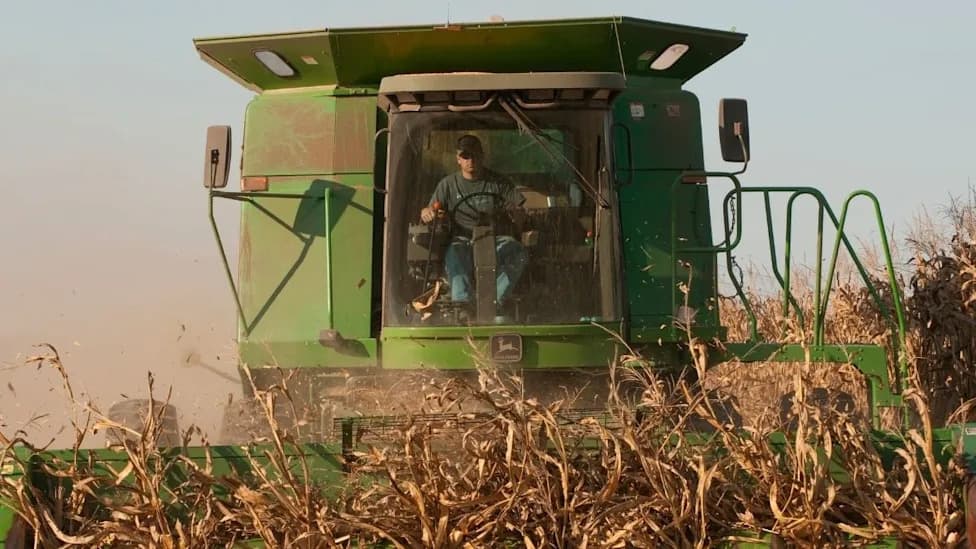
(Karen Kasmauski/The Image Bank/Getty Images)
Municipal biosolids—the nutrient-rich sludge left after sewage treatment—are applied to millions of hectares of U.S. farmland each year as a recycled fertilizer. While this practice supports nutrient recycling, it has also spread substantial amounts of PFAS (per- and polyfluoroalkyl substances), the so-called "forever chemicals," into agricultural soils.
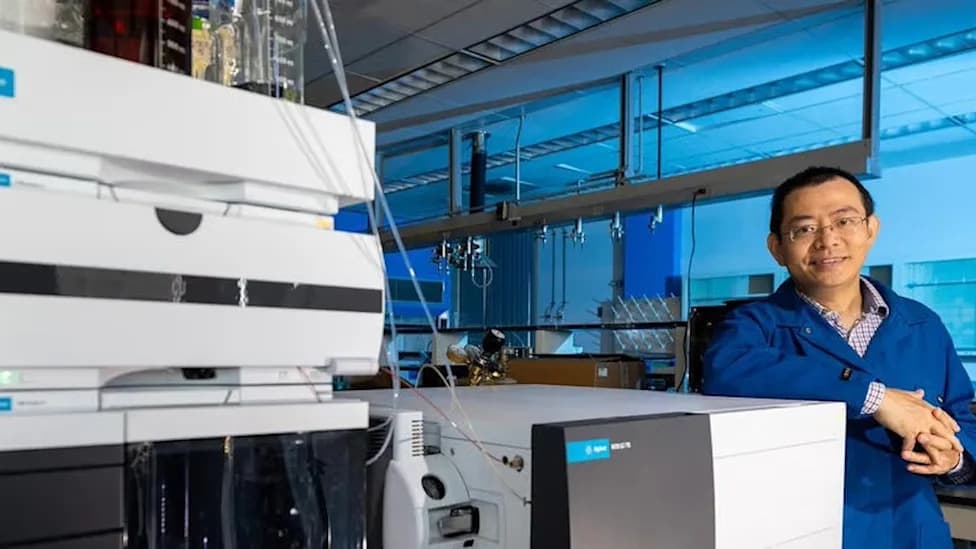
Researchers led by Yale environmental scientist Jake Thompson have published a remediation strategy in PNAS that could dramatically reduce PFAS contamination on farmland at far lower cost than existing approaches. The method combines alkaline rock amendments (enhanced weathering), planting PFAS-accumulating crops, and converting contaminated biomass into biochar via pyrolysis.
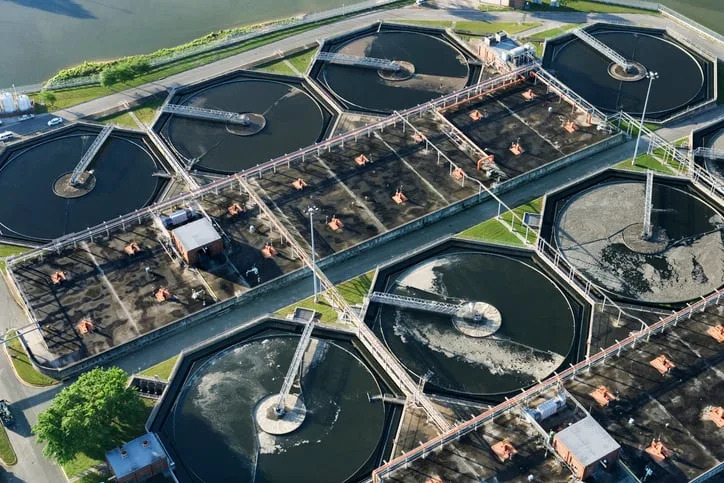
A wastewater treatment plant in Texas. (JupiterImages/The Image Bank/Getty Images)
Why This Matters
A 2001 U.S. EPA survey estimated that between 2,749 and 3,450 kilograms of PFAS are present in the nation’s annual biosolids output, about half of which are applied to agricultural soils. PFAS are exceptionally persistent because of the strong carbon–fluorine bond: they can accumulate in soils, leach into waterways, and be taken up by crops, potentially entering the food chain. Laboratory, animal, and population studies have linked PFAS exposure to a range of health risks including reproductive problems, higher cardiovascular risk, and some cancers—though research is ongoing.
How The Proposed Method Works
1. Alkaline rock amendment (enhanced weathering): Crushed basalt (or limestone) is applied to fields to raise soil pH toward ~7. Higher pH increases the mobility and bioavailability of certain PFAS (notably PFOS and PFOA), making them easier for plants to take up.
(Yale News)
2. Phytoextraction with fast-accumulating plants: Crops known to accumulate PFAS—such as hemp and certain perennial grasses—are grown on treated ground. These plants concentrate PFAS in their biomass.
3. Pyrolysis of harvested biomass to produce biochar: The contaminated plant material is harvested and thermally treated without oxygen (pyrolysis) to make biochar. Portions of biochar can be removed and treated further, while reapplying some biochar to fields can help immobilize residual PFAS and improve soil health.
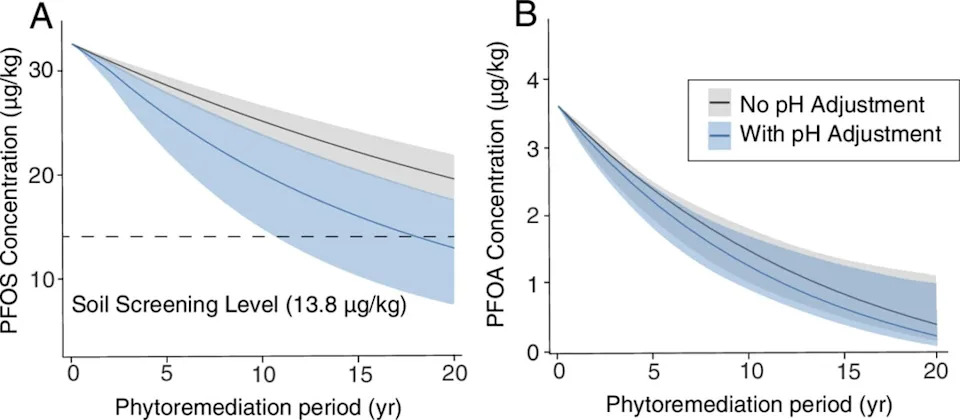
Modeled PFOS and PFOA concentrations in soil under proposed remediation strategy. Modeled trajectories of plant-driven PFOS and PFOA removal in soils with and without a pH amendment. In each panel, the solid line represents the modeled outcome under average site conditions, and the shaded region denotes the 95 percent confidence interval. (Thompson et al.,PNAS, 2026)
Costs, Benefits, And Uncertainties
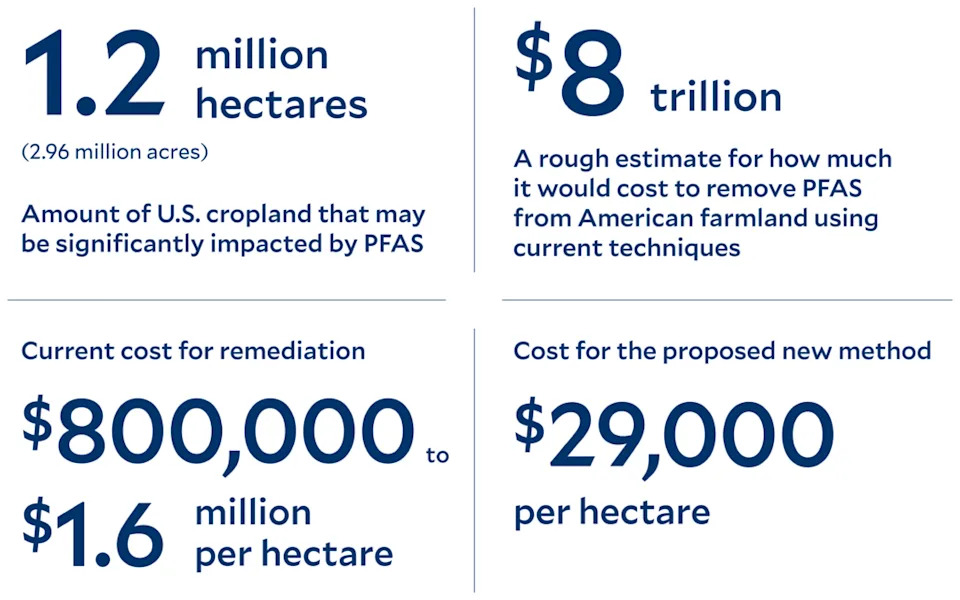
Current soil-removal methods (excavation and thermal destruction) are expensive—roughly $800,000 to $1.6 million per hectare, with an estimated nationwide cost of about $8 trillion. Thompson and colleagues model a much cheaper pathway—about $29,000 per hectare—if the process is repeated over multiple years (up to 20) to ensure remediation.
The approach may also offer climate benefits: the authors estimate that nationwide adoption could draw down approximately 10.5 million metric tons of CO2 per year through enhanced weathering. However, high-temperature pyrolysis (recent studies suggest temperatures ≥800 °C may be needed to break down PFAS) and biochar transport generate greenhouse gas emissions, so precise carbon accounting is critical.

Subscribe to ScienceAlert's free fact-checked newsletter
“This is a real pathway to actually give farmers some agency over their land and leave the soil in better condition than it was before,”
—Jake Thompson, Yale University
Important unknowns remain: the detailed fate of specific PFAS compounds during pyrolysis, the optimal pyrolysis conditions to reliably destroy PFAS rather than merely redistribute them, logistics and economics of scaling plant cultivation and biomass processing, and regulatory and market factors for biochar reuse or disposal. Field trials and pilot projects will be essential to validate model results and refine protocols.
Outlook
The proposed combination of enhanced weathering, targeted phytoextraction, and biomass-to-biochar processing offers a promising, lower-cost, and potentially climate-positive approach to reduce PFAS loads on agricultural land. If verified in real-world trials and implemented with careful carbon and contamination safeguards, it could give farmers a practical option to reclaim contaminated soils without losing topsoil or emitting the large CO2 volumes associated with excavation-and-incineration methods.
Research source: Thompson et al., Proceedings of the National Academy of Sciences (PNAS).
Help us improve.