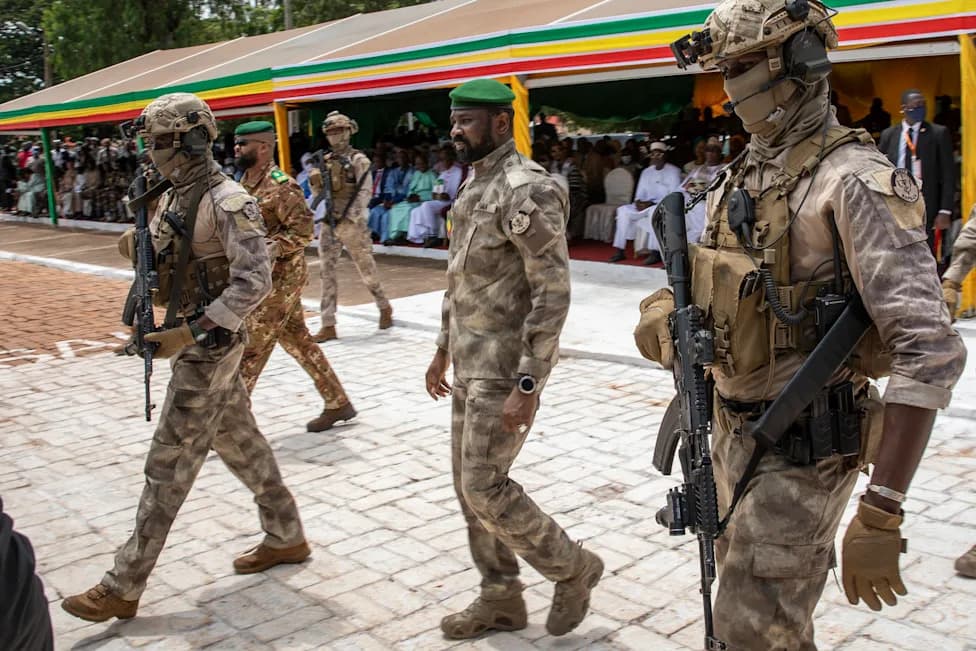
The April 25, 2026 FLA–JNIM offensive heralded a sharper, more coordinated phase in Mali's northern conflict, stretching from Kidal to Sévaré and challenging both the Malian army and Russia's Africa Corps. The rare operational cooperation between a secular separatist movement and an al‑Qaeda affiliate has produced more sophisticated attacks—featuring drones, ambushes and captured weaponry—while financing still draws on regional networks and illicit economies. Political objectives remain divergent (Azawad independence, regime change, Mali's territorial integrity), leaving the alliance's durability and prospects for negotiation uncertain.
Unlikely Alliance, New Phase: How an FLA–JNIM Partnership Transformed Mali’s Northern War
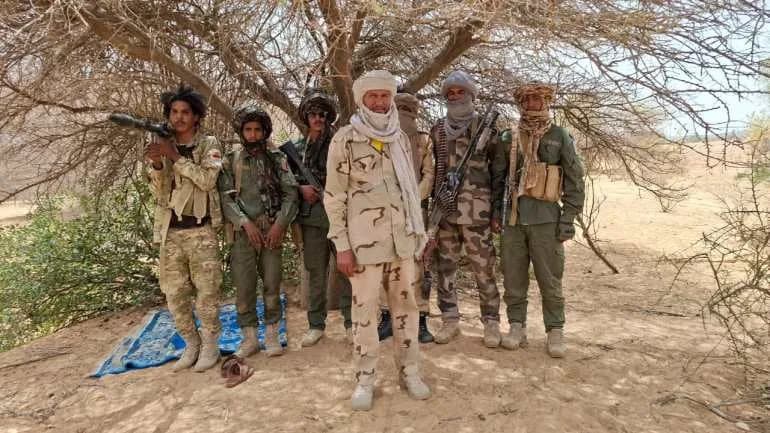
Colonel Mohamed Issa, centre, one of the FLA's most prominent military commanders [Photo: Courtesy of the Azawad Liberation Front (FLA)]
An unexpected battlefield partnership between the Azawad Liberation Front (FLA) and al‑Qaeda affiliate Jama'at Nusrat al‑Islam wal‑Muslimin (JNIM) has shifted the dynamics of Mali's long-running northern conflict, producing a more coordinated and sophisticated threat to the Malian state and its foreign backers.
April Offensive and Its Reach
When the FLA and JNIM launched a joint offensive on April 25, 2026, the fighting entered a new phase. What had been a fragmented conflict involving multiple armed groups became a concerted campaign stretching from Kidal and Anefis to Tilemsi, Gao and Sévaré. The offensive has posed one of the most serious challenges in years to both the Malian army and Russia's Africa Corps—the Kremlin‑backed force that replaced the Wagner Group.
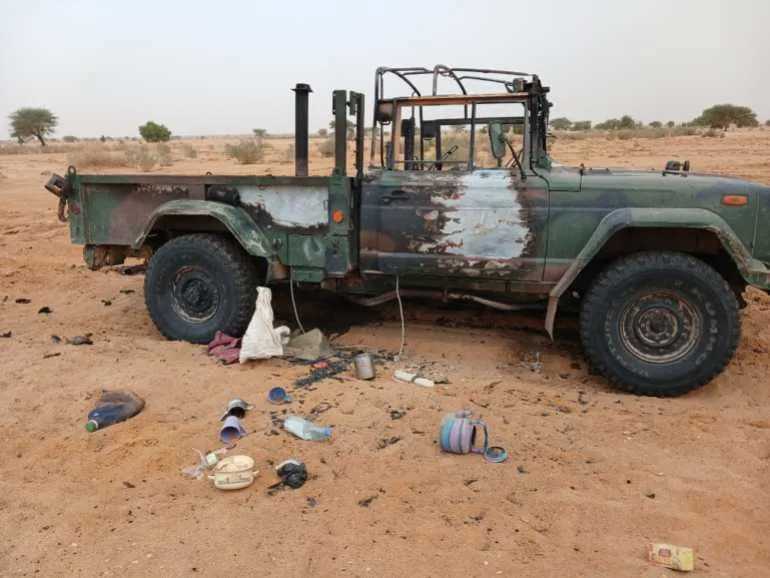
A destroyed vehicle at the site of recent fighting in northern Mali [Photo: Courtesy of the Azawad Liberation Front (FLA)]
How the Partnership Works
On the ground, the partnership has enabled coordinated attacks: simultaneous assaults across distant fronts, ambushes on reinforcement columns, drone strikes and repeated raids on supply convoys. FLA commanders say the arrangement lets each side divide responsibilities and pool tactical expertise; JNIM commanders describe the cooperation as operationally unified despite differing long‑term goals.
"This is a battlefield arrangement against a common enemy," said Colonel Mohamed Issa, one of the FLA's senior military leaders, while a senior JNIM field commander, speaking as Suleiman, said fighters on both sides largely come from "one people" and that their liberation aims had become "relatively unified."
Military Trends: Drones, Captured Arms and Tactics
Drones have taken on a more prominent role—not only for reconnaissance but increasingly as strike platforms against vehicles and positions. Both sides are adapting: Malian forces and Russia's Africa Corps rely on air power, whereas rebel tactics emphasize mobility, ambushes and the use of weapons seized from government stocks. Captured vehicles and arms from Malian units have become a growing component of rebel arsenals.
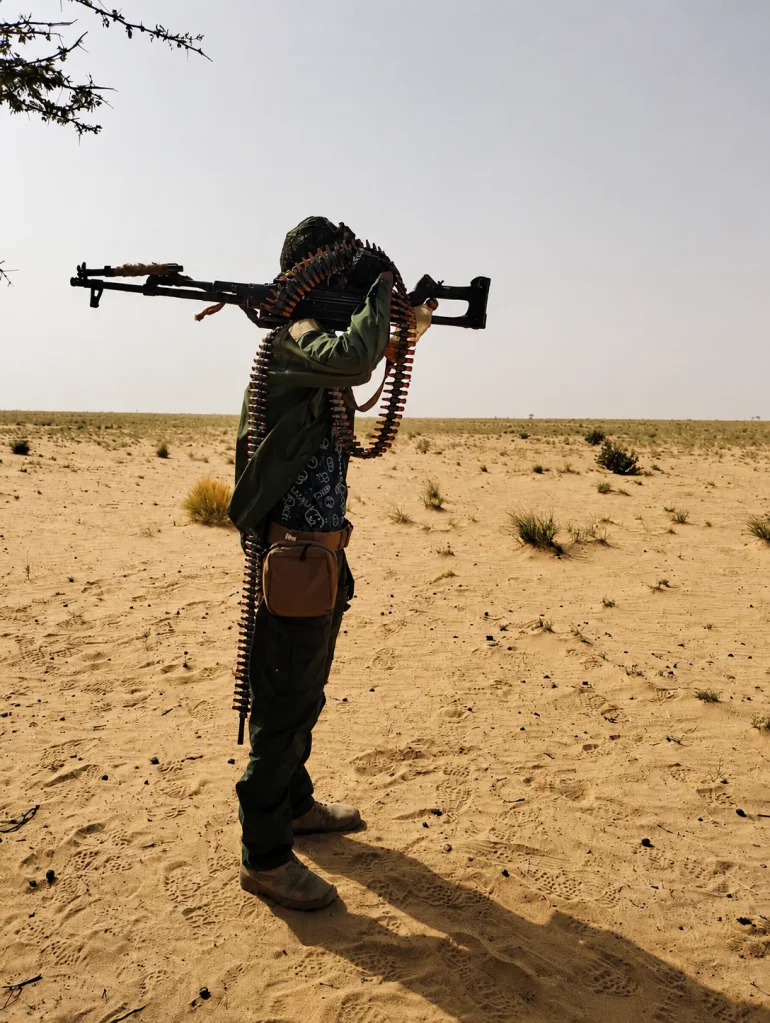
An armed man carries a weapon in a desert area of northern Mali, where government forces and armed groups have been fighting for control of territory [Photo: Courtesy of the Azawad Liberation Front (FLA)]
Financing and Illicit Economies
Longstanding regional commercial and trafficking networks continue to underwrite both sides. JNIM draws on regional commerce, organised zakat, and funds accumulated over years, including proceeds linked to earlier kidnapping‑for‑ransom operations. The FLA cites donations organised by tribal leaders, traders and community associations. Officials on both sides acknowledge some individuals' participation in illicit economies, though the proportion of overall war finance this represents is hard to verify.
Political Impasse and Regional Implications
The military standoff mirrors a broader political deadlock: Bamako insists on preserving Mali's territorial integrity; the FLA demands independence for Azawad; and JNIM seeks regime change and the imposition of its interpretation of Islamic law. Because the FLA–JNIM cooperation is rooted in mutual opposition to the Malian state and foreign forces rather than a shared political programme, its longevity is uncertain.
The alliance has already reshaped the battlefield and may have wider consequences across the Sahel: it complicates ceasefire prospects, strains regional security mechanisms, and creates fresh dilemmas for external actors supporting Bamako.
Outlook
Three months after the April offensive, northern Mali remains locked in a conflict with no clear end. Unless the competing ambitions of territorial unity, separatism and regime change are addressed alongside battlefield dynamics, a negotiated settlement looks unlikely. Whether the FLA–JNIM partnership endures, fractures, or morphs into a different configuration, it has created a new military and political reality whose consequences are likely to extend beyond Mali's borders.
Help us improve.