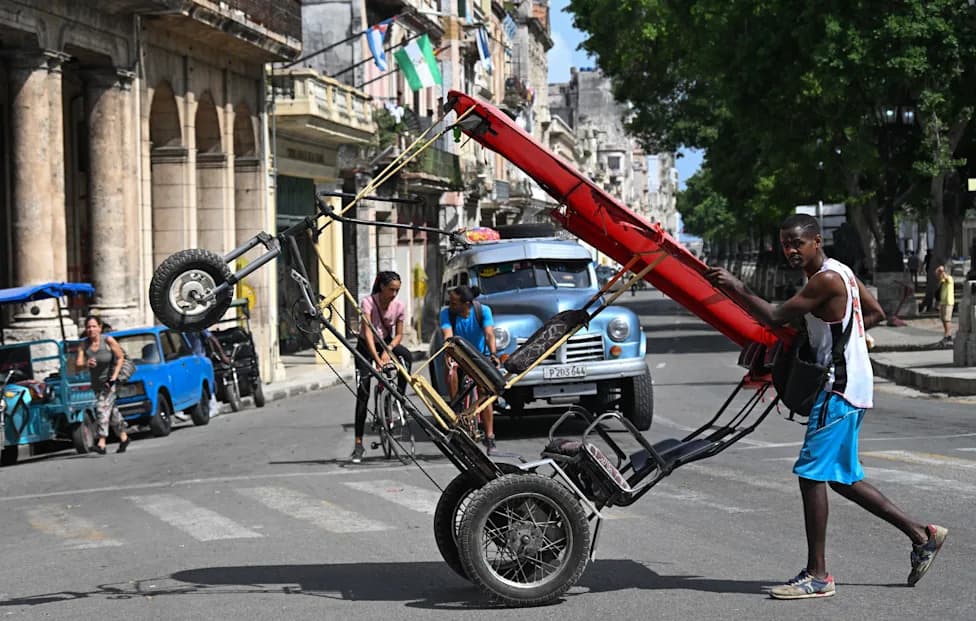
Miguel Díaz-Canel accused the United States of a "cold-bloodedly calculated genocide" at a rally marking the Cuban Revolution anniversary, blaming an oil embargo imposed on January 29 for severe blackouts, shortages and economic decline. The Cuban government says sanctions and financial pressures have forced cutbacks in workdays and driven firms such as Visa, Mastercard and Meliá to withdraw services. Washington has accused Havana of espionage and indicted Raúl Castro; Cuba rejects these claims and bilateral talks have largely stalled.
Cuban President Accuses US Of 'Genocide' and Says Washington Seeks To Seize Island
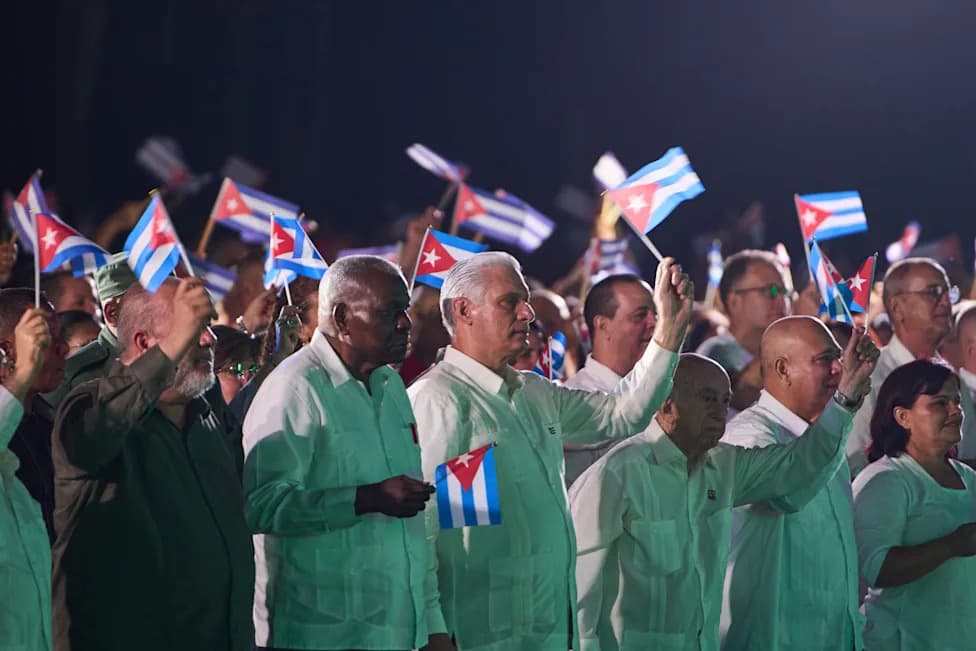
Cuban President Miguel Diaz-Canel, centre, is seen during an event marking the 73rd anniversary of the start of the Cuban Revolution in Pinar del Rio, Cuba, Sunday, July 26, 2026 [Ramon Espinosa/AP]
Cuban President Miguel Díaz-Canel accused the United States on Sunday of pursuing a policy he called a "cold-bloodedly calculated genocide" against the Cuban people and of attempting to seize control of the island nation. His remarks came at a rally in Pinar del Río marking the 73rd anniversary of the start of the Cuban Revolution.
Speaking to supporters, Díaz-Canel blamed renewed U.S. pressure — including what Havana describes as an oil embargo imposed on January 29 — for worsening shortages, prolonged blackouts and economic hardship across the country.
"I denounce that Cuba is the victim of a cold-bloodedly calculated genocide," Díaz-Canel said, calling U.S. measures a form of "economic strangulation" intended to weaken and ultimately appropriate the nation.
Impact and Government Response
The Cuban government says the embargo and related restrictions have contributed to daily power cuts in some areas of more than 20 hours, forced employers to reduce workdays, halted industrial production in parts of the country and aggravated shortages of water and medicines. Officials also point to earlier financial reforms and sanctions as drivers of inflation and economic pain.
Several international companies and service providers — including payment networks Visa and Mastercard, Spain’s Meliá hotel chain, and airlines such as Air Canada and Air France — have reduced or suspended operations in Cuba amid the crisis, the government says.
Accusations and Diplomacy
The United States, for its part, has accused Cuba of running espionage and influence operations targeting Washington and other governments in Latin America. In May, U.S. authorities indicted former Cuban leader Raúl Castro on charges related to the 1996 downing of two civilian aircraft; Havana has strongly rejected those charges.
Díaz-Canel also referenced inflammatory rhetoric from U.S. officials, saying Washington’s posture — including comments about "taking over" Cuba attributed to then-President Donald Trump — has heightened tensions and helped stall bilateral talks.
Context
The Cuban Revolution, led by Fidel and Raúl Castro, culminated in the fall of the Batista government in 1959. Former President Raúl Castro, now in his 90s, was notably absent from the anniversary rally.
The situation remains polarized: Havana condemns what it calls coercive measures aimed at crippling the country, while Washington frames its actions as pressure in response to concerns over human rights, security and regional influence. Both sides say diplomatic engagement is limited at present.
Help us improve.