Alon Arad of Emek Shaveh called Israel’s moves around Sebastia politically driven and argued that prioritizing Israeli access to the ancient site over local Palestinian rights amounts to “heritage apartheid.” UNESCO recently inscribed Sebastia as a World Heritage site, a designation Palestinians hope will block Israeli expropriation plans after a November notice to Mayor Mahmoud Azem. Arad urged Israel to present evidence if it claims deliberate Palestinian damage and recommended empowering the Palestinian Authority’s tourism and archaeology bodies to protect the ruins.
‘Heritage Apartheid’? Israeli Plans in Sebastia Spark Outcry After UNESCO World Heritage Inscription
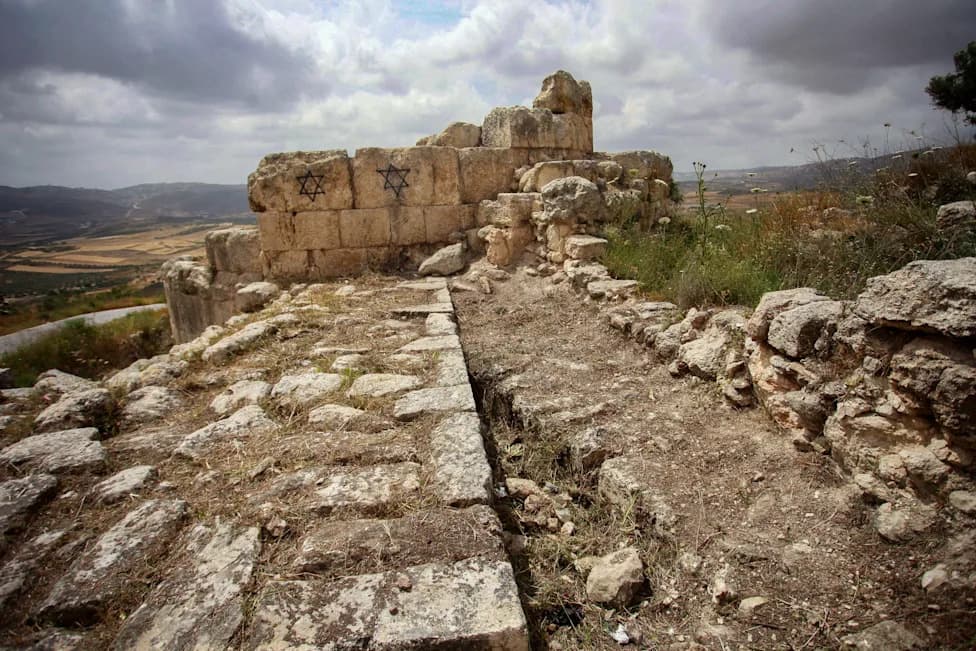
View of a graffiti painted, in the ancient archeological site of Sebastia, near the West Bank city of Nablus, May 12, 2025. (photo credit: NASSER ISHTAYEH/FLASH90)
Alon Arad, executive director of the Israeli NGO Emek Shaveh, warned that Israel’s prioritization of archaeological access over the rights and livelihoods of Palestinians living beside historic ruins amounts to a form of “heritage apartheid.” His remarks to The Jerusalem Post came days after UNESCO inscribed the ancient site of Sebastia as a World Heritage site — a move Palestinian officials said could block Israeli plans to appropriate nearby land.
Background
Sebastia, located in Area C northwest of Nablus, sits adjacent to a populated village in Area B whose economy depends heavily on tourism tied to the ruins and surrounding olive groves. In November, Israel notified Mayor Mahmoud Azem of plans to seize control of parts of the archaeological area, raising alarm among local Palestinians and international observers.
Claims and Counterclaims
Israeli authorities have defended assertions that greater Israeli control over key archaeological sites is necessary to prevent looting and damage, arguing the Palestinian Authority has not sufficiently protected them. Heritage Minister Amichai Eliyahu told The Jerusalem Post,
"The land of the Jewish people belongs to the Jewish people. No international organization... will determine the identity of our heritage sites or rewrite the history of the Jewish people. Therefore, we are acting to secure the future of our national heritage sites."
Arad dismissed such claims as politically motivated and unsupported by clear evidence. He said Sebastia's residents welcome the ruins as part of their local identity and benefit from tourism. Arad also alleged that Palestinians who try to access the site for preservation or maintenance are sometimes detained by the Israeli Civil Administration.
"It’s hypocritical to claim Palestinians are destroying the site without producing evidence, then use that allegation to justify land expropriation and Israeli-led development while sidelining the Palestinian community,"
Arad pointed to an Israeli investment figure of roughly $150 million earmarked for developing archaeological areas and argued that if those developments primarily serve Israeli visitors, they will exclude Palestinian residents and amount to "heritage apartheid." He said that unless Israel presents concrete evidence of deliberate Palestinian destruction, such claims should be treated with skepticism.
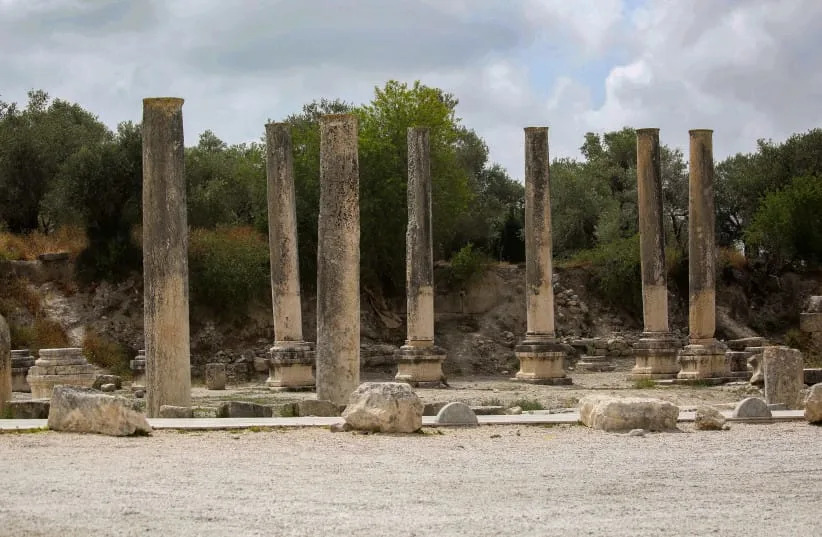
View of the ancient archeological site of Sebastia, near the West Bank city of Nablus, May 12, 2025. (credit: NASSER ISHTAYEH/FLASH90)
Incidents and Damage
There have been specific incidents cited in the dispute: in 2023 the Palestinian Authority built a road through parts of the site, an operation that Israeli groups said damaged a Herodian-era wall and resulted in the looting of burial caves from the Second Temple period, according to Shomrim Al Hanetzach (Protecting Eternity). Arad acknowledged some looting in Areas A and B but attributed most illicit digging to economic hardship — not to a deliberate campaign to erase history.
Heritage, Law, and Proposals
UNESCO describes Sebastia as containing archaeological remains spanning many periods — from at least the 9th century BCE (associated with an Israelite capital) through Hellenistic, Roman, Byzantine, Islamic, Crusader and Ottoman layers — and notes its wider religious significance, including traditional identification as the burial place of John the Baptist.
Arad accused Israel of contravening international heritage law, including the 1954 Hague Convention for the Protection of Cultural Property and the 1972 World Heritage Convention. He warned that if Israel wants to preserve its standing in international heritage bodies, it must acknowledge Sebastia’s new status as a World Heritage site and act in accordance with relevant obligations.
For a constructive path forward, Arad recommended strengthening Palestinian institutions — specifically the Palestinian Authority’s Ministry of Tourism and its Department of Archaeology and Cultural Heritage — and providing them with the resources and autonomy to manage and protect the sites collaboratively.
Outlook
The Sebastia dispute underscores how archaeology and heritage can become entwined with territorial politics. Observers say turning ancient sites into instruments of sovereignty risks both local livelihoods and the physical preservation of ruins, while heightening tensions in an already fraught political context.
Help us improve.