The UK cancelled a September 2026 military training exercise in Kenya after required approvals were not granted, highlighting a dispute over jurisdiction and accountability under the UK–Kenya Defence Cooperation Agreement. Parliamentary scrutiny has focused on BATUK and whether current arrangements sufficiently protect Kenyan legal authority and human rights. The move signals closer legal and political scrutiny of future UK–Kenya military cooperation unless the two governments agree clearer rules.
UK Cancels Kenya Military Exercise Over Legal Dispute — What It Means for BATUK and Bilateral Ties
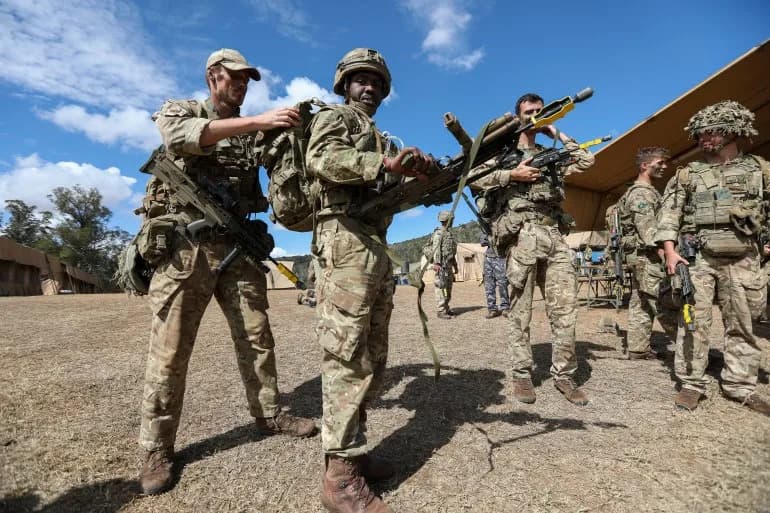
British troops take part in field training during an earlier military exercise in Kenya [Daniel Irungu/EPA]
Nairobi — The United Kingdom has called off a planned military training exercise in Kenya scheduled for September 2026 after required authorisations were not granted, exposing growing tensions in the long-standing defence relationship between the two countries.
What Happened
The UK Ministry of Defence said the exercise was cancelled because formal approvals were not obtained amid an unresolved dispute over the legal framework governing British forces in Kenya. At the centre of the disagreement is the UK–Kenya Defence Cooperation Agreement, which sets out procedures for training, investigations and jurisdiction for visiting forces.
Focus On BATUK And Accountability
Much of the debate has refocused attention on the British Army Training Unit Kenya (BATUK), the long-established platform based near Nanyuki that enables British troops to train alongside the Kenya Defence Forces. While BATUK has provided valuable training opportunities and closer operational ties for decades, its presence has also prompted questions about oversight, legal jurisdiction and accountability when allegations arise.
'This House and the Departmental Committee on Defence, Intelligence and Foreign Relations had reservations on BATUK and particularly, where we as a society, are uncomfortable with human rights abuses,' a parliamentary committee said during scrutiny of the defence pact.
Positions From Both Sides
The UK government has defended the bilateral defence relationship as founded on mutual interests and cooperation. The Ministry of Defence said it highly values the partnership and acknowledged the challenges that have arisen in relation to the UK's defence presence in Kenya, both historically and more recently.
For Kenya, parliamentary concern has centred on ensuring that any defence agreement clearly preserves Kenyan legal authority and provides stronger accountability mechanisms for foreign forces operating on Kenyan territory.
Why It Matters
The cancellation does not end UK–Kenya security cooperation, but it signals that future training may face closer legal and political scrutiny. If the two sides cannot reconcile differences over jurisdiction and accountability, British training activities in Kenya could become more limited or subject to renegotiated terms.
Next Steps
The immediate challenge for London and Nairobi is to renegotiate or clarify elements of the Defence Cooperation Agreement so that it provides transparent accountability, dispute-resolution mechanisms and clear rules on jurisdiction. Reaching a workable compromise would allow joint training to continue while respecting Kenya’s sovereignty and addressing parliamentary concerns.
Bottom line: The cancelled exercise is the clearest sign yet that the future of Britain’s long-standing military presence in Kenya may depend on a revised approach to legal authority, oversight and accountability.
Help us improve.