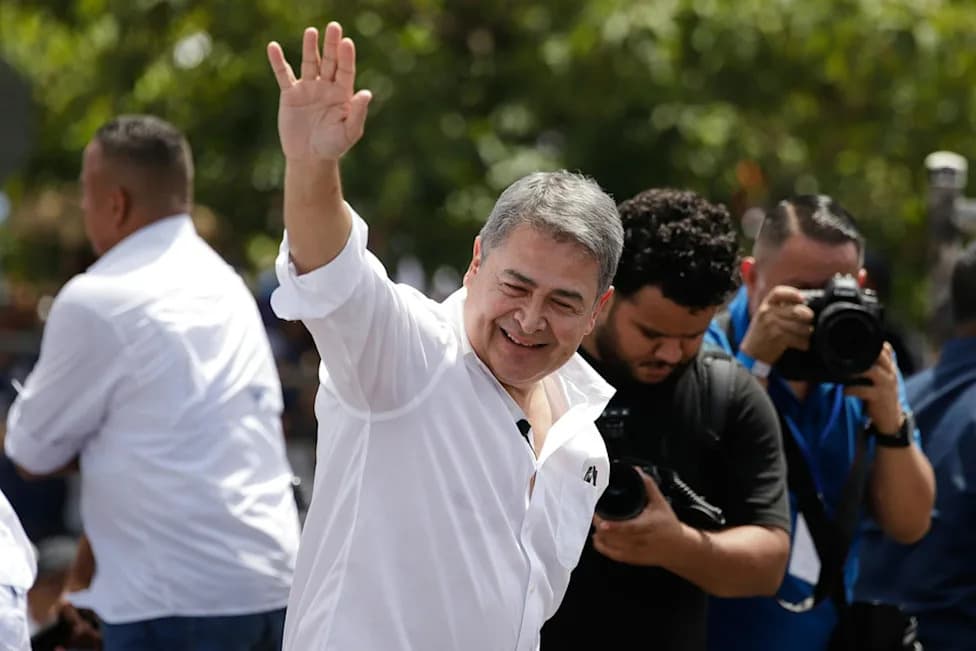
Former Honduran president Juan Orlando Hernández returned to Honduras after being pardoned and released in the United States. He faces corruption charges in the Pandora I case alleging more than 288 million lempiras (~$10.8M) in dubious public disbursements and at least 62 million lempiras (~$2.3M) in alleged campaign proceeds. A judge suspended his arrest warrant and an Interpol red notice in June; Hernández is due to be arraigned on Aug. 3. Critics warn political changes and weakened anti-corruption institutions may prevent meaningful accountability.
Juan Orlando Hernández Returns to Honduras After U.S. Pardon; Corruption Case Fuels Impunity Fears
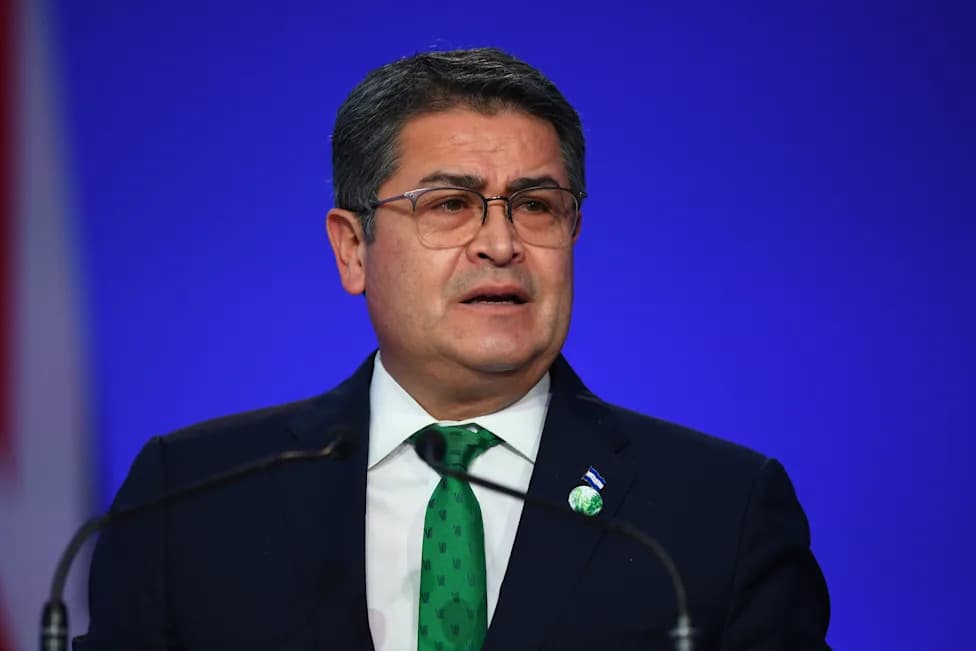
FILE - Honduras' President Juan Orlando Hernandez speaks during the opening ceremony of the UN Climate Change Conference COP26 in Glasgow, Scotland, Monday Nov. 1, 2021. (Andy Buchanan/Pool via AP, File)
TEGUCIGALPA — Four years after his extradition to the United States on drug-trafficking charges and a subsequent U.S. sentence, former Honduran president Juan Orlando Hernández returned to Honduras on Sunday to confront corruption allegations tied to the Pandora I case. His return follows an unexpected pardon and release in the United States, and has reignited concerns that political shifts and a weakened justice system could deny accountability.
Background
Hernández, who governed Honduras from 2014 to 2022, was once viewed by some U.S. officials as an ally in the fight against narcotics trafficking. Prosecutors in the United States cited inflammatory remarks he made while in office, and he was later extradited and sentenced to 45 years in a U.S. prison. In December, he was released after receiving a presidential pardon from U.S. President Donald Trump, who said Hernández had not received a fair trial and described the case as politically motivated.
Corruption Allegations
Back in Honduras, Hernández faces criminal accusations in the Pandora I investigation, which alleges that a network of senior officials between 2010 and 2013 arranged the expansion and approval of public disbursements exceeding 288 million lempiras (about $10.8 million) to various foundations. The Specialized Prosecutor's Unit Against Corruption Networks (UFERCO) says Hernández benefited from the scheme, receiving at least 62 million lempiras (roughly $2.3 million) to support his political campaign through shell companies, straw intermediaries and fictitious contracts. Hernández has denied wrongdoing, saying the case "lacks any legal basis."
Legal Status And Concerns
In June, a judge suspended the arrest warrant against Hernández and an Interpol red notice that had been issued at the request of his defense lawyers, though the underlying case remains open. Hernández has agreed to appear for arraignment on Aug. 3.
"There is a social majority that is outraged, but doesn't speak out because of fear," said Joaquín Mejía, a lawyer and researcher with the human rights group Reflection, Research and Communication Team. "We're talking about the boss of all drug bosses."
Human rights advocates and former anti-corruption investigators warn that the return to power of Hernández's National Party — and the removal of key prosecutors who pursued Pandora I — could make meaningful prosecution unlikely. Luis Javier Santos, the former head of UFERCO who led parts of the Pandora I probe, said his removal in February signaled efforts by the new government to curtail anti-corruption work. The new administration, led by Nasry Asfura, took office in January.
What Comes Next
Observers say several senior officials implicated in Pandora I have already seen their cases dismissed, foreshadowing a possible pattern for Hernández. Critics expect that authorities may impose alternative measures instead of pretrial detention, allowing Hernández to avoid jail time while preserving an appearance of legal process. Supporters of accountability argue that his return is instead a pivotal moment to test Honduras's capacity to investigate and prosecute high-level corruption.
Since his release in the United States, Hernández has expressed his desire to reunite with his wife, Ana García, and their children; reports indicate the family's U.S. visas remain suspended. Brigida reported from Mexico City.
Help us improve.