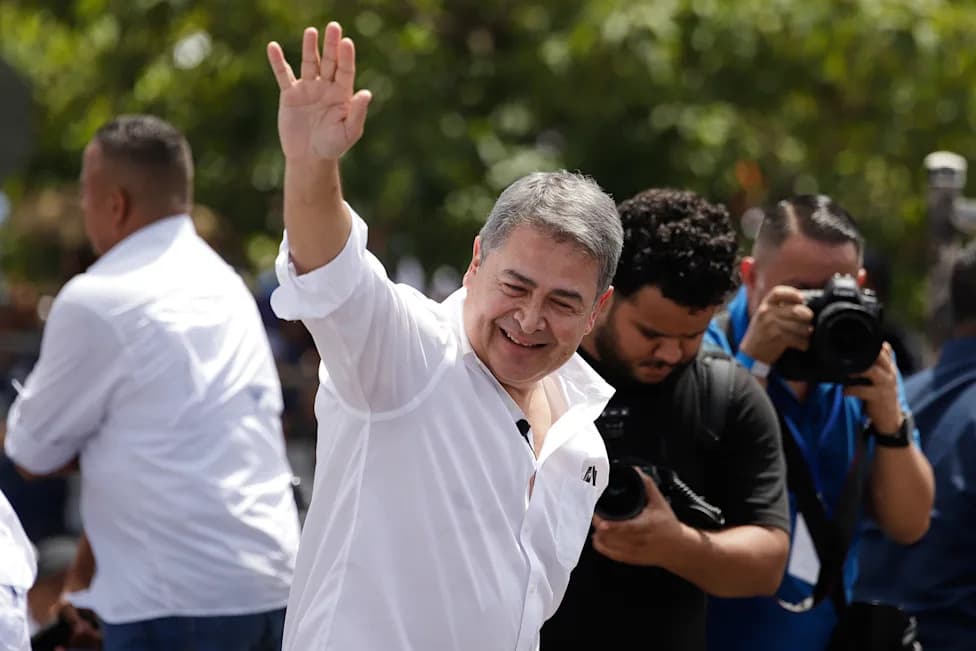
Juan Orlando Hernández returned to Honduras in July 2026 after a U.S. conviction and a full pardon from President Donald Trump. On Sept. 1, 2026, Honduran judges dismissed money-laundering and fraud charges tied to the Pandora case. Critics say his comeback — coupled with renewed ZEDE initiatives and expanding U.S. and Israeli security ties — highlights a broader struggle over Honduran sovereignty and accountability.
Pardoned, Returned, and Cleared: How Juan Orlando Hernández’s Case Reveals a Battle Over Honduran Sovereignty
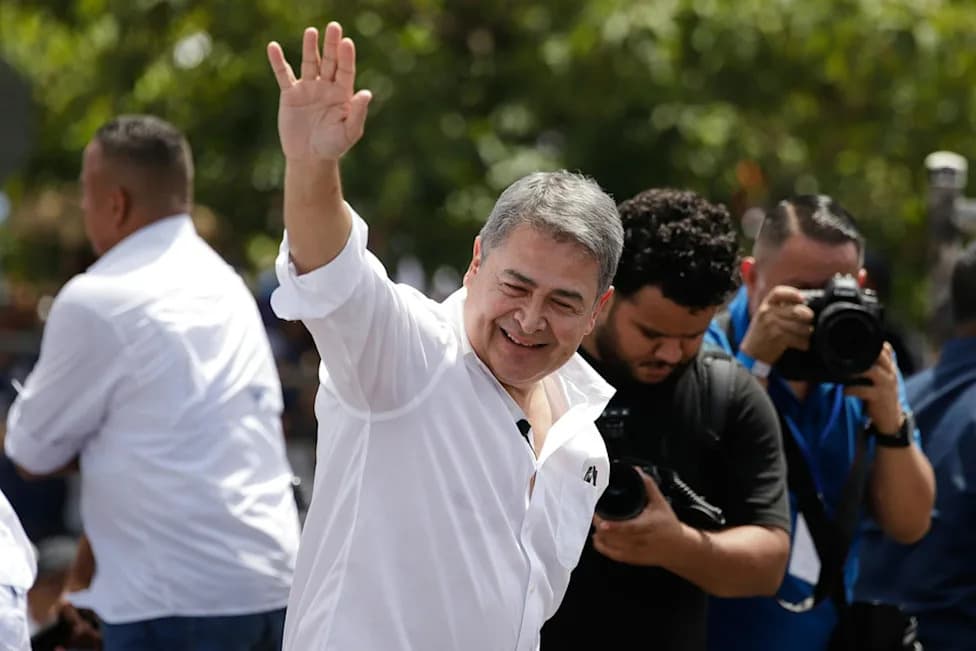
Former Honduran President Juan Orlando Hernández acknowledges supporters upon his return to Honduras on July 26, 2026.AP Photo/Fernando Destephen,File
On Sept. 1, 2026, a Honduran judge dismissed sprawling money-laundering and fraud charges against former president Juan Orlando Hernández, removing a major legal obstacle for a politician who has repeatedly eluded accountability.
Hernández returned to Honduras in late July 2026 after roughly four years abroad. Extradited to the United States in 2022 following a long U.S. investigation, he was convicted in 2024 of cocaine trafficking and related offences and sentenced to 45 years in prison. After serving about 18 months, Hernández received a full pardon from U.S. President Donald Trump on Dec. 1, 2025, and was subsequently allowed special immigration protections and escorted back to Honduras.
Behind-the-scenes influence. Although no longer behind bars, Hernández continues to exert influence in Honduran politics, operating as a power broker within the ruling National Party and behind President Nasry Asfura. Observers argue that his safe return and the collapse of domestic charges against him are symptomatic of a wider struggle over Honduran sovereignty, in which domestic political shifts and external pressures intersect.
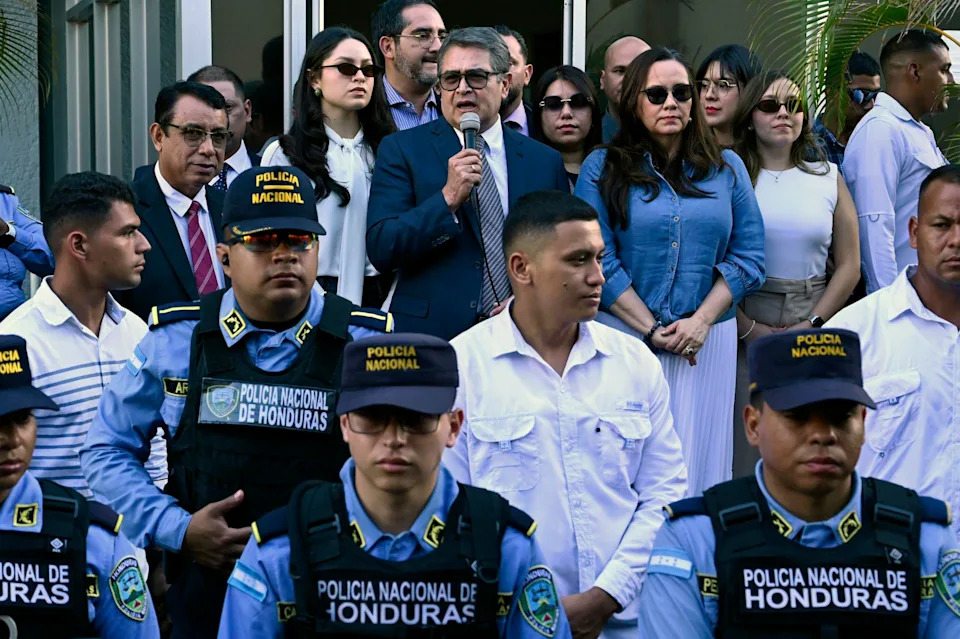
Hernandez speaks to the press as police officers stand guard outside the Supreme Court of Justice after a judge dismissed corruption charges against him.Orlando SIERRA / AFP via Getty Images
Legal timeline in Honduras. The Pandora corruption probe, which alleges the embezzlement of roughly $12 million in public funds diverted into political campaigns including Hernández's 2013 run, has long implicated major National Party figures. Under the Castro administration (2022–2026) prosecutors reopened Pandora and in 2023 sought indictments against Hernández and former president Porfirio Lobo. On Aug. 12, 2026 the Public Ministry presented 48 items of evidence against Hernández, but within weeks the court dropped the case, and judges confirmed the dismissal on Sept. 1.
Election interference and geopolitical context. Critics contend that U.S. actions surrounding Hernández — including President Trump’s public endorsement of Asfura ahead of the November 2025 election and the Dec. 1, 2025 pardon issued amid contested vote counts — signalled Washington’s preference for right-wing allies. Honduran authorities ultimately declared Asfura the winner on Dec. 24, 2025 by a margin of less than 1 percent after a contentious count and fraud allegations.
HondurasGate and disputed audio leaks. In May 2026 the Spanish outlet Canal Red published 37 audio files purportedly featuring Honduran political figures, including Hernández and Asfura. Dubbed HondurasGate, the leaks suggest an international scheme to undermine leftist governments and expand foreign militarization in Honduras. Analysts remain divided over their authenticity, and those named have dismissed the recordings as forgeries or AI fabrications.
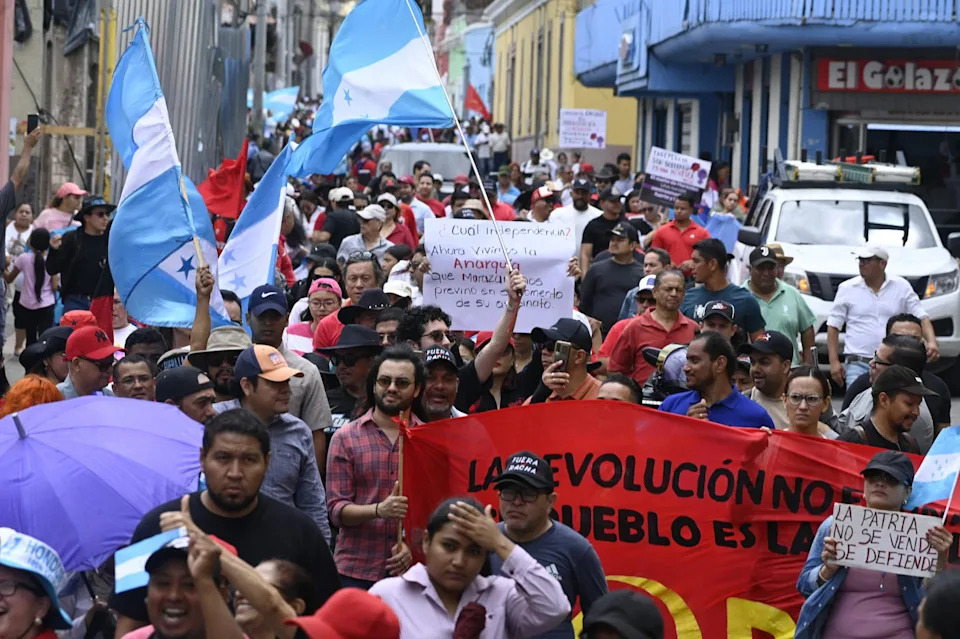
Supporters of the opposition Liberty and Refoundation Party take part in a protest calling for the resignation of President Nasry Asfura in Tegucigalpa on Sept. 15, 2026.Orlando SIERRA/AFP via Getty Images
Security ties and private zones. Honduras has deepened security cooperation with the United States and Israel: officials signed memoranda expanding defense ties and announced plans for joint operations in Honduras and neighbouring states. At the same time, the contested ZEDEs (Zones for Employment and Economic Development) — including the high-profile Próspera project backed by international investors tied to tech figures — have resurfaced as corporate and political priorities. Critics warn that ZEDEs amount to privatized governance that risks ceding regulatory control and sovereignty over Honduran territory.
Human impact and governance concerns. The political realignment has coincided with growing economic and social strain for ordinary Hondurans: politicized public-sector layoffs, reports of public health workers unpaid for months, a rise in insecurity and disappearances, and the economic effects of tougher U.S. immigration enforcement that reduce remittances. Meanwhile, a specially designated Honduran security unit was assigned to protect Hernández — a stark symbol of the protection afforded to political elites.
Hernández's case, supporters say, reflects legal vindication and restoration. For critics and many Hondurans, it illustrates how foreign influence, elite networks and legal reforms have combined to limit accountability and reshape national sovereignty.
Note: This article synthesizes reporting and analysis on events through Sept. 1, 2026. It was originally published on The Conversation and written by Laura Blume of the University of Nevada, Reno.
Help us improve.