The IUCN has reclassified Florida's gopher tortoise as critically endangered after surveys found populations declined by more than 80% over three generations. Habitat loss — especially of longleaf pine sandhills and coastal dunes — is the primary driver, and experts say translocation cannot make up for continued destruction. Federal Endangered Species Act protections remain limited, legal challenges are underway, and scientists warn some surviving groups may be effectively doomed without stronger conservation action.
Florida's Gopher Tortoise Declared Critically Endangered After 80% Population Collapse
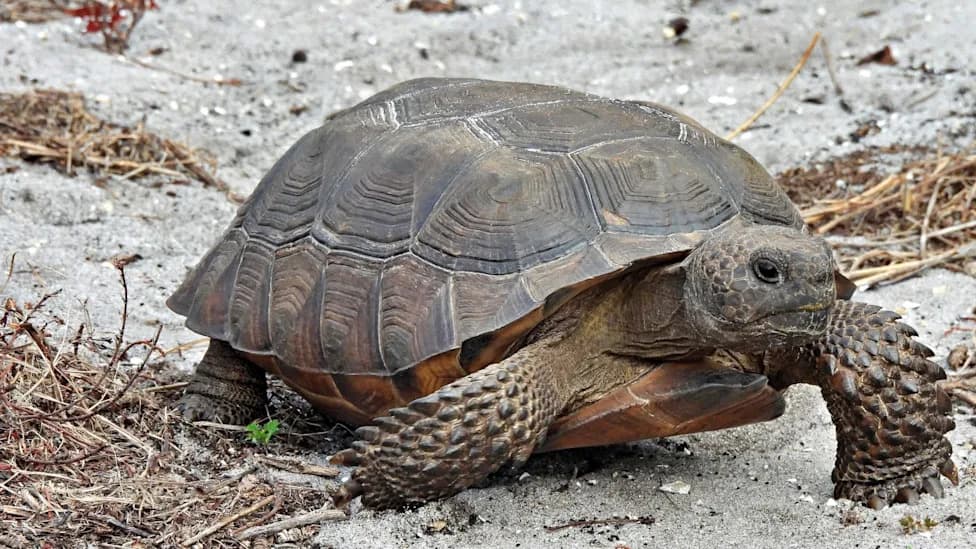
Photo Credit: iStock
Florida's gopher tortoise — a quiet but essential builder of upland ecosystems across the Southeast — has been reclassified by the International Union for Conservation of Nature (IUCN) as critically endangered after surveys showed population declines exceeding 80% over the last three generations.
Why Numbers Have Fallen
Scientists point to widespread loss and fragmentation of the tortoise's preferred upland habitats, especially longleaf pine sandhills and coastal dunes. Development that replaces native habitat with roads, subdivisions and commercial projects has confined tortoises to smaller, isolated patches, reducing breeding success and increasing mortality.
Outsize Ecological Role
Gopher tortoises are ecosystem engineers: the burrows they dig provide shelter for hundreds of other species. As those tortoise populations decline, the ecological impacts ripple through plant and animal communities that depend on these burrows for refuge from predators, fire and extreme weather.
“These [burrows] are sort of life-giving forces in the Southeast's upland habitats,” said Elise Bennett, Florida and Caribbean director at the Center for Biological Diversity.
Protections, Relocation, And Limits
Federal protections remain limited. The U.S. Fish and Wildlife Service has not listed most eastern gopher tortoise populations under the Endangered Species Act; only western populations in parts of Alabama, Mississippi and Louisiana currently receive that protection. In Florida, the Fish and Wildlife Conservation Commission requires tortoises be moved before site clearing and reports that relocated animals are usually placed in better habitat and receive health screenings.
Researchers caution, however, that translocation cannot compensate for ongoing habitat loss. Hunter Howell, a co-author of the IUCN reassessment, said researchers have been unable to find evidence of any gopher tortoise population increasing in growth across their range — “even in protected areas,” added co-author Leyna Stemle.
Legal And Scientific Disputes
Conservation groups including the Center for Biological Diversity and Nokuse Education, Inc. have sued after the Fish and Wildlife Service declined to list eastern gopher tortoises. Critics of the federal analysis say the population model contains significant errors; ecologist Kevin Shoemaker has described those errors as "real errors." Howell warned that some remaining groups may be "ghost populations" — persisting now but effectively doomed without stronger conservation action.
What’s Next
Conservationists and experts urge stronger habitat protection and restoration (notably of longleaf pine ecosystems), improved land-use planning to reduce fragmentation, and expanded federal and state safeguards. Without durable measures to halt habitat loss, researchers say the gopher tortoise and the many species that rely on its burrows will continue to face steep declines.
Help us improve.