The 9th U.S. Circuit Court of Appeals, in a 2-1 decision, upheld the firing of Oregon counselor Roderick E. Theis II after he displayed and in some cases gave gender-themed books to middle school students. The court concluded that Theis' on-duty speech was government speech and therefore not protected by the First Amendment. A partial protective order had allowed the books to remain visible only when students were absent; termination followed after investigators found he provided the books to students. The lone dissent warned about selective restrictions on office speech and symbolic displays.
9th Circuit Upholds Firing Of Oregon Counselor Over Gender-Themed Books, Calling On-Duty Speech Government Speech
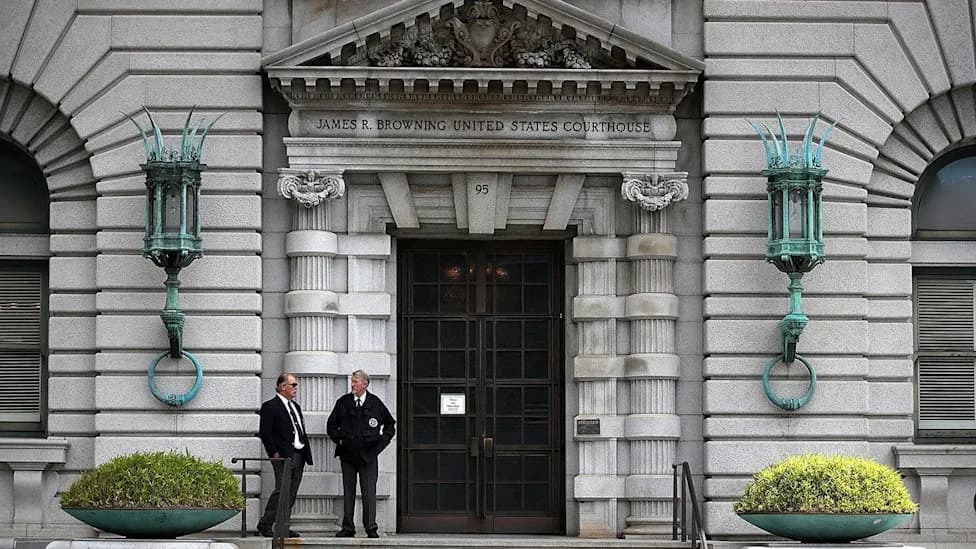
Security guards stand in front of the Ninth U.S. Circuit Court of Appeals building in San Francisco.
A federal appeals court this week affirmed the termination of an Oregon school counselor who displayed and shared gender-themed books in school offices, ruling that his on-the-job speech was government speech and therefore not protected by the First Amendment.
In a 2-1 decision, the 9th U.S. Circuit Court of Appeals upheld the InterMountain Education Service District's (IMESD) dismissal of Roderick E. Theis II, an education specialist who worked for the district for more than 15 years. Court documents show Theis displayed books including He Is He, She Is She, and Matt Walsh’s Johnny the Walrus in offices where he met with middle school students, and on at least one occasion provided copies to students who requested them.
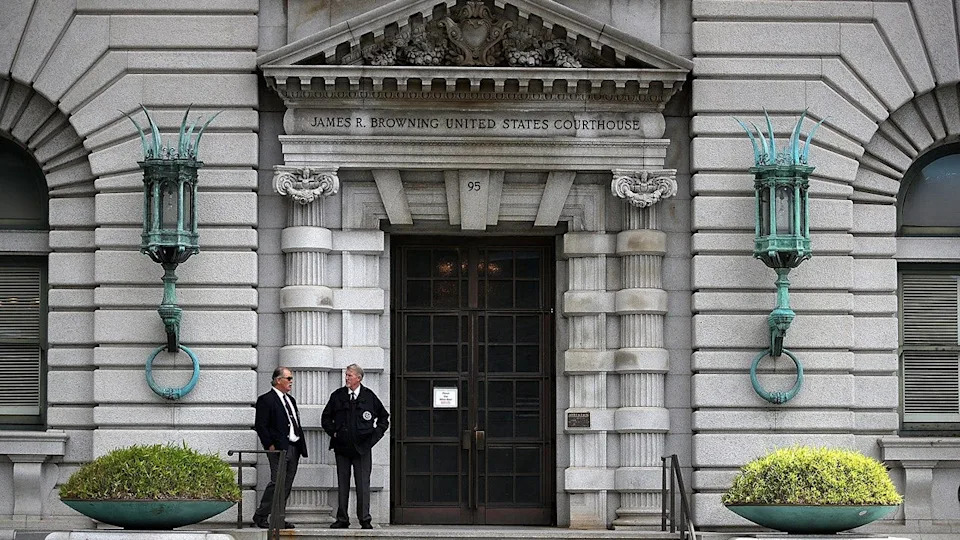
Security guards stand in front of the Ninth U.S. Circuit Court of Appeals in San Francisco, Calif., on June 12, 2017.
Following a district investigation, IMESD classified the displays as a "bias incident" and instructed Theis to remove the books or face termination. A federal judge later issued a limited protective order allowing Theis to keep the books visible only when students were not present. The district ultimately terminated his employment after investigators concluded Theis had given the books to middle school students during school hours.
Court Rationale
Writing for the majority, Circuit Judge John B. Owens relied on longstanding precedent treating educators' speech as government speech when it occurs in the course of school duties. Owens wrote that because Theis was "assigned to work in school offices, meet with students, and carry out his duties in that setting," his speech "cannot be meaningfully separated from them" and therefore falls outside the First Amendment's protection.

The 9th U.S. Circuit Court of Appeals upheld the firing of Oregon school counselor Roderick E. Theis II over his display of books promoting binary gender views to middle school students.
"As a government employee, Theis was assigned to work in school offices, meet with students, and carry out his duties in that setting. His speech occurred in the course of those responsibilities and cannot be meaningfully separated from them." — Judge John B. Owens (majority)
Dissent And Reactions
The lone dissent, written by Circuit Judge Lawrence VanDyke, argued the books functioned as personal office decoration and warned against selective enforcement that could permit some symbolic displays while prohibiting others. VanDyke posed rhetorical questions about whether schools could allow certain political or symbolic banners while banning others, arguing that inconsistent policies risked viewpoint discrimination.
"Could public school administrators establish a policy allowing office decoration with partisan political messages deemed sufficiently 'compassionate,' but prohibit — as inherently hostile — any political speech that did not align with [a particular] platform?" — Judge Lawrence VanDyke (dissent)
Mathew Hoffman, legal counsel at Alliance Defending Freedom, said Theis' attorneys are "evaluating next steps" and criticized the district's decision, saying Theis was fired after a single objection to his views. Fox News Digital reported that IMESD was contacted for comment.
Theis may seek further review, including a request for rehearing by the full 9th Circuit or a petition to the U.S. Supreme Court. The ruling underscores ongoing legal tensions over when public employees' speech in schools is First Amendment-protected personal expression versus government speech tied to their official duties.
Help us improve.