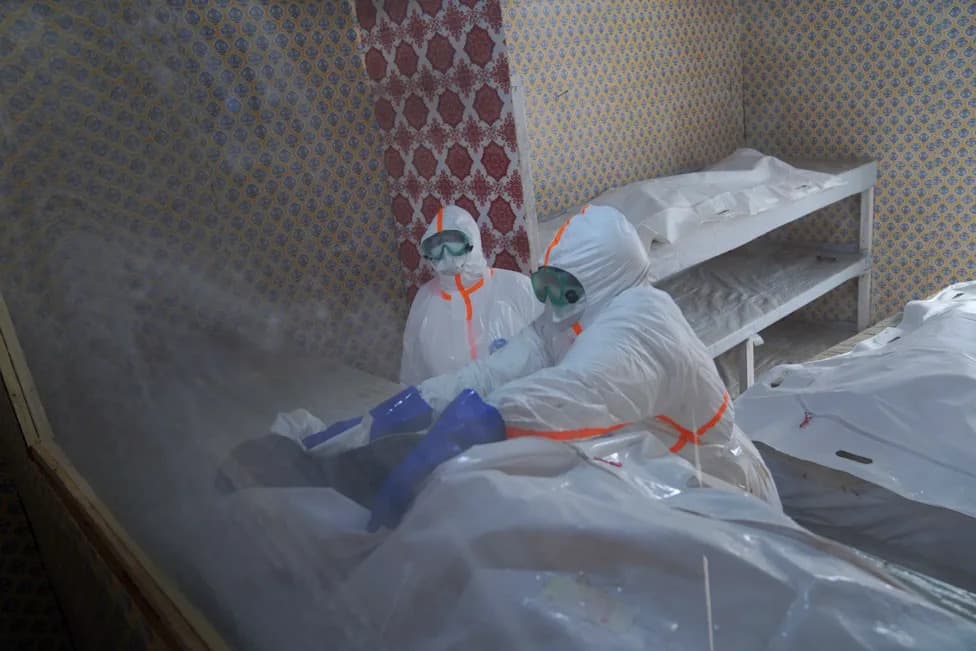
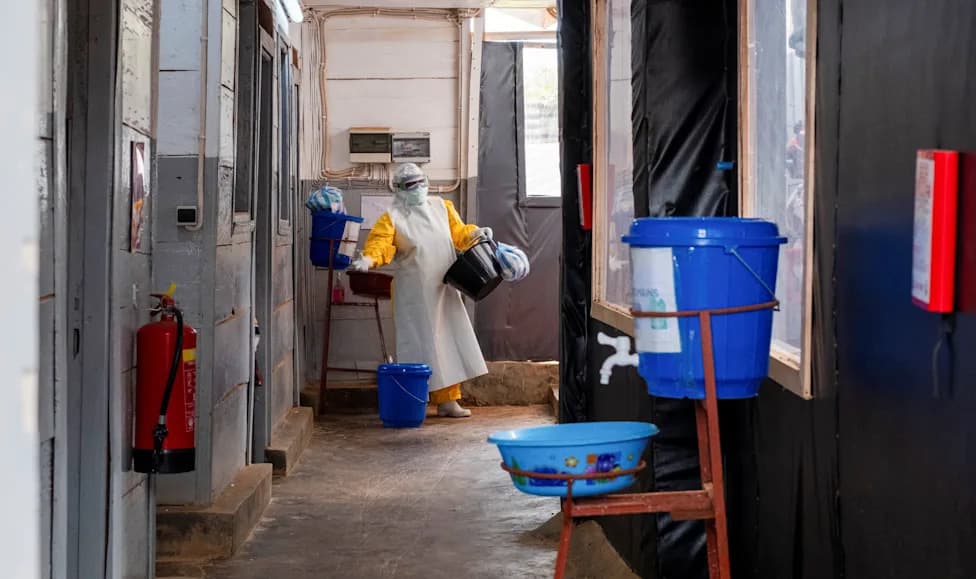
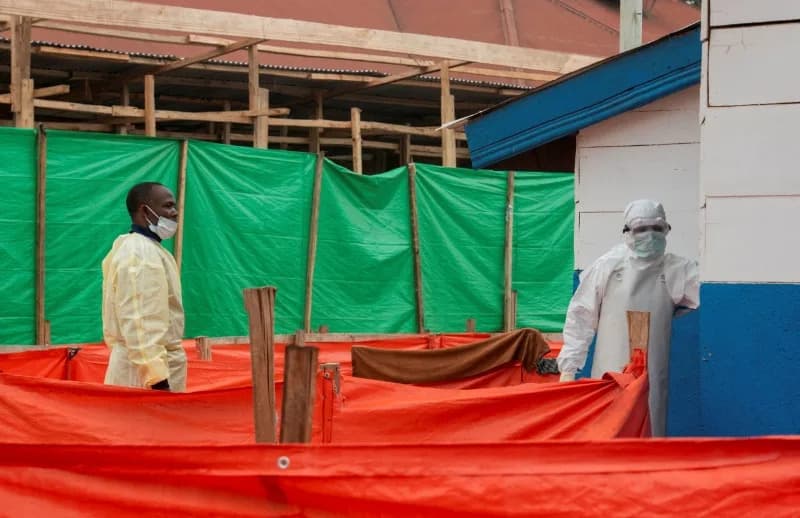
The Ebola outbreak in the Democratic Republic of Congo has accelerated sharply: deaths have exceeded 1,309 and confirmed cases reached 2,973 as of Thursday. The epidemic is being driven by the rare Bundibugyo variant, which currently has no approved vaccine. Researchers have begun trials of an experimental vaccine, while insecurity, attacks on treatment centres and strikes by health workers are hampering the response. WHO warns true case numbers may be much higher and has urged safer access for responders.
Ebola Deaths in DRC Top 1,300 as Rare Bundibugyo Variant 'Spreads Like a Wildfire'
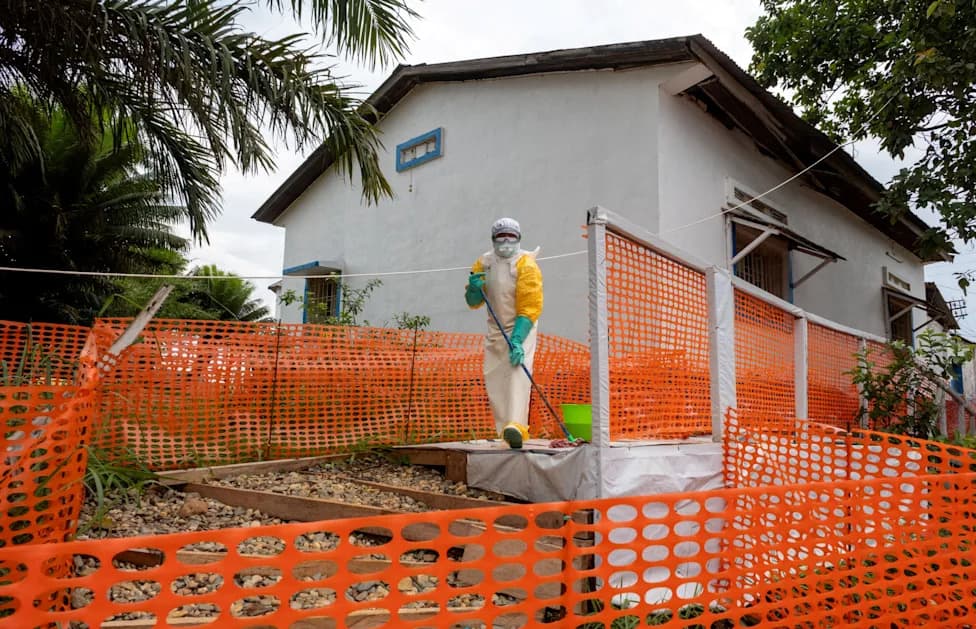
A health worker cleans outside her station during a tour by DRC Prime Minister Judith Suminwa Tuluka of the Mongbwalu General Hospital in Ituri province [File: Gradel Muyisa Mumbere/Reuters]
Nairobi, Kenya — The death toll from the current Ebola outbreak in the Democratic Republic of Congo (DRC) has surged past 1,309, a leap of more than 40% in five days, government figures show. Updated statistics released on Saturday put the total number of confirmed cases and fatalities at 2,973 as of Thursday — a 27% rise in one week.
The outbreak is accelerating. Public-health experts warn this is the fastest‑spreading Ebola epidemic on record, driven by the rare Bundibugyo variant, for which there are currently no approved vaccines or established treatments.
Compounding challenges: The epidemic is unfolding amid active conflict in eastern DRC, limiting access for response teams and stretching already scarce health resources. Insecurity, community hostility and shortages of protective equipment have contributed to infections among medical staff and hampered contact tracing.
Vaccine Trial and Scientific Response
Researchers are racing to develop countermeasures. The Oxford Vaccine Group at the University of Oxford said a volunteer received the first dose of a rapidly developed experimental vaccine on Friday. Katrina Pollock, the trial's chief investigator, described the vaccination as an important milestone in the multinational effort to develop a Bundibugyo ebolavirus vaccine.
“The absence of a proven vaccine is allowing the virus to move through communities 'like a wildfire,'” said Abdulsalami Nasidi, a public-health consultant who helped establish the Africa Centres for Disease Control and Prevention (Africa CDC).
Impact on Health Workers and Facilities
More than 100 health workers have been infected since the outbreak was declared in May, and about 35 have died. Medical teams report strikes over unpaid wages and unsafe conditions in the epicentre of Ituri province. Parts of treatment centres have been attacked or set on fire, and staff have been chased from facilities — actions that further undermine the response.
Last week dozens of employees at Rwampara General Hospital near Bunia staged a strike after parts of its Ebola treatment unit were burned in May. A fresh walkout began at the Elikya Ebola Treatment Centre in Bunia, where approximately 100 staff protested unpaid bonuses and largely suspended services.
Global Warnings and Travel Measures
World Health Organization Director‑General Tedros Adhanom Ghebreyesus warned that the true number of infections could be more than double the official count because teams cannot safely access many affected communities. He reported that contact tracing currently reaches roughly 80% of known contacts but stressed that response teams still cannot reach every village.
In response to the escalating epidemic, the United States and Canada have restricted entry for travellers recently in the DRC — measures that diverge from WHO guidance issued in May when the outbreak was declared a global health emergency.
“If we do not stop it today, this will become the worst outbreak the world has ever documented,” Africa CDC Director‑General Jean Kaseya wrote on social media.
Why This Is Alarming
The 2013–2016 West Africa Ebola epidemic — the deadliest on record — killed more than 11,000 people from at least 28,000 cases. That outbreak took roughly eight months to reach its first 1,000 deaths; the current DRC epidemic reached that threshold in under 10 weeks, underscoring how rapidly the situation is deteriorating.
Health authorities and international partners say immediate political and humanitarian actions are needed to secure safe access for responders, increase protective equipment and support vaccine trials before the virus spreads to additional provinces.
Help us improve.