New research in Biological Conservation shows Iberian Peninsula rabbits comprise two species — the Iberian rabbit (Oryctolagus algirus) and the European rabbit (Oryctolagus cuniculus) — that diverged about 2 million years ago. Scientists report a sharp decline of the Iberian rabbit in Portugal and southwestern Spain, while European rabbit populations are stable or increasing elsewhere. Misclassifying them as one species has masked local losses, distorted hunting and restocking, and threatens predator species that depend on rabbits. Researchers call for formal taxonomic recognition and region-specific conservation measures.
Study Splits Iberian Rabbits Into Two Species — One Is Plummeting in Portugal and Spain
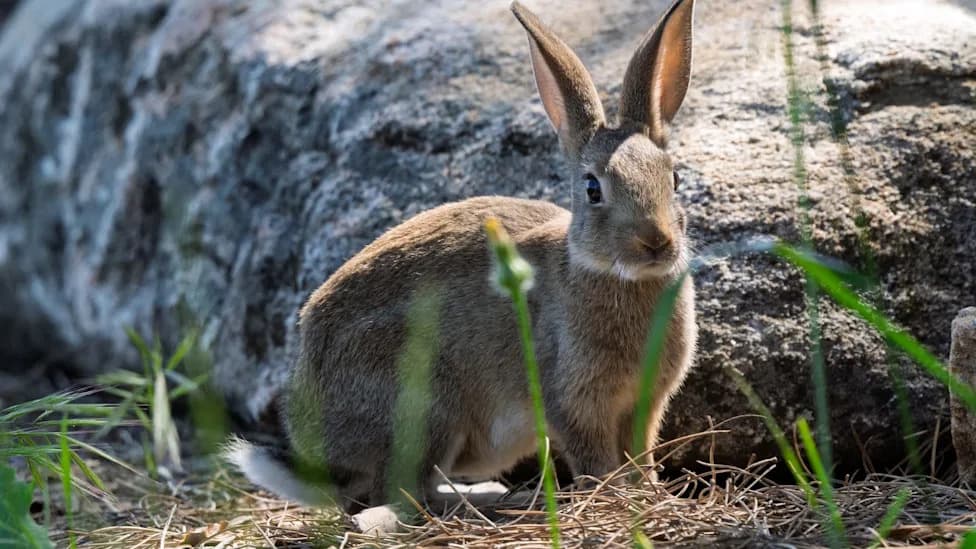
Photo Credit: iStock
For more than a century, rabbits across the Iberian Peninsula were assumed to be a single species. New research published in Biological Conservation shows that assumption masked an urgent conservation problem: what was treated as one species is actually two distinct lineages, and one of them is in steep decline.
What the Study Found
The team argues the traditionally recognised Iberian rabbit is two species: the Iberian rabbit (Oryctolagus algirus) and the European rabbit (Oryctolagus cuniculus). The lineages appear to have diverged about 2 million years ago, likely after populations were isolated in glacial refuges in the Ebro Valley and the Gulf of Cádiz.
Although visually similar, the researchers documented consistent differences: the Iberian rabbit is generally smaller, darker, reaches sexual maturity earlier, and produces smaller litters. Genetic analyses, gut microbiome profiles and parasite communities also differ between the two groups.
Distribution And Status
The ranges are distinct: the Iberian rabbit is native mainly to Portugal and western Spain, while the European rabbit predominates in eastern Spain and is the source of introduced populations across Europe, Oceania and the Americas. Crucially, population trends differ: European rabbit numbers are stable or increasing in many places, but the Iberian rabbit is declining sharply in Portugal and parts of southwestern Spain.
Conservation Consequences
Treating both lineages as a single species can conceal local declines by aggregating them with healthier populations elsewhere. That conflation can delay targeted recovery plans, skew hunting regulations and lead to risky restocking practices that use the more abundant European rabbit to replenish areas historically occupied only by Iberian rabbits.
“We cannot go on managing as a single species two rabbits that have evolved separately for almost two million years,” said study coordinator Miguel Delibes-Mateos.
Broader Ecological Risks
Rabbits are a keystone prey species in Mediterranean habitats: as many as 40 predator species — including the Iberian lynx and the Spanish imperial eagle — rely on them. If the wrong lineage is protected, translocated, or allowed to replace the other through competition or hybridization, dependent predators and ecosystem processes could suffer.
Next Steps
The authors urge formal taxonomic recognition of the two species so governments and conservation organisations can implement region-specific monitoring, hunting rules and recovery measures. They also recommend revising game restocking practices to avoid introducing European rabbits into areas historically occupied by Iberian rabbits, which could accelerate replacement through competition and hybridisation.
Study reported by Euronews and published in Biological Conservation. Quotes and findings cited from the study coordinators Rafael Villafuerte and Miguel Delibes-Mateos.
Help us improve.