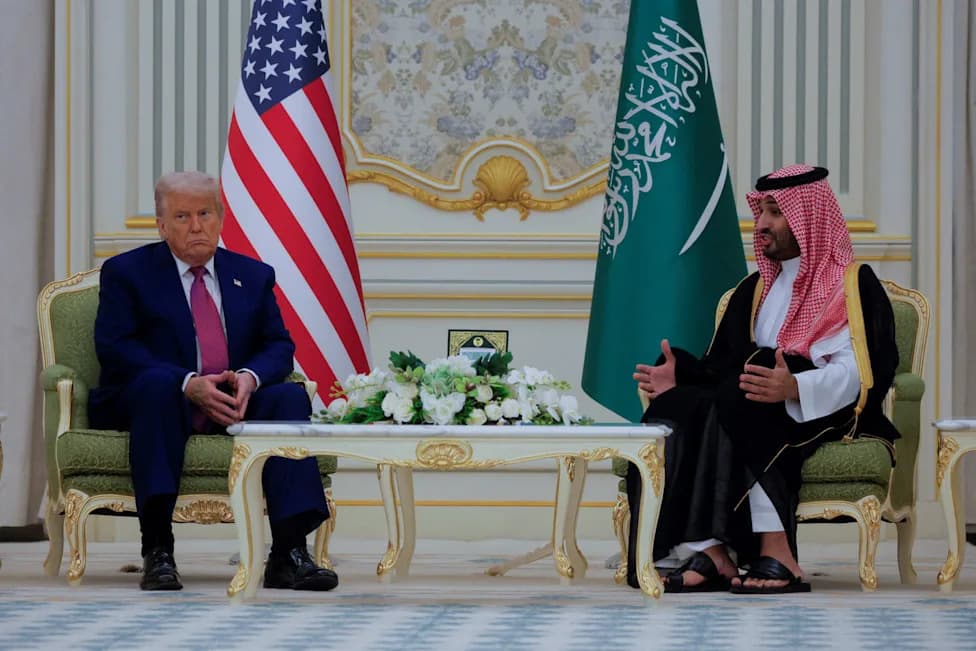
President Trump said the United States will not finalise a civilian nuclear cooperation agreement with Saudi Arabia unless Riyadh first normalises ties with Israel under the Abraham Accords. The administration framed the pact as a decades-long, multibillion-dollar partnership to be submitted to Congress for review. While details are not public, reports about possible domestic uranium enrichment prompted Trump to insist there "will be no enrichment of material." Saudi officials say they will not formalise relations with Israel until there is a clear path to Palestinian statehood.
Trump: Saudi Arabia Must Join Abraham Accords Before US Nuclear Deal
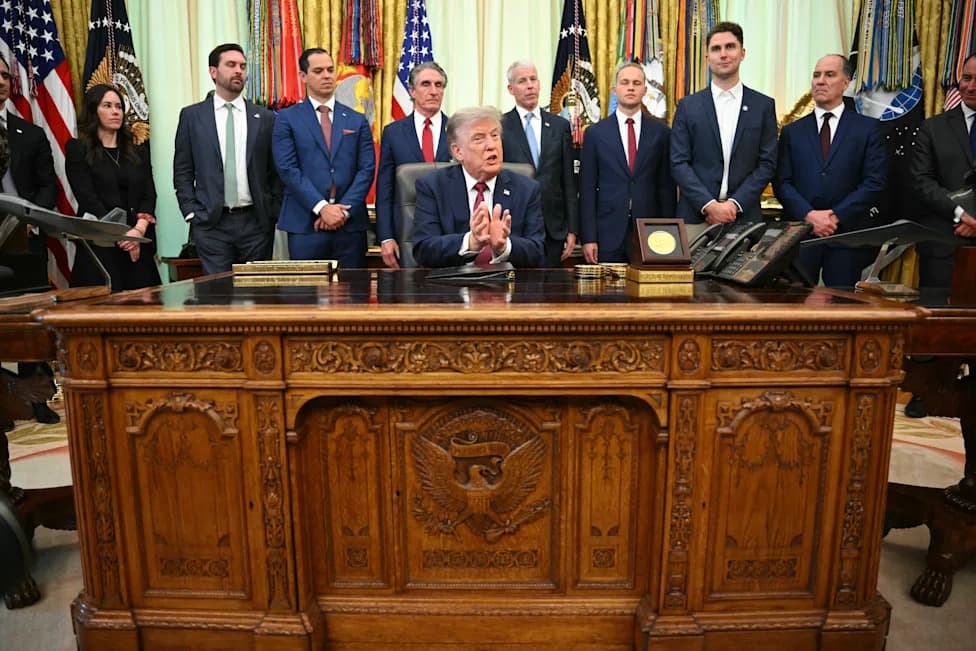
US President Donald Trump makes an announcement on American Nuclear Innovation in the Oval Office, on July 24 [Mandel Ngan/AFP]
President Donald Trump reiterated that the United States will not finalise a civilian nuclear cooperation agreement with Saudi Arabia unless Riyadh first normalises relations with Israel under the Abraham Accords.
Asked whether the US Department of Energy had moved ahead of him when it announced the deal earlier in the week without mentioning Israel, Mr Trump replied:
"No, nobody got out ahead."He added:
"I just say that in order to do it, they have to be a member of the Abraham Accords, which have been very successful. But it's time now that they do it."
Washington and Riyadh signed a cooperation agreement on Wednesday to develop a civilian nuclear programme in Saudi Arabia. A day later, Mr Trump used social media to attach a new requirement to the pact, saying the kingdom must normalise ties with Israel first, a stance he reiterated in comments on Friday.
What The Administration Says
Energy Secretary Chris Wright described the agreement as reflecting a shared commitment to strengthen US–Saudi commercial relations and enhance security for allies. The administration has characterised the pact as a "decades-long, multibillion-dollar partnership" that will be submitted to Congress for review.
The full text of the agreement has not been released. Some US media reports indicate the arrangement might permit Saudi Arabia to enrich uranium domestically rather than import nuclear fuel from the United States; Mr Trump later asserted there "will be no enrichment of material." The deal is reported to run for roughly 30 years and would transfer US technology and expertise to the kingdom.
Saudi Response And Regional Context
Saudi authorities have not publicly accepted Mr Trump's new linkage of normalisation to the nuclear deal. Riyadh has long maintained it will not formalise relations with Israel until there is a clear pathway to Palestinian statehood — a condition at odds with the position of Israel's current government.
Saudi Arabia's Ministry of Energy said the agreement advances efforts to diversify energy sources, develop advanced technologies, and expand cooperation and investment in ways that serve the mutual interests of both countries.
Non-Proliferation Concerns And Oversight
US officials emphasise that American contractors would play a central role in building and operating the programme, enabling Washington to maintain oversight and reduce proliferation risks. Senator Marco Rubio said he expected US oversight and contractor involvement to be key elements in preventing proliferation. US nuclear reactor designer Westinghouse is widely reported to be a principal contractor.
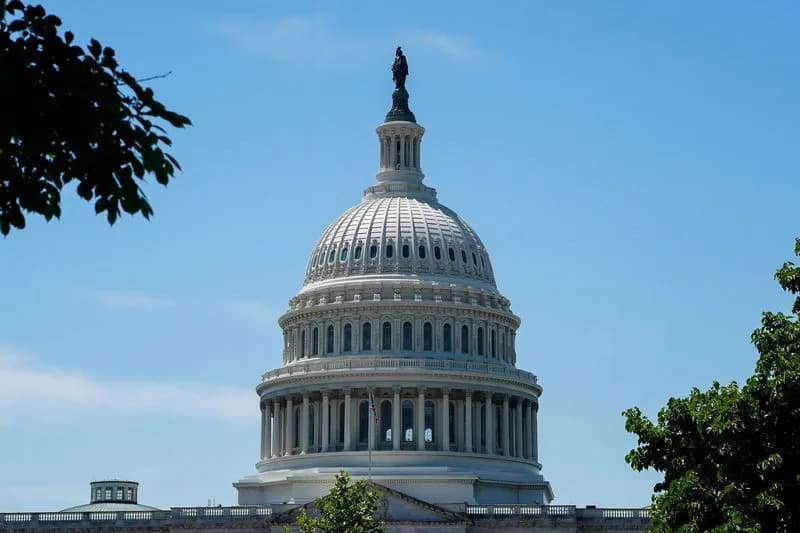
As the agreement is reviewed by Congress, key questions remain about safeguards, enrichment limits, and the diplomatic implications of linking civilian nuclear cooperation to progress on Israeli–Saudi normalisation.
Help us improve.