BuzzBallz, a brightly packaged ready-to-drink cocktail popular with younger consumers, cannot be recycled in the UK because its PET plastic sphere is permanently bonded to an aluminium lid. WRAP warns no UK councils will accept the containers at kerbside and that they can contaminate sorting lines. Greyparrot found the product contaminated recycled plastic 66% of the time in one facility. BuzzBallz has apologised for a website error that referenced a US-only TerraCycle scheme and has updated its UK pages.
Why BuzzBallz Can’t Be Recycled In The UK — And What That Means For Drinkers

Georgia enjoyed a Lotta Colada on her way to watch Harry Styles [BBC]
Aédén Rooney cleans up after pre-drinks and drops an empty BuzzBallz into his recycling bin — only to discover the bright, ready-to-drink cocktails cannot be processed by UK recycling systems. The brand once claimed on its website that packaging was recyclable and referenced a TerraCycle partnership; that information has since been removed and, the company says, applied only to the United States.

Aédén Rooney said he drinks about three BuzzBallz a week during term time [Aédén Rooney]
Why BuzzBallz Are Effectively Unrecyclable
WRAP, the global body for environmental action, says the problem is the product's construction: the PET plastic sphere is permanently bonded to an aluminium lid and cannot be separated for standard recycling streams. "They're a mix of two very recyclable materials that put together makes an unrecyclable format," said Adam Herriott, WRAP's head of packaging. As a result, no UK local authority accepts BuzzBallz at kerbside.
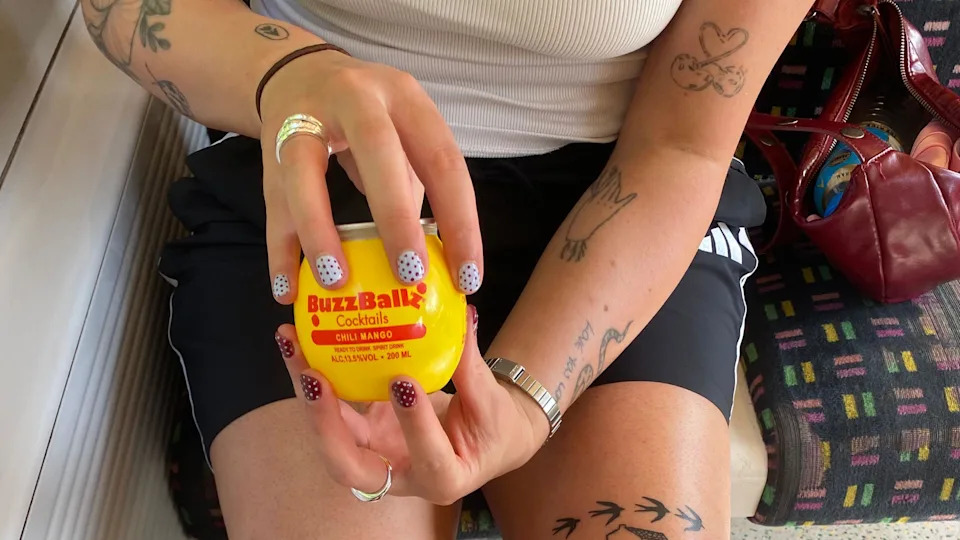
BuzzBallz were created by school teacher Merrilee Kick but bought by Sazerac in 2024 [BBC]
"No local authorities will accept these at the kerbside." — Adam Herriott, Head of Packaging, WRAP
Practical Risks At Recycling Facilities
The spherical shape and mixed materials also cause sorting problems. At Material Recovery Facilities (MRFs), items travel on conveyor belts through scanners and air jets. BuzzBallz containers can roll or shift position, causing scanners and separation systems to misidentify them and potentially contaminate other recycling streams. Ambarish Mitra, co-founder of waste-analytics firm Greyparrot, described BuzzBallz as "one of the villains of recycling" and said the format currently has "no recovery route in the current system."
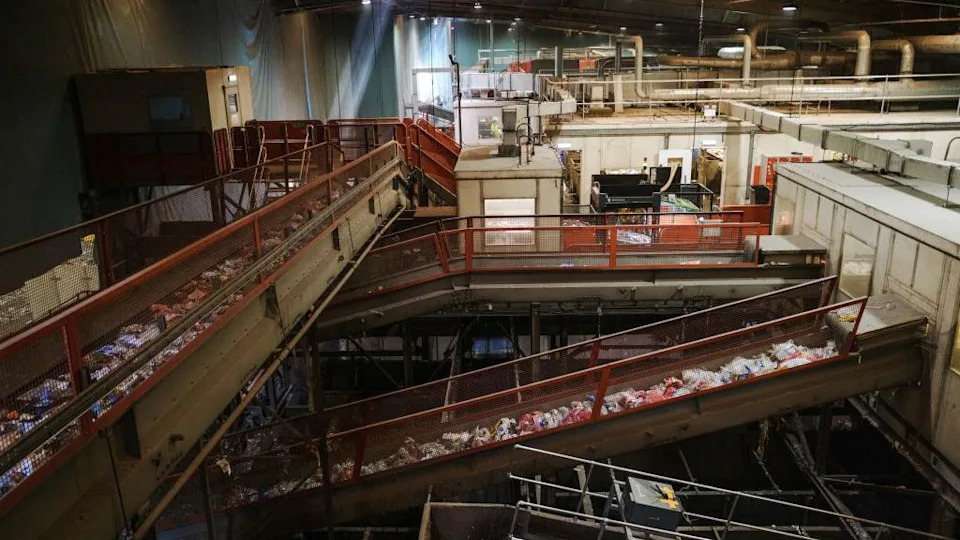
Recycling is taken to local Material Recovery Facilities to sort [Getty Images]
"Once in the plastic stream, the aluminium reduces the quality of the recycled plastic, while the colour pigments can lower the recycled plastic bale's value." — Ambarish Mitra, Co-founder, Greyparrot
Greyparrot's analysis of a Manchester processing facility with capacity of roughly 35,000 tonnes a year found BuzzBallz contaminated recycled plastic 66% of the time during six months of monitoring.
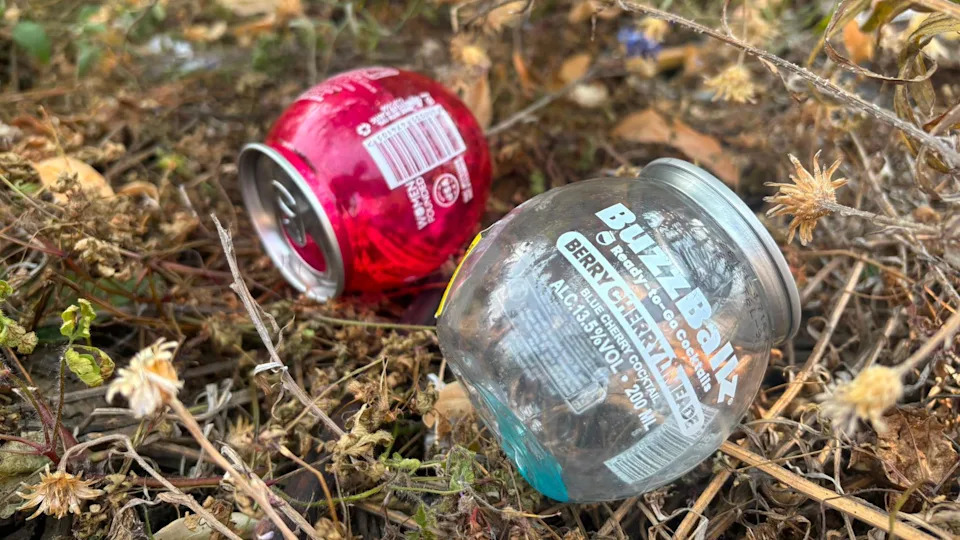
The popular drinks are often seen littered around [BBC]
Consumers, Messaging And Safety
Many consumers, including university students, assumed the packaging was recyclable because it looks like conventional containers. Environmental campaigner Laura Anderson (LessWasteLaura) called the brand's earlier messaging "misleading" and likened it to greenwashing. Experts warn against advising consumers to cut packaging apart at home: using knives to separate metal from plastic creates hazards for workers and is not a safe solution for household recycling.

Laura Anderson says the only way to separate the metal lid from the plastic would be with a sharp knife, which would be very dangerous [Susie Lowe]
James Piper, co-host of the Talking Rubbish podcast and co-owner of waste compliance firm Ecosurety, added that novel packaging designed for marketing often ignores existing recycling infrastructure — and that mixing materials has "nothing environmentally positive" about it.

James Piper said he would never recommend cutting packaging as it creates a hazard for those in recycling facilities [Talking Rubbish Podcast]
Company Response And Wider Implications
BuzzBallz later issued a statement saying a global website update mistakenly copied the TerraCycle reference for UK pages: "We very recently went through a global website update and the information pertaining to TerraCycle recycling for BuzzBallz was incorrectly copied and does not apply to the UK market as of today. We apologise for the oversight and have since updated our website to reflect the correct position for UK consumers." The company did not elaborate on the now-deleted UK FAQ that had claimed recyclability "where local facilities allow."
The episode highlights a broader tension between marketing-driven packaging designs and the practical limits of municipal recycling systems. Recycling aluminium is highly valuable because it can be reprocessed indefinitely and reduces pressure on bauxite mining; mixed-material, hard-to-sort formats risk contaminating recyclable streams, lowering material quality and increasing processing costs. Experts say the simplest fixes are clearer consumer guidance (“bin it” where no recycling route exists) or redesigning the product into a fully aluminium container that fits existing systems.
Help us improve.