The Berkeley College webinar used an AI-generated Kente-inspired pattern to explore legal questions about design ownership. Experts stressed that current U.S. copyright law requires human authorship, so works created solely by AI generally cannot be copyrighted. Speakers advised designers to read AI terms of use carefully, retain legal counsel for contracts, document human contributions, and preserve cultural storytelling as a marketing advantage when entering the U.S. market.
AI-Generated Patterns Raise New Questions About Fashion Ownership and U.S. Copyright
AI Raises New Questions About Fashion Design Ownership and Copyright
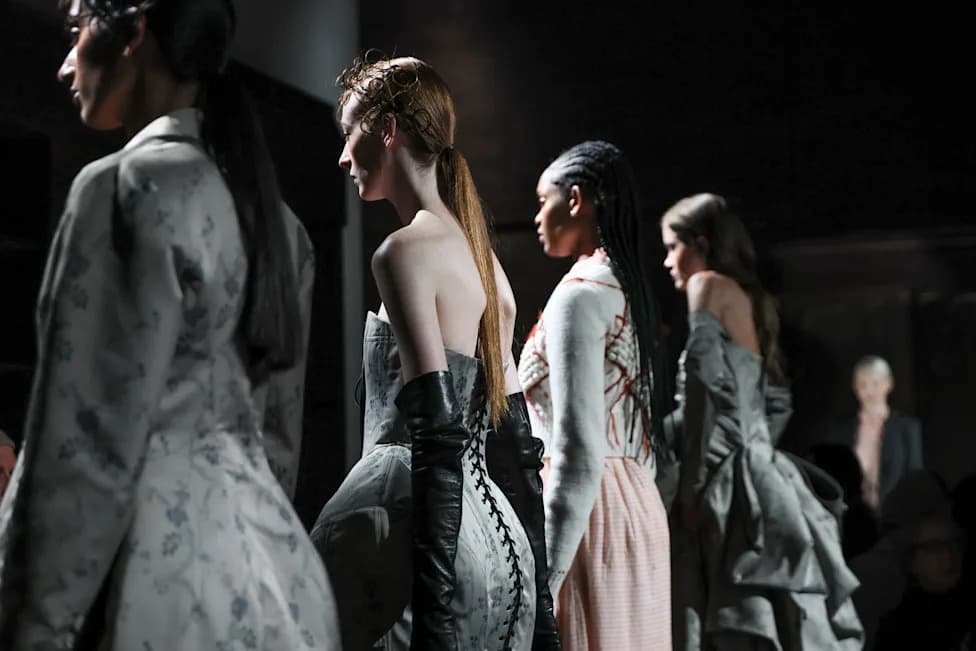
At a Berkeley College webinar, a lawyer displayed a pattern inspired by Kente — the vibrant West African textile whose colors appear interwoven — to illustrate a legal dilemma facing designers who use artificial intelligence. The virtual audience included fashion designers, industry professionals and students from across Africa who joined to learn how to operate in the U.S. market.
The presenter was candid about the pattern's origin: she was not a designer and had generated the image using ChatGPT after entering a text prompt. The AI-produced design served as a concrete example to frame the central legal question rather than as an original work submitted for protection.
“Would this be capable of protection under the U.S. Copyright Act?” asked Amy Goldsmith, a partner at Tarter, Krinsky & Drogin. “And the simple answer is no way, no how.”
Goldsmith explained that, under current U.S. law, copyright requires human authorship and patent law requires human inventorship. Creations produced solely by AI — regardless of how sophisticated the prompts are — typically do not qualify for copyright protection. She also warned designers to scrutinize the terms and conditions of any AI tool they use, since those terms often determine ownership of inputs and outputs.
“If you look at the terms and conditions of the AI tools, you need to make sure that all of the inputs and all of the outputs are going to be yours,” she said.
The webinar, organized by Berkeley College and the Fashion Law Academy Africa, aimed to fill gaps in fashion-law knowledge, particularly regarding import/export processes, intellectual property rights, AI and retail operations linking African and U.S. markets.
Speakers acknowledged that AI can be a useful creative tool — speeding ideation, generating variations, and helping with production mock-ups — but emphasized that AI complicates legal ownership. They urged designers to protect their commercial interests proactively.
“If you use AI, make sure the platform rights protect you,” advised Nicole Alexander, founder of luxury accessories brand Ivy Alexander and an adjunct professor at Berkeley College. “Read the fine print. Hire a good lawyer to make sure, and don't rely on AI to draft your contracts.”
Alexander also highlighted an often-overlooked advantage for African creatives: storytelling and authenticity. Consumers frequently seek meaning and provenance in fashion — who made a piece, what a pattern signifies, and where the craftsmanship originated. Preserving and promoting those narratives, she said, can be a powerful marketing asset for designers exporting to the U.S.
Ultimately, the session underscored practical takeaways: understand AI platform licensing, document human creative contributions, secure appropriate contracts when collaborating or importing, and leverage cultural authenticity as a distinct competitive edge in international markets.
Help us improve.