Yoonseo Chae argues that global indifference compounds North Koreans’ oppression by normalizing a brutal regime. Drawing on 23 years of lived experience, she shows how state education, public and collective punishments, and constant surveillance suppress dissent — while informal markets and foreign media have created fragile but meaningful cracks. Chae urges continued international attention: back U.N. mechanisms, support information and aid channels, and listen to defectors to keep pressure and hope alive.
Indifference Is North Korea’s Second Prison: How Familiarity Sustains Repression
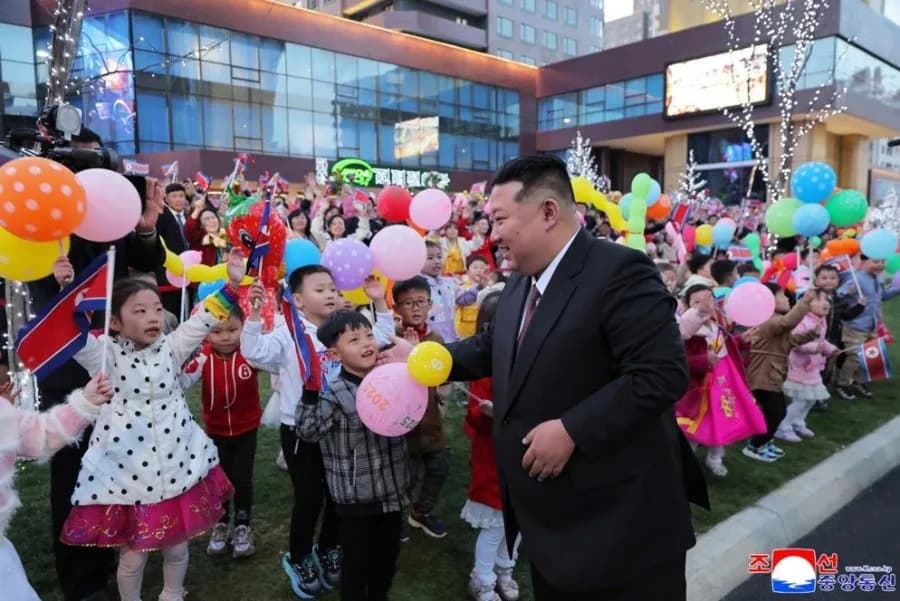
Banners in the street and the broadcasts at home in North Korea repeat the same message. That is not merely propaganda. It was an education that defines reality itself. File Photo by Korea Central News Agency/EPA
Why do North Koreans rarely resist? After years working on North Korean human rights and living there for 23 years, I have been asked this question more than any other. But a deeper question deserves equal attention: why has the international public grown so accustomed to their suffering?
It is not only the state's coercive machinery that confines North Koreans. Our collective indifference — the moment their suffering becomes a routine news item — builds a second set of walls. The regime imposes silence; our familiarity with that silence makes many stop acting.
People are not born rejecting freedom. They grow up in a society where freedom is not presented as an option. From the age of two, children learn songs praising the leader, memorize glorified biographies of the Kim family, and repeat pledges of loyalty. Those lessons are not mere propaganda: they shape how people experience reality.
“I assumed it was simply how the world worked.”
That sentence captures a lived experience. I kept a diary for more than a year — drawings, small moments, sentences I wanted to remember. One day it was inspected and taken. Later my favorite clothes were confiscated. I did not get angry; the idea that I had been wronged never occurred to me. I had been taught that the state deciding what people wear, how they cut their hair, and even reading a young girl's diary was normal.
Fear then hardens that familiarity. North Korea stages punishment as public instruction: residents are summoned to watch executions, and political crimes can bring collective punishment — spouses, children, or parents may be sent to prison camps. Citizens learn the risks not from legal texts but when their neighbor’s home empties overnight. They do not avoid resistance because they lack courage; they avoid it because they understand the price more precisely than anyone.
Small Cracks, Big Meaning
Still, the system is not monolithic. When state rationing collapsed, jangmadang — informal markets — became lifelines. Foreign films and TV dramas circulated on USB drives and SD cards, giving people windows into other lives. For many, that outside information was not mere entertainment: it was an air hole that gradually cracked indoctrination.
I was among those who watched and learned. Repeated exposure to foreign media revealed how abnormal and violent my society was, and ultimately I resolved to leave — even if it cost everything. The regime understands the threat those cracks pose.
In December 2020 the Reactionary Thought and Culture Rejection Act introduced penalties including life imprisonment or death for importing or distributing South Korean films and recordings; organizing group viewings can carry the death penalty. Laws on youth education and "Pyongyang cultural language" extend surveillance into speech, dress, and youth culture. Reports of executions linked to watching South Korean media have continued to surface.
Why International Attention Still Matters
These harsh measures demonstrate that outside information and outside attention genuinely threaten the regime. They also show that international pressure can elicit a response. Following the U.N. Commission of Inquiry and global attention, North Korea ratified the Convention on the Rights of Persons with Disabilities in 2016 and, in 2017, allowed a thematic U.N. Special Rapporteur to visit — the first such visit in years. It engaged, within limits, with UN committees on children’s rights and women’s discrimination. These steps are far from reform, but they prove that naming abuses and keeping records matters.
Practical Steps Anyone Can Take
Familiarity is the word I fear most: when a crisis becomes routine, sympathy hardens into indifference. But there are concrete actions individuals and governments can take to thin the walls of repression:
- Follow and support U.N. resolutions and the work of the Special Rapporteur.
- Back organizations that send information and life-saving aid into the country.
- Listen directly to defectors and preserve their testimony so the record does not disappear.
- Treat North Koreans you meet as neighbors, not objects of pity; support programs that help escapees rebuild their lives.
North Korean human rights is not an “old” problem that has been solved. Today, someone is still enduring abuse and someone may be losing their life while dreaming of freedom. The people working to change their society need allies and friends. Our attention matters: it makes those walls thinner.
About the author
Yoonseo Chae is a North Korean human rights advocate and graduate student at Dongguk University who lived in North Korea for 23 years and escaped in 2019 after secretly preparing for a year. She crossed four international borders (China, Vietnam, Laos and Thailand) and resettled in South Korea, where she earned a bachelor's degree in Business Administration. She has worked with South Korea’s Ministry of Unification and leading civil society organizations on human rights and unification education, and she teaches unification education while pursuing graduate studies.
Help us improve.