The Andean leaf-eared mouse survives from Chile’s coastal deserts to Andean summits by combining metabolic and genomic adaptations that allow it to tolerate low oxygen and freezing temperatures. Researchers sequenced whole genomes from 167 individuals and found highland mice better sustain thermogenesis, have increased mitochondrial capacity in skeletal muscle, and possess brown fat optimized for burning fats. Genetic signals also point to evolved abilities to metabolize plant toxins encountered at extreme elevations. Key questions about diet, lifespan and reproduction on the highest peaks remain.
How the Andean Leaf-Eared Mouse Survives 22,000-Foot Peaks: Genomic and Metabolic Adaptations
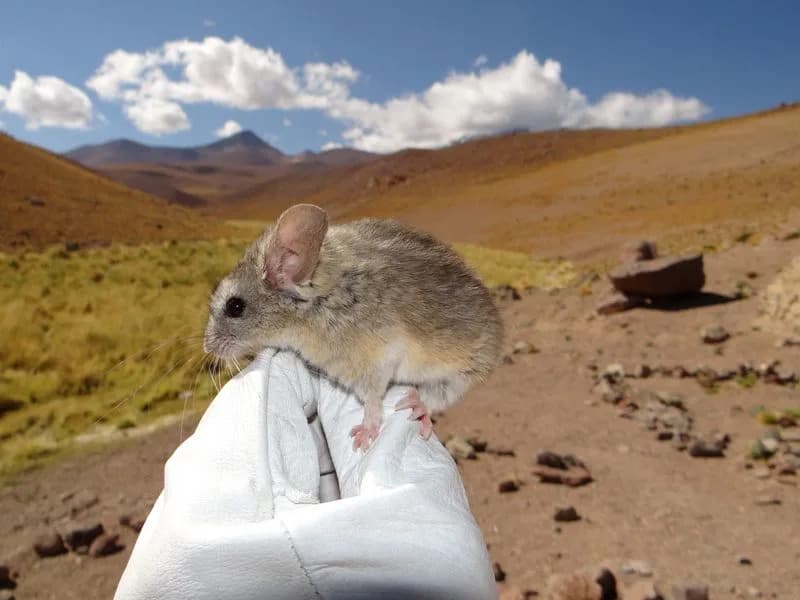
An Andean leaf-eared mouse (Phyllotis vaccarum) is held in a gloved hand against a high-altitude Andean landscape in Parque Nacional de Llullaillaco in northern Chile in June 2020, in this photo released on July 9, 2026. Marcial Quiroga-Carmona/Handout via
High on volcanic summits where humans cannot survive long-term, the Andean leaf-eared mouse demonstrates how mammals can thrive under extreme environmental stress. Researchers report that this small rodent has evolved a distinctive combination of metabolic and genetic traits that enable it to occupy the widest elevational range documented for any mammal.
Recognizable by its rounded, leaf-shaped ears, the species ranges from the arid coastal deserts of northern Chile to the peaks of the Andes mountain chain that runs along South America’s western flank. Scientists trapped individuals on peaks approaching 22,000 feet (about 6,700 meters), where oxygen levels are less than half those at sea level and temperatures are nearly always below freezing.
What the Study Found
The research team sequenced whole genomes from 167 mice collected across the species’ elevational span and combined genomic data with physiological measurements. Their analyses point to coordinated adjustments in how these animals use oxygen and generate energy.
“When a mammal faces extreme cold it must produce metabolic heat to maintain a stable body temperature, and that heat production requires oxygen as fuel. Because oxygen is scarce at high altitude, mammals that live there adjust their metabolism to use oxygen more efficiently.” — Jay Storz, University of Nebraska
Compared with lowland conspecifics, high-elevation mice better maintain thermogenic capacity (the ability to produce body heat). At the cellular level, their skeletal muscles show greater mitochondrial capacity, enabling enhanced energy production, and their brown adipose tissue is more effective at burning fats to generate heat in cold, oxygen-poor air.
Unexpected Dietary Adaptations
Surprisingly, the study also uncovered genetic signals consistent with adaptation to different dietary toxins. Plants available at extreme elevations often contain toxic secondary compounds, and researchers found selection on genes involved in antioxidant defense and toxin metabolism—suggesting the mice have evolved ways to cope with novel or concentrated plant toxins.
“We identified signals of selection on genes involved in antioxidant defence and the metabolism of dietary toxins. We know these genes are involved in those functions but cannot yet identify specific toxins or plants.” — Guillermo D'Elía, Universidad Austral de Chile
Broader Implications
High-elevation mammals endure chronic oxygen deprivation that parallels certain human disease states. Understanding the physiological and genomic strategies these mice use could inform future research into treatments for cardiorespiratory conditions that impair oxygen delivery at sea level.
Despite the advances, important natural-history questions remain. The researchers still do not know exactly what the summit-dwelling mice eat, how long they live at such heights, or whether they successfully breed on the highest peaks.
These findings underscore how even the most barren-looking landscapes can harbor surprising, specialized life and highlight the value of conserving high-elevation habitats.
Reporting by Marta Serafinko in Gdansk; Edited by Will Dunham. Study published in the journal Science; lead author Jay Storz.
Help us improve.