Local challenges in Charleston and Boise show how stronger municipal capacity turns data, civic engagement and cross‑sector collaboration into durable solutions. Charleston used targeted data analysis to map 118 vehicle rescues and prepare for a 7.1‑foot tide, launching tools like WaterWise and the $1.4 billion Battery Extension. Boise engaged 200+ residents, generated 500+ ideas and drove a 113% rise in rental construction while creating a Department of Organizational Effectiveness. As philanthropy enters a new era, investing in the institutions that enable local governments to perform may yield outsized returns.
Why Investing In Local Government Delivers Big Returns
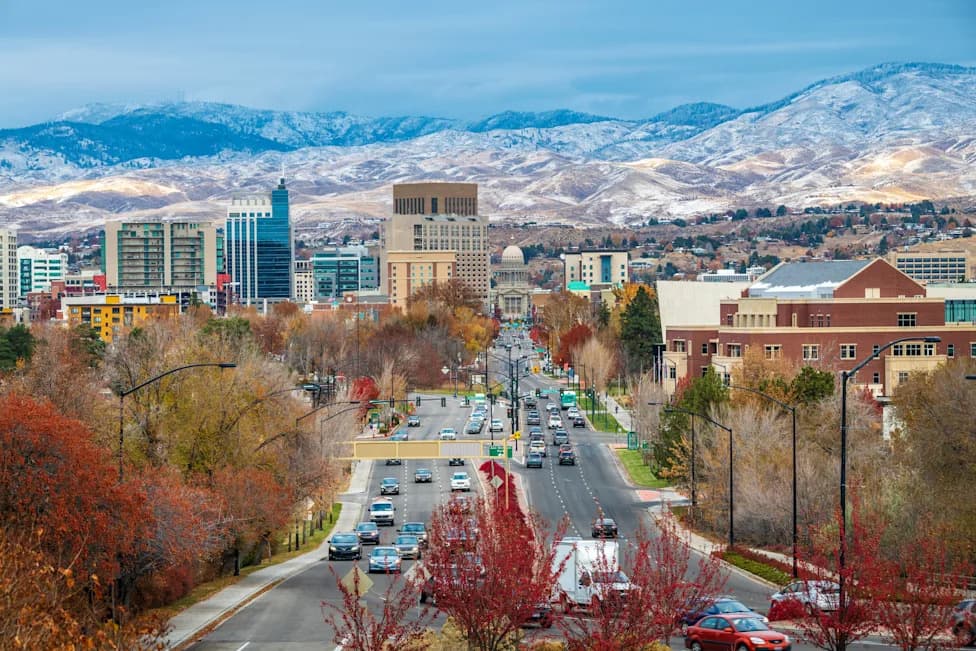
A view of downtown Boise, Idaho. —4kodiak—Getty Images
The water that floods Charleston is not an abstract policy question; it pours over curbs, fills intersections, and moves around school buses and shops. The city sits at sea level, and the sea is rising.
For years Charleston flooded, recovered and waited for the next storm. The turning point came not from the weather but from participation in the Bloomberg Harvard City Leadership Initiative and the city’s decision to apply those lessons locally. City Hall began using data differently: tracking road closures alongside tide and weather patterns, analyzing high‑water vehicle deployments, and mapping 118 vehicle rescues over two years. A 7.1‑foot tide with a northeast wind stopped being a guess for crews. Events that once looked like isolated emergencies became a consistent set of facts from which to design solutions.
Local government convened transportation planners and civil engineers, emergency managers and first responders, neighborhood leaders and environmental organizations, parents and business owners. That collaboration produced real‑time barricade deployment on hazardous streets, basin‑by‑basin planning, and a resident‑facing resilience platform called WaterWise. It also supported protective public space solutions that cost less and arrive faster because City Hall recruited partners to share the burden — including the $1.4 billion Battery Extension, a combined local and federal project that will shield the peninsula while creating miles of waterfront promenade.
The same mindset now shapes decisions measured in generations. Infrastructure, transportation, housing and land use no longer compete for scarce attention; a problem that began with water in the streets evolved into a holistic way of seeing the entire city, and residents whose lives depend on it started working together.
Nearly 2,000 miles west of Charleston lies Boise — long seen as a place where a teacher, a firefighter or a young family could build a future. Population growth accelerated in the 2010s and surged during the COVID‑19 pandemic, and demand outpaced housing supply. By 2022, one study ranked Boise the least affordable housing market in the country.
Boise responded by engaging the people most affected and inviting neighbors to help design solutions. City Hall brought more than 200 residents, homeowners, renters, developers, service providers and frontline municipal employees into a collaborative process that yielded over 500 ideas. Officials tested proposals, discarded what failed, learned from what worked and advanced the most promising reforms. Measures such as preapproved blueprints for accessory dwelling units (ADUs) helped drive a 113% increase in rental housing construction.
What began as housing policy became a new way of governing. Boise created a chief innovation officer to spread these practices across city hall; that leader now oversees the city’s first Department of Organizational Effectiveness. When in‑home childcare providers said licensing was too slow and costly, staff working with providers and community groups redesigned the process, cutting approval times by roughly 60 days and reducing fees by about $230. Building that discipline helped Boise win one of Bloomberg Philanthropies’ 2025–2026 Mayors Challenge awards: the city will be the first in the U.S. to connect municipally owned geothermal systems to affordable housing — 350 units and counting — lowering utility bills by up to 80% and turning a public asset into a lever for affordability.
Other Local Wins
- Sioux Falls: Rebuilt a transit system to cover 100% of the city, connecting riders to more than 50,000 jobs and cutting cost per ride by 25%.
- Chattanooga: After listening to 500 residents about youth violence, one of the city’s most dangerous neighborhoods went a full year without a homicide.
- Anchorage: Reached zero major encampments by March 2026 under new local strategies.
- Las Vegas: Brought critical care to 1,000 residents experiencing homelessness in four months and housed 242 more.
These accomplishments often look ordinary, and that is the paradox: when local government succeeds, the results are pragmatic and familiar — but the institutional capacity that powers them is rarely visible and seldom funded.
Today, as philanthropy enters a new age shaped by fortunes from artificial intelligence, biotechnology and emerging industries, donors face a choice: fund isolated projects, or invest in the public institutions closest to people so they can scale and sustain solutions.
The Government Innovation initiatives supported by Michael R. Bloomberg ask the question many donors skip: not only which problems deserve funding, but whether the institutions responsible for everyday services can be made to succeed. Two hundred and fifty years after the nation’s founding, strengthening local government may be one of the most consequential investments philanthropists can make in the country itself.
Help us improve.