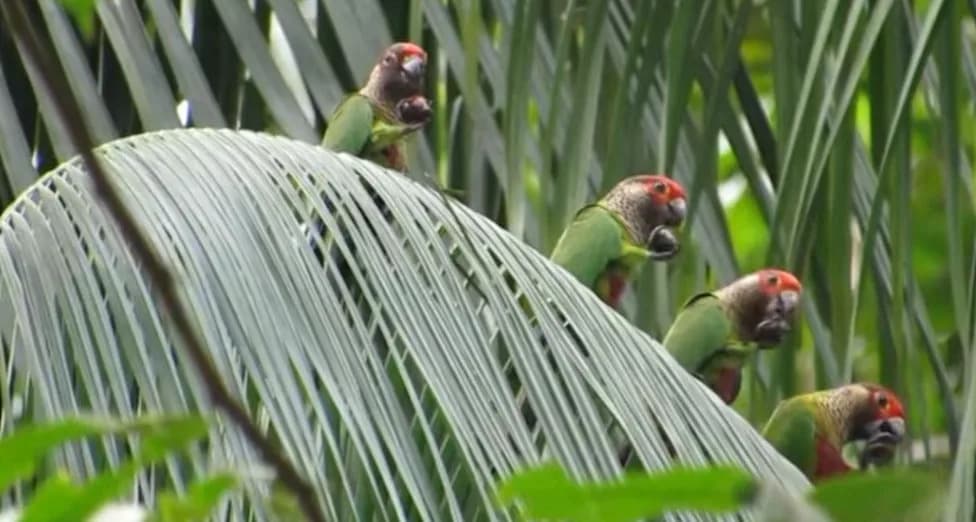
Researchers warn that AI-generated and AI-edited bird photos are increasingly appearing online and could undermine the reliability of citizen-science databases. Public repositories such as iNaturalist and the Macaulay Library are vital for tracking species ranges, migrations and climate-driven changes, but manipulated images can distort the evidence. Experts urge contributors to preserve documentary fidelity, disclose edits, and limit changes to basic corrections. Platforms and scientists are working to detect and manage AI-manipulated records to protect conservation research.
AI-Altered Bird Photos Threaten Conservation Data — Experts Warn Edits Can Mislead Science
Photo Credit: iStock
For birdwatchers, spotting a species far outside its normal range can feel like a rare thrill. Scientists now warn that images created or modified by artificial intelligence risk turning those exciting discoveries into unreliable data that could mislead conservation research.
Why This Matters
Public, citizen-science image libraries such as iNaturalist and the Macaulay Library are essential tools for tracking species distributions, migrations and climate-driven changes in seasonal events. Researchers use these photo records to detect range shifts, document unusual sightings, and inform conservation and management decisions. If images in those databases are fabricated or altered, the resulting records can blur the empirical picture scientists depend on.
How AI Changes the Game
In a recent commentary in Nature and reporting by outlets including The Guardian, researchers warn that generative AI now makes it easy to produce highly persuasive fake wildlife photos or to edit real images in ways that no longer reflect what the camera actually captured. Edits that seem harmless — removing a twig, sharpening a bird, or improving contrast — can accidentally introduce features from another species or otherwise change diagnostic details.
"My experience of looking at Facebook these days is that a huge volume of wildlife photos now are simply AI-generated imagery," said Dr. Alexander Lees, an ecologist at Manchester Metropolitan University and co-author of the Nature commentary.
Lees pointed to a reported sighting in central Brazil where an epaulet oriole was apparently altered so it resembled a red-winged blackbird — a change that could mislead anyone using the image as evidence of a genuine range expansion.
Scale and Detection
Platform managers say the issue is not always malicious: many edits are made with good intentions to improve a picture’s aesthetics. Tony Iwane, iNaturalist's director of community support and co-author of the Nature paper, noted that the problem often stems from users trying to produce a prettier or clearer photo rather than from bad intent. To date, The Guardian reported that roughly 1,400 of iNaturalist's more than 610 million images have been flagged for possible AI use, but the true scale is unknown because many manipulated images may escape detection.
Best Practices and Recommendations
Researchers and platform managers urge contributors to prioritize documentary fidelity over cosmetic editing when an image is being used as evidence of a sighting. Recommended practices include:
- Keep documentary photos as true to the original scene as possible.
- Limit edits to basic corrections (cropping, exposure, white balance) and clearly disclose any edits applied.
- Avoid using AI tools to remove objects or to "improve" an animal’s appearance in images intended as records.
- Platform operators and researchers should continue developing detection tools and clear policies to flag and manage suspected AI-manipulated records.
Why Accuracy Matters
Many citizen-science platforms now serve as near–real-time indicators of environmental change. Even a modest number of false entries can obscure the significance of unusual sightings, misdirect research efforts, or lead to incorrect conclusions about species’ responses to climate change. As Iwane put it: "The more we know about where species are, the better informed we can be as conservationists. But the information needs to be accurate."
Maintaining transparency about edits and improving detection of AI-generated or -altered images will be critical to preserving the scientific value of public wildlife photo libraries as AI tools continue to evolve.
Help us improve.