Bio‑Thera Solutions has begun dosing in a Phase I dose‑escalation study of BAT8013, an anti‑CD25 antibody–drug conjugate for advanced solid tumours. The trial will assess safety, tolerability, pharmacokinetics and determine a recommended Phase II dose. Preclinical data showed favourable stability and strong anti‑tumour activity, particularly when combined with Bio‑Thera’s PD‑1 inhibitor BAT1308. The ADC’s membrane‑permeable topoisomerase I payload may produce a bystander effect to deplete tumour‑infiltrating regulatory T cells.
Bio‑Thera Begins Phase I Dosing of BAT8013, an Anti‑CD25 ADC for Advanced Solid Tumours

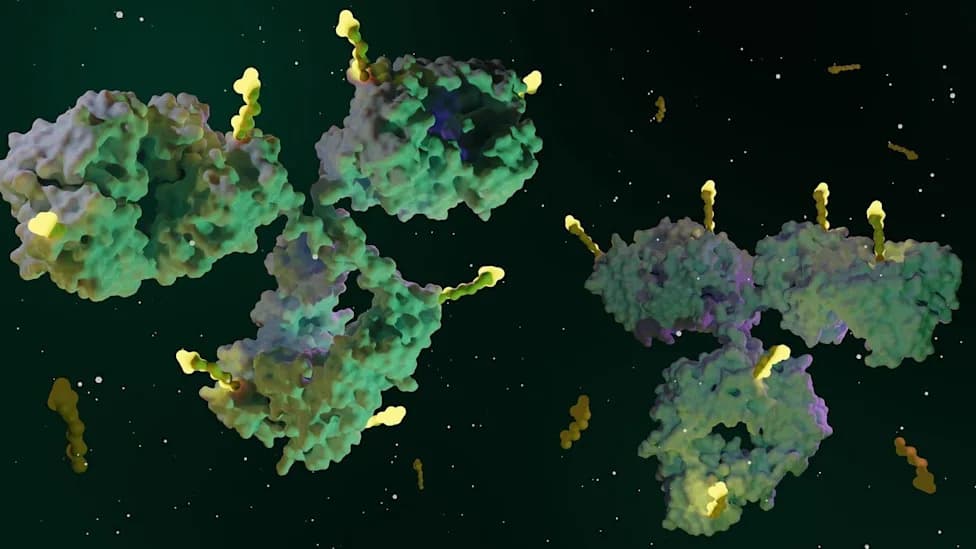
BAT8013 is designed to target CD25
Bio‑Thera Solutions has started dosing patients in a Phase I clinical trial of BAT8013, an antibody–drug conjugate (ADC) that targets cluster of differentiation 25 (CD25) in adults with advanced solid tumours.
Trial Design and Objectives
The multicentre, open‑label, dose‑escalation study is designed to evaluate the safety and tolerability of BAT8013 and to identify the recommended dose for Phase II testing. Key objectives include determining the maximum tolerated dose (MTD), characterising pharmacokinetics (PK), and collecting preliminary efficacy and safety data in patients with advanced solid tumours.
Target Rationale: CD25 (IL‑2Rα)
CD25, the interleukin‑2 receptor alpha chain encoded by the IL2RA gene, is primarily expressed on activated T and B cells and regulatory T cells (Tregs), and is present in certain haematologic malignancies. In many solid tumours, CD25 is overexpressed on tumour‑infiltrating Tregs. Because Tregs suppress anti‑tumour immune responses, selectively depleting them can reprogram the tumour immune microenvironment and potentially enhance the activity of immune‑checkpoint inhibitors.
Drug Design and Mechanism
BAT8013 couples Bio‑Thera’s anti‑CD25 antibody to a cleavable, systemically stable linker carrying a small‑molecule topoisomerase I inhibitor payload. The payload is described as membrane‑permeable, which may enable a bystander effect: after ADC internalisation and payload release, neighbouring Tregs (and possibly other immunosuppressive cells) could be affected, amplifying the local immune‑modulating impact beyond directly targeted cells.
Preclinical Findings
Preclinical studies reported that BAT8013 demonstrated favourable stability and safety profiles, and produced robust anti‑tumour activity. Antitumour effects were particularly notable when BAT8013 was combined with Bio‑Thera’s PD‑1 inhibitor, BAT1308, supporting combination strategies in clinical development.
Broader Pipeline
Bio‑Thera is advancing a diversified oncology pipeline of over 20 clinical candidates, including ADCs targeting folate receptor alpha (FolateRα), HER2 and Trop2, and early‑stage immuno‑oncology assets such as bispecific antibodies engaging PD‑L1/4‑1BB and PD‑1/IL‑15. ADCs remain a core focus of the company’s targeted therapy efforts.
Next steps: The Phase I study will continue dose escalation and safety evaluation. Further clinical readouts will be needed to confirm tolerability, PK, and any signals of anti‑tumour efficacy or immune modulation, and to guide combination strategies with PD‑1/PD‑L1 inhibitors.
Help us improve.