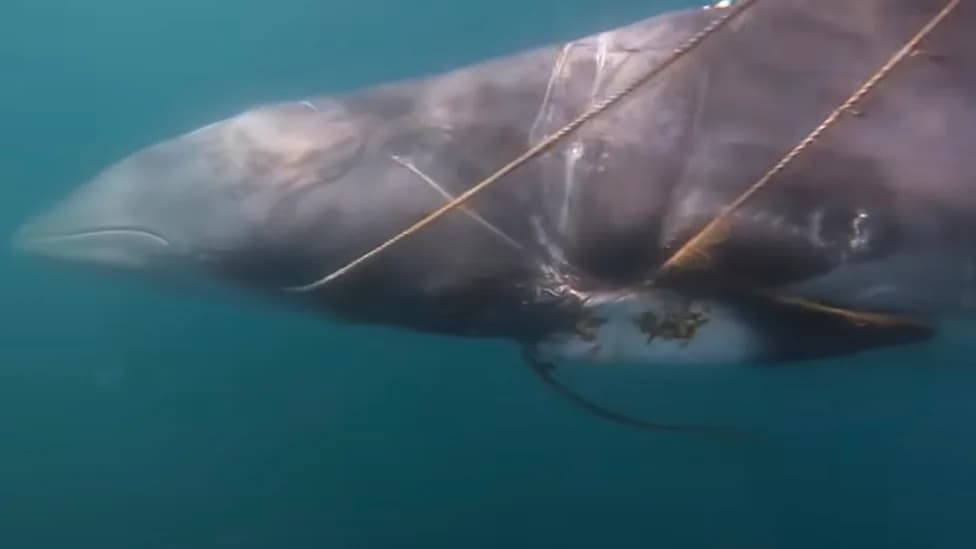
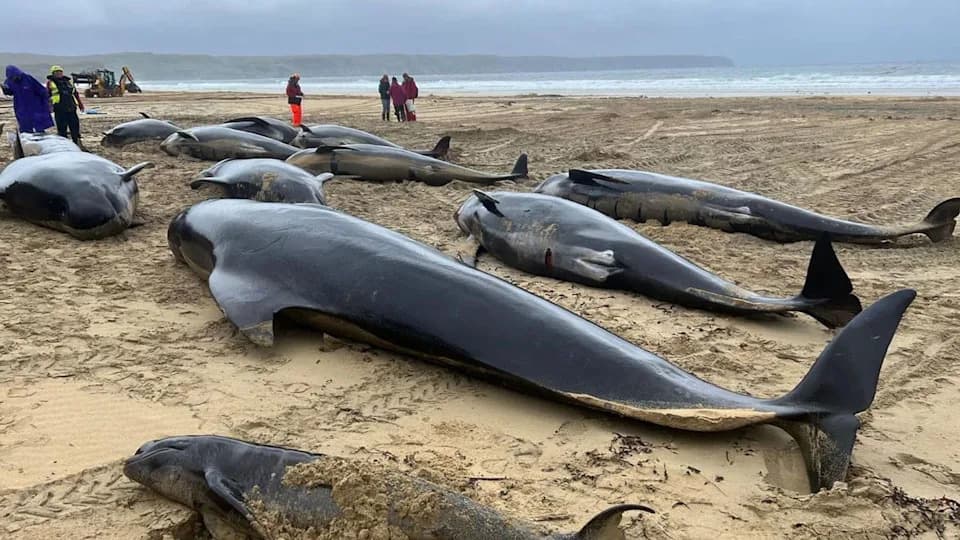
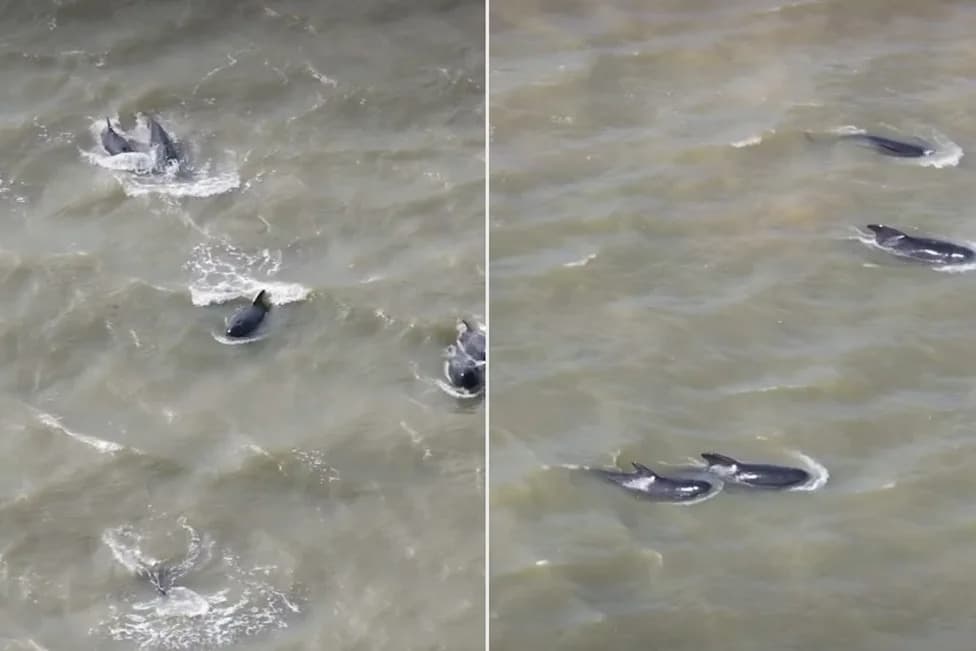
Satellite data indicates roughly 22 bottlenose dolphins regrouped in deeper water off Barnstable after what officials call Massachusetts’ largest known mass stranding. IFAW was notified on July 13 of nearly 30 dolphins stranded between Brewster and Ellis Landing; many refloated with the tide but several died before help arrived. Two dolphins were fitted with satellite tags, and by July 15 those signals showed the animals about two miles northwest of Sandy Neck Beach as part of a single pod. Authorities stressed the danger posed by Cape Cod’s shallow tidal flats and the need for trained responders and ongoing monitoring.
22 Dolphins Tracked Offshore After Massachusetts’ Largest Known Mass Stranding
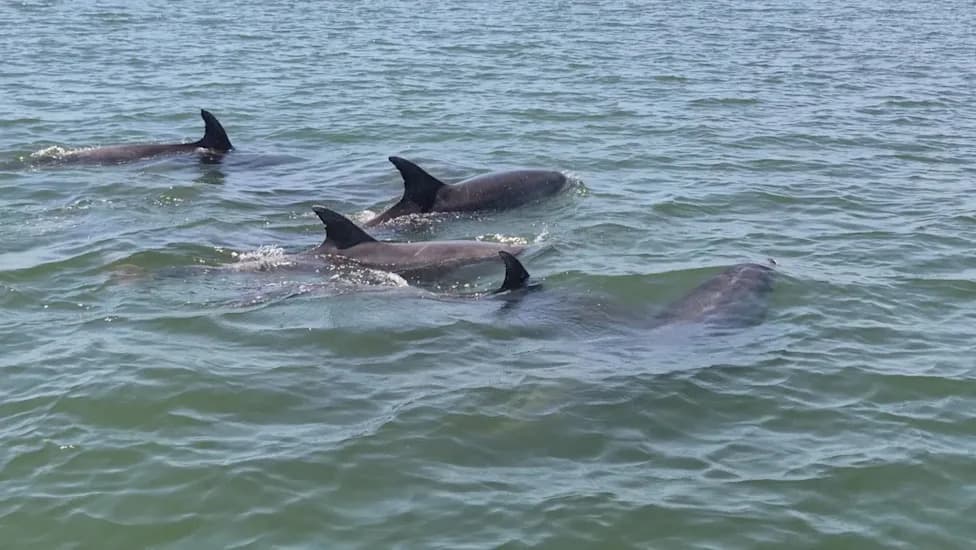
Photo Credit: International Fund for Animal Welfare
Encouraging news came from Cape Cod after what officials say was Massachusetts’ largest recorded mass stranding of bottlenose dolphins: satellite tags show roughly 22 survivors traveling together in deeper water off Barnstable.
Rescue Response and Timeline
On July 13, the International Fund for Animal Welfare (IFAW) was alerted to nearly 30 bottlenose dolphins mass-stranded along the Brewster shoreline between First Light and Ellis Landing. The rescue response stretched across two days and multiple beaches from Brewster to Wellfleet.
As the tide rose, many dolphins refloated on their own, but several animals were found dead before responders arrived. By the next morning, teams that had first located four dolphins in Wellfleet's Herring River Gut were responding to 19 live strandings at three sites across a roughly nine-mile stretch from Brewster to Wellfleet.
Tagging, Tracking, and Outcome
Rescue teams attached satellite tags to two dolphins and monitored their signals to learn how the group moved after the event. By July 15, satellite data placed the tagged dolphins about two miles northwest of Sandy Neck Beach, where they appeared to be part of a single pod of approximately 22 animals in deeper, safer water.
Why Strandings Happen and Why Rapid Response Matters
NOAA Fisheries defines a marine mammal stranding as an animal that is dead or alive but unable to return to its natural habitat without assistance. Cape Cod’s extreme tidal fluctuations and broad, shallow flats — especially inside the Wellfleet–Eastham "crook" — make the area a known global hotspot for mass strandings. The same shallow flats that shape the shoreline can quickly trap pods as the tide recedes.
Strandings can become fatal within hours. Dolphins left on beaches or tidal flats may be injured, exhausted, or otherwise unable to survive even if they appear alive. Those risks underline the need for trained responders, proper handling, and continued monitoring after refloating.
Coordination and Ongoing Monitoring
IFAW operates under a federal stranding agreement with the National Marine Fisheries Service (NMFS) as part of the Marine Mammal Protection Act. That framework authorizes trained teams to assess strandings, refloat animals when appropriate, and track their condition after rescue. IFAW said it continues to monitor the recovered dolphins using the satellite tags fitted to two animals.
IFAW officials advised: "Similar to a person involved in a car accident, dolphins can become injured and exhausted during a stranding event and should never be pushed or dragged back into the water."
Teams emphasize that rescuing stranded marine mammals requires specialized training and equipment; well-intentioned public intervention can inadvertently harm the animals or responders.
Help us improve.