The Federal Communications Commission (FCC) has granted California start-up Reflect Orbital permission to test a satellite-mounted mirror designed to reflect sunlight back to selected areas on Earth.
What’s Approved: The FCC’s authorization allows Reflect Orbital to run an on-orbit demonstration for up to two years. The first test vehicle, a demonstration satellite named Earendil-1, will carry a large reflective surface the company says can project a beam roughly three miles (about 5 kilometers) wide onto a targeted ground area.
How It Would Work
The concept is straightforward: place reflective surfaces in orbit to redirect sunlight to specific locations after local sunset. Proponents say this could extend the productive hours for solar panels, provide targeted illumination for disaster response and nighttime work zones, and even support agricultural activities that could benefit from additional overnight light.
Potential Scale and Ambition
Reflect Orbital describes a longer-term vision of a constellation of mirrors — potentially as many as 50,000 satellites — that could create widespread, controllable lighting where and when it is needed. The company frames the technology as a way to expand the availability of daylight-like illumination beyond the constraints of local sunrise and sunset.
Agriculture - Field of mid growth pre-tassel stage grain corn at sunset with a farmstead in the distance / Marshalltown, Iowa, USA.
Concerns and Opposition
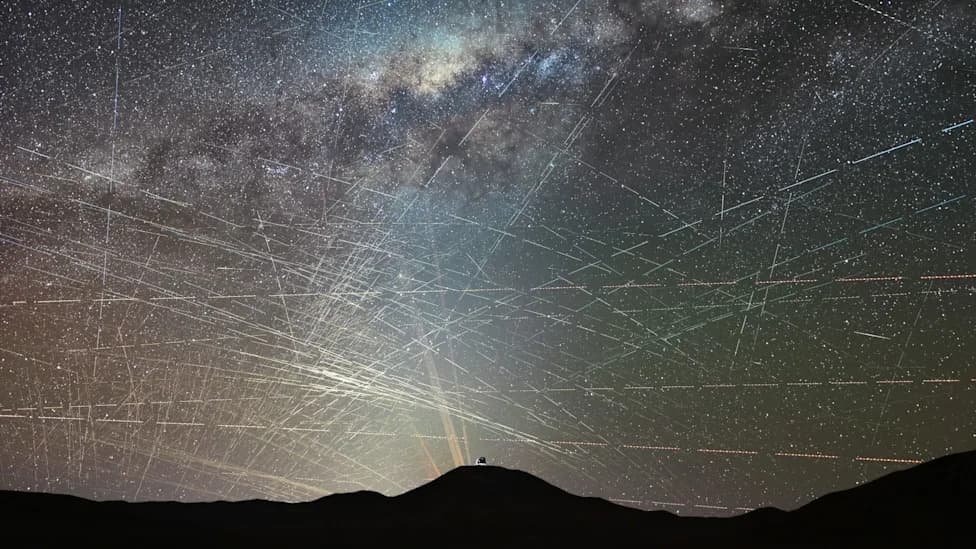
The American Astronomical Society (AAS) and other critics have petitioned against the project, warning it could increase light pollution, disrupt ground-based astronomical observations, and harm wildlife and night-time ecosystems. Environmental and ethical questions remain about unintended consequences, including how reflected light might affect migratory animals or obscure the night sky.
Regulatory Note: The FCC stated it is not required to conduct an environmental review for satellite launches in this case; the agency’s decision primarily concerns spectrum and orbital use. The approval clears the way for on-orbit testing but does not resolve broader environmental, scientific, or policy questions.
What Comes Next
The two-year demonstration will test technical feasibility, control of the reflected beam, and real-world impacts. If successful and if regulators and stakeholders agree, the program could scale — but significant scientific, legal, and ethical discussions will likely shape any larger deployment.
Bottom Line: The FCC approval is an initial regulatory step that enables a high-profile experiment in space-based lighting. The test will provide data, but the debate over benefits and risks — from extended solar generation to threats to astronomy and ecosystems — is far from settled.