Researchers tagging 42 sperm whales off Norway’s Lofoten Islands found the animals take short, upright naps (about 10–15 minutes) and emit bubbles while resting. Whales near the surface released bubbles roughly 11 times per nap, whereas deep-resting whales released only three to four times. The team concludes that small exhalations adjust buoyancy so whales don’t float to the surface during sleep, although it remains unclear whether the behavior is deliberate or automatic.
Sperm Whales Blow Bubbles to Stay Underwater During Short Naps
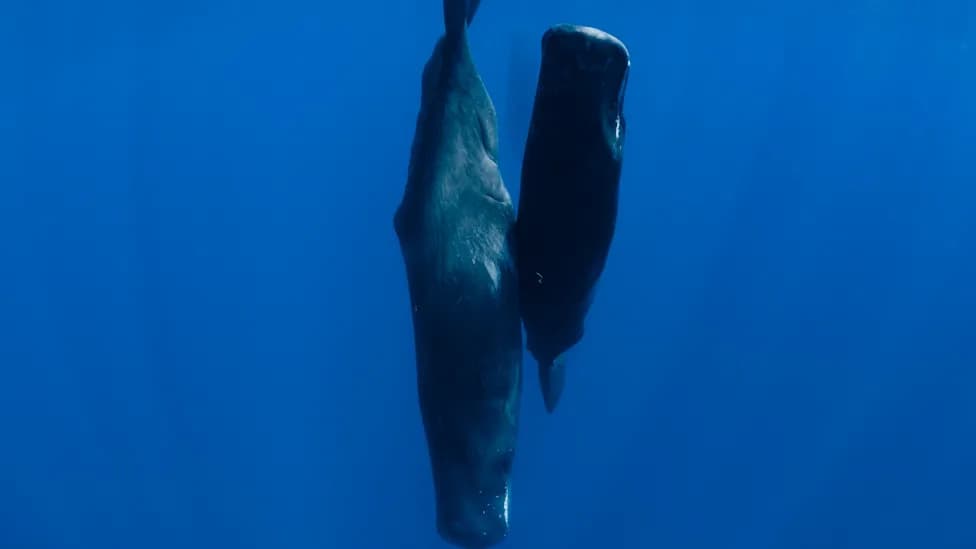
Two sperm whales in the vertical sleeping phase in a position called candle in Mauritius Island, Indian Ocean.
Researchers report that sperm whales (Physeter macrocephalus) release small bursts of air while taking brief, upright naps to fine-tune their buoyancy and avoid floating uncontrollably to the surface. The finding helps explain a curious behavior recorded in tagged whales off Norway’s Lofoten Islands and sheds light on how these deep-diving giants rest safely in the ocean.
Study Design and Methods
The study, published in the Journal of Experimental Biology, analyzed data from 42 sperm whales tagged with suction-mounted devices that recorded bubble sounds as well as depth and body orientation. Tags detached naturally and were retrieved at the surface for laboratory analysis. The researchers used orientation and depth traces to identify short resting episodes—typically lasting about 10 to 15 minutes—during which whales assumed a near-vertical posture with their heads pointed upward.
Three Resting Modes and Bubble Patterns
Field observations revealed three primary resting modes: slowly sinking tail-first to roughly 26 feet (~8 m); making short head-first dives before reorienting as buoyant heads turned up; or diving deeply—more than 656 feet (~200 m)—and resting while slowly ascending toward the surface. The team found a clear relationship between resting depth and bubble production: whales resting near the surface emitted bubbles much more frequently (about 11 bubble releases per nap) than those that rested while returning from deep dives (about three to four releases during the ascending nap).
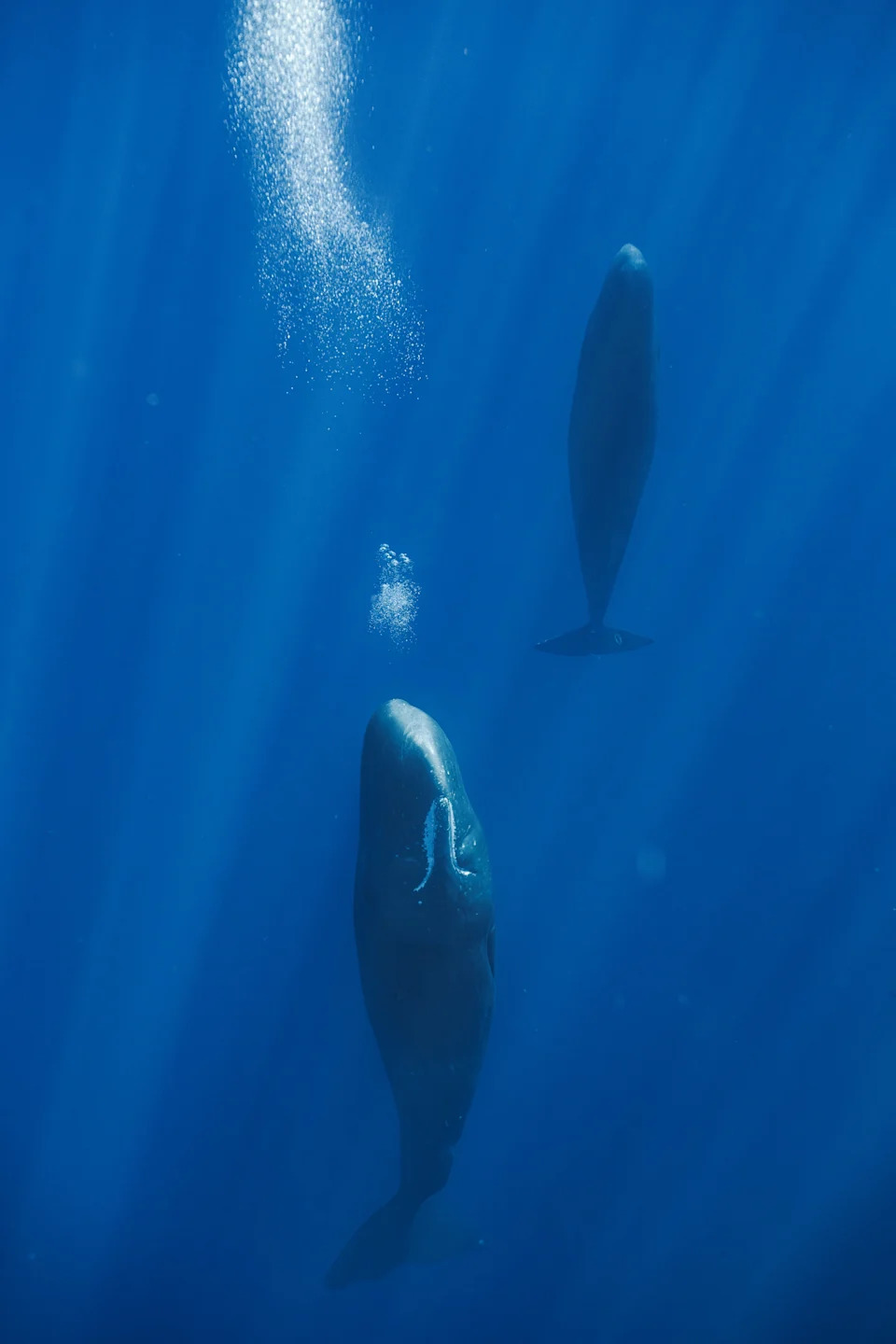
Sperm whales at rest.Image: University of St Andrews
Why Bubbles Help
The researchers argue that exhaling small amounts of air while napping lets whales reduce the buoyant force of their large, air-filled heads so they remain submerged and stable. At greater depths, increased water pressure compresses lung air and reduces buoyancy, so deep-resting whales require fewer bubble releases even though they may retain more oxygen in their lungs. In short, bubble releases appear to be a simple behavioral mechanism to regulate buoyancy during rest.
"We were lucky to have access to such a large dataset with many tag deployments, because the main challenge is that a deployment must last long enough to capture resting behaviour," said Noémie Freymond, lead author. "This allowed us to show that sperm whales release bubbles to regulate their buoyancy while resting."
Open Questions
One important unanswered question is whether bubble release during naps is under conscious control. Some cetaceans, such as dolphins, demonstrate unihemispheric sleep—keeping half the brain active while the other half sleeps—so it remains possible sperm whales retain enough awareness to control buoyancy. Determining whether the behavior is deliberate or automatic will require further physiological and behavioral study.
Beyond scientific implications, the finding adds a vivid and relatable detail to our picture of sperm whale life: even the largest toothed whales use surprisingly subtle tricks to sleep safely at sea.
Help us improve.