President Trump announced additional conditions for a U.S.-Saudi civil nuclear agreement hours after it was signed, demanding Saudi normalization with Israel and insisting 'there will be no enrichment of material.' White House press secretary Karoline Leavitt offered no concrete steps or mechanisms to enforce that demand, and Saudi sources quoted by journalist Laura Rozen said a signed deal cannot be renegotiated. The conflicting messages underscore a coordination problem within the administration and raise questions about the deal's practical implications for nuclear safeguards.
Trump Adds New Conditions to Saudi Nuclear Deal Hours After Signing, White House Struggles to Explain
White House Can’t Explain Trump Changing Terms of Saudi Nuclear Deal
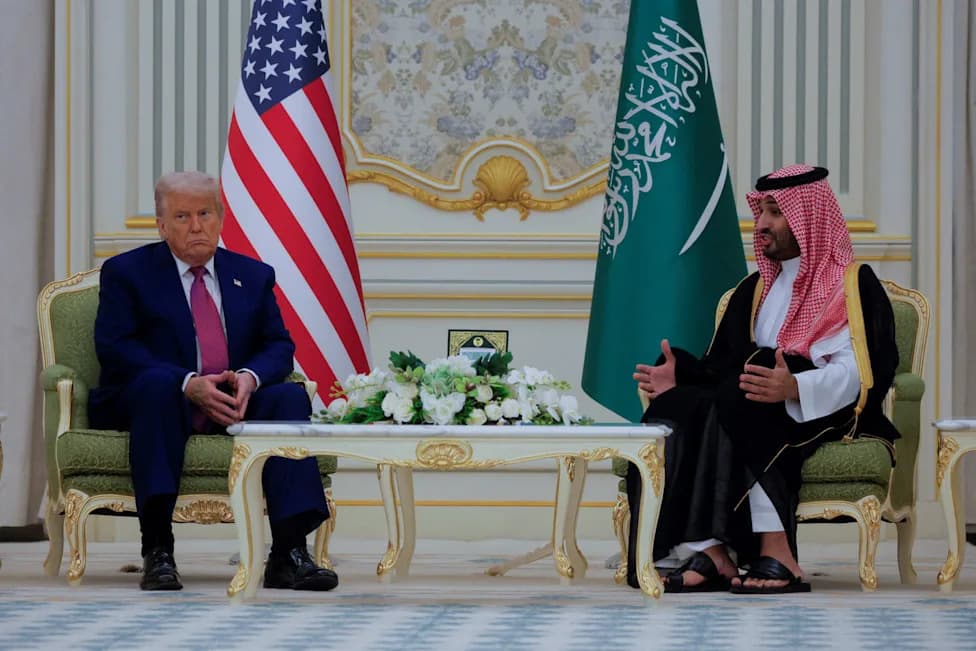
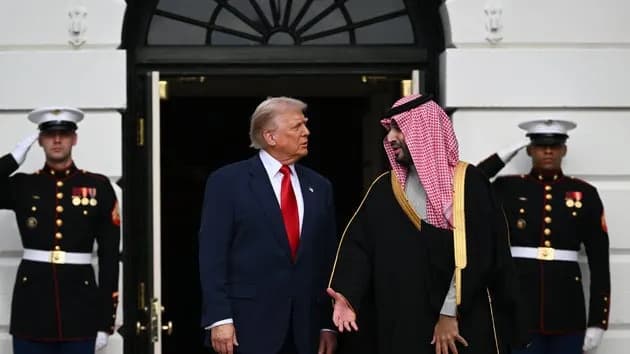
President Donald Trump publicly attached sweeping new conditions to a U.S.-Saudi civil nuclear agreement just hours after the accord was signed, creating a sharp messaging clash within the administration.
What Trump Said
In a post on Truth Social, Trump said Riyadh must normalize relations with Israel under the Abraham Accords before receiving any U.S. nuclear technology. He also insisted, 'there will be no enrichment of material,' even though analysts warn the agreement could still open the door to uranium enrichment in the kingdom.
'The Civil Nuclear Deal (There will be no enrichment of material!) being made between the United States Department of Energy and Saudi Arabia, which pertains only to non-military use such as the ones that Iran and UAE (and others) already have, will be approved, but is totally subject to Saudi Arabia joining the very respected and successful Abraham Accords,' Trump wrote. 'The United States is not opposed to Civil (Non-Enriched) Nuclear Facilities.'
Press Briefing: Questions Left Unanswered
White House press secretary Karoline Leavitt was pressed at a Thursday briefing to explain how the administration intended to enforce the new condition and whether it would seek to renegotiate the signed agreement. Reporters repeatedly asked what steps the United States would take to get Saudi Arabia to join the Abraham Accords and why the condition was not mentioned when the Department of Energy announced the deal.
Leavitt reiterated that the president has long spoken about wanting to expand the Abraham Accords and said the deal is "contingent" on that aim from the president's perspective. She did not, however, provide concrete mechanisms, timelines or evidence that Saudi Arabia had signaled a willingness to accept the added conditions.
Saudi Reaction And The Practical Problem
At the time of the briefing, officials had not explained how they planned to secure Saudi agreement to terms that appeared to differ from the text signed only hours earlier. Journalist Laura Rozen quoted a Saudi source saying the agreement had already been signed and was not open to renegotiation: 'It was signed. So nothing to renegotiate,' adding, 'Tweets don't overturn signed agreements.'
Why It Matters
The episode highlights a coordination and communications problem within the administration: public statements by the president introduced new diplomatic conditions without an apparent plan for implementation or corroboration from negotiating counterparts. It also raises questions about nuclear safeguards, since some experts caution that civil nuclear cooperation can create pathways to uranium enrichment unless strict limits and monitoring are in place.
Until the White House or Saudi officials clarify how the president's conditions would be implemented—if at all—the status and enforceability of the deal remain unclear.
Help us improve.